Specializing in the production of Plastic Pulverizer Machines.

Views: 0 Author: Site Editor Publish Time: 2026-07-06 Origin: Site
Are you struggling to get the perfect powder size for your plastic products? Inconsistent grinding can ruin your production quality.
Mastering your PE PP Pulverizer Machine is essential for success in industries like rotomolding and SPC flooring. Achieving the right fineness ensures high-quality output every time.
In this post, you’ll learn how to master your machine. We will explore the mechanical principles behind precise grinding. You will discover professional tips to fine-tune your settings for consistent results.

To get the best results from your PE PP Pulverizer Machine, you need to look past the outer casing. At its heart, the machine relies on a synchronized system of components working in harmony. You have the heavy-duty motor driving the shaft, the grinding chamber where the actual reduction happens, and the vibrating screen that sorts your output. A robust dust removal system keeps the workspace clean while preventing material buildup. Think of these parts as a single unit; if one fails to perform, the entire process suffers.
Component | Primary Function | Operational Impact |
Grinding Chamber | Material reduction | Determines particle shape and size |
Vibrating Screen | Particle classification | Ensures final mesh consistency |
Dust Removal | Air quality control | Prevents clogging and heat buildup |
The way you feed material into your PE PP Pulverizer Machine is just as important as the grinding itself. You generally have two main options, and each serves a different production need. Vertical feeding is a classic approach that excels at preventing clogs, making it a reliable choice for steady, daily operations. On the other hand, vacuum suction feeding is built for speed. It pulls material into the chamber rapidly, which is great when you need to maximize your hourly throughput.
Industry experts at Changzhou Maoyue Intelligent Equipment emphasize that your choice of feeding method dictates the stability of the entire grinding cycle. They suggest that matching your feed method to the material's physical properties prevents unnecessary strain on the motor. If you choose the wrong method, you might face inconsistent particle sizes or frequent machine downtime. It is worth taking the time to test both methods to see which one aligns better with your specific plastic types, whether you are processing PE, PP, or other polymers.
Beyond these basics, you should pay close attention to how these components interact during high-speed operation. When you run your PE PP Pulverizer Machine for extended periods, heat becomes your biggest enemy. The grinding chamber needs to stay cool to prevent the plastic from melting and clumping together. By keeping the screen clear and ensuring your dust removal system is pulling air efficiently, you maintain a stable environment inside the mill. This balance keeps your output within the 20–120 mesh range consistently, day after day.
Effective operation really comes down to understanding these mechanical relationships. When you know how the motor speed interacts with the feed rate, you can adjust your output on the fly. You do not need to be a mechanical engineer to master this, but you do need to observe how the machine reacts to different settings. Keep an eye on the vibration levels and the sound of the motor, as these are often the first indicators that your settings might need a slight tweak to keep your production line running smoothly.
Achieving specific powder sizes requires balancing three mechanical variables. When you operate a PE PP Pulverizer Machine, you are essentially managing a delicate dance between physical space, air pressure, and raw shearing power. If you master these three pillars, you gain full control over your production quality. We have found that small, iterative changes often yield better results than drastic adjustments.
The gap between your grinding discs acts as the primary gatekeeper for particle size. Most modern systems utilize a split grinding block design, which allows for very precise physical control. To make your powder finer, you simply reduce the distance between these discs. Conversely, increasing the gap lets larger particles pass through, resulting in a coarser output.
● Uniformity is key: Always use a feeler gauge to measure the gap across all four surfaces. If the spacing is uneven, the discs will wear down prematurely and produce inconsistent powder.
● Step-by-step process: Loosen the locking bolts carefully before making any adjustments. Once you shift the disc to your desired position, tighten everything back down to ensure the setup remains stable during high-speed rotation.
● Material sensitivity: Different plastics behave differently under pressure. You might need to experiment with the gap until you hit the exact mesh size required for your specific application.
Airflow serves as the transport mechanism for your finished powder. By using the fan frequency converter on your control panel, you can dictate how quickly particles exit the chamber. This is a powerful tool because it allows you to influence the final mesh size without even touching the grinding discs.
Adjustment Goal | Airflow Setting | Resulting Particle Size |
Finer Powder | Lower Airflow | Less coarse material is forced out |
Coarser Powder | Higher Airflow | More particles pass through quickly |
When you lower the airflow, you give the material more time to be ground down inside the chamber. This creates a finer, more uniform powder. If you increase the fan speed, you pull material out faster, which naturally leads to a coarser finish. It is a simple inverse relationship, but it is incredibly effective once you get the hang of it.
The speed of your spindle determines the intensity of the shearing force applied to the plastic. For a PE PP Pulverizer Machine, you typically want to operate within the 2900–3700 rpm range. Increasing the speed provides a more aggressive grind, which is perfect for hitting those 100–120 mesh targets. If you are aiming for a coarser 20–40 mesh, you can dial back the speed to keep the process gentle.
● Component durability: High-speed grinding generates significant stress on your hardware. We highly recommend using DC53 high-hardness grinding discs, as these components are engineered to withstand extreme shearing forces.
● Extended service life: These specialized discs often last twice as long as standard alternatives. This means you spend less time on maintenance and more time producing high-quality material for your clients.
● Consistency matters: A stable rotor speed ensures that every batch of plastic receives the same amount of force. This consistency is exactly what you need to maintain a professional reputation in the industry.
Finding the right balance for your specific material takes a bit of practice. When you operate a PE PP Pulverizer Machine, you have to coordinate several settings to hit your target mesh consistently. Think of these adjustments as fine-tuning a musical instrument; small turns make a big difference in the final sound. We suggest starting with a conservative approach, testing small batches, and then locking in your settings once you see the desired powder quality on your sieve.
To help you get started, we have organized the recommended settings into a quick-reference table. You can use these values as a baseline for your initial setup. Please keep in mind that material hardness and ambient temperature can slightly shift these requirements, so stay flexible during your first few test runs.
Target Mesh Size | Grinding Gap | Airflow Setting | Rotor Speed |
20–40 Mesh | Large Gap | High Airflow | Lower Speed |
60–80 Mesh | Medium Gap | Moderate Airflow | Standard Speed |
100–120 Mesh | Small Gap | Low Airflow | High Speed |
The final step in this process involves your internal vibrating screen. Many operators forget that the screen acts as the ultimate gatekeeper for your PE PP Pulverizer Machine output. You must replace the screen mesh to match your target fineness. If you try to force a 100-mesh result while using a 40-mesh screen, you will simply end up with a mix of sizes that fails to meet your quality standards.
● Screen Selection: Choose a screen mesh size slightly smaller than your target powder size. This ensures that only particles meeting your strict criteria pass through to the collection bin, while larger pieces remain in the chamber for further grinding.
● Installation Check: Always ensure the screen is seated perfectly within the vibrating frame. Even a tiny gap around the edges allows coarse material to bypass the grinding process, which ruins the purity of your final batch.
● Regular Inspection: Check the screen for tears or signs of wear during every shift change. A damaged screen is the most common cause of "mystery" coarse particles appearing in an otherwise perfect production run.
Once you have set your gap, airflow, and speed, run the machine for a few minutes before checking the sample. If the powder feels too coarse, tighten the disc gap by a fraction and reduce the fan speed. If the motor sounds strained or the material starts to clump, you are likely pushing the machine too hard. Back off the speed slightly and increase the airflow to help clear the chamber. Developing this intuition takes time, but it becomes second nature after a few successful adjustments.
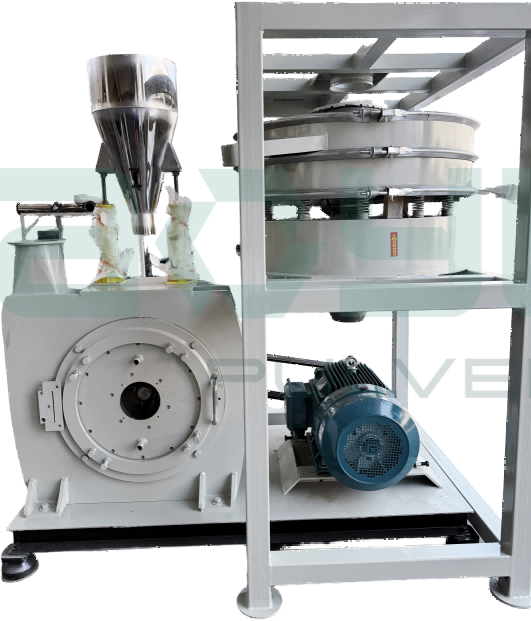
Getting the basics right is essential, but sometimes your production needs demand more than a standard setup. When you operate a PE PP Pulverizer Machine, you might notice that specific material challenges—like metal contaminants or excessive fine dust—start to impact your bottom line. Adding optional accessories is often the smartest way to address these issues without replacing your entire line. These upgrades help you maintain high purity levels while keeping your machine running at peak performance.
Accessory | Primary Benefit | Best Use Case |
Pulse Dust Collector | Superior air quality | High-volume dust management |
Metal Separator | Protects grinding discs | Processing recycled plastic scrap |
Vacuum Feeder | Consistent throughput | High-speed, automated lines |
If you find that your final powder contains unwanted metallic traces, a metal separator is a must-have addition. It sits before the grinding chamber to catch stray screws or wire fragments before they reach your expensive discs. Similarly, a pulse dust collector is a fantastic investment if you are struggling with airborne particles in your facility. It keeps the air clean and ensures that your cooling system does not get clogged with fine powder buildup.
● Customized Engineering: Sometimes, off-the-shelf equipment simply cannot handle the unique properties of complex plastics like HDPE or EVA. Manufacturers like Maoyue specialize in providing tailored pulverizing solutions that address these specific material requirements. They work with you to adjust the internal geometry of the grinding chamber, ensuring that your PE PP Pulverizer Machine handles difficult materials with optimal efficiency.
● Tailored Performance: By choosing a custom configuration, you avoid the common pitfalls of forced operation. Maoyue understands that every production environment is different, so they focus on building systems that align with your specific throughput goals. This level of professional support ensures that your equipment remains a reliable asset rather than a constant maintenance headache.
● Long-Term Reliability: Investing in professional-grade accessories and custom builds pays off through reduced downtime and higher product quality. When your machine is perfectly matched to the material it processes, you spend far less time troubleshooting and more time meeting your delivery deadlines. It is about creating a workflow that supports your business growth instead of holding it back.
When you reach a point where your current output quality hits a plateau, consider reaching out to experts who understand the nuances of plastic pulverization. They can help you identify exactly which component is causing the bottleneck. Whether it is adding a more efficient cooling system or upgrading to a pulse dust collector, these targeted improvements make a world of difference. You will find that a well-equipped PE PP Pulverizer Machine is much easier to manage and far more productive over the long run.
Mastering your PE PP Pulverizer Machine requires balancing disc gaps, airflow, and rotor speed.
Start with a 0.2–0.3 mm gap for HDPE or PP materials. Always fine-tune your settings based on your sieve results.
Consistent maintenance remains the foundation of a high-performing production line. Choose the right components to ensure long-term success. With these steps, you can achieve perfect powder fineness every single day.


