Specializing in the production of Plastic Pulverizer Machines.

Views: 0 Author: Site Editor Publish Time: 2026-06-27 Origin: Site
Are you struggling with inconsistent colors in your masterbatch products? The quality of your mixing process could be the culprit.
A plastic pulverizer is essential for achieving fine powder, which enhances mixing quality in masterbatch production. Masterbatch, a concentrated mixture of pigments and additives, requires precise mixing for optimal performance.
In this article, we’ll explore how plastic pulverizers work, the benefits of fine powder, and why mixing quality is crucial for your production success.
Fine powder plays a crucial role in the masterbatch production process. Simply put, fine powder consists of small particles that enhance the mixing and dispersion of additives and pigments.
● Definition and Characteristics: Fine powder typically refers to particles that are smaller than those found in standard granules. The size range relevant for masterbatch applications is usually between 20 to 120 mesh. This particle size ensures optimal interaction during mixing.
● Typical Particle Size Range: For masterbatch production, the ideal particle size falls within this range:
○ 20-40 mesh: Coarser powders for specific applications.
○ 60-80 mesh: Commonly used sizes for most masterbatches.
○ 100-120 mesh: Finer powders that provide excellent dispersion.
Utilizing fine powder in masterbatch production offers several advantages. Here are some key benefits:
● Enhanced Dispersion of Additives and Pigments: Fine powders ensure that pigments and additives are evenly distributed throughout the polymer matrix. This uniform dispersion is critical for achieving consistent color and quality in the final product. Inconsistent mixing can lead to defects such as streaking or uneven coloration.
● Improved Adhesion and Interaction with Resins: When fine powders are used, they create a larger surface area for interaction with the resin. This increased surface area improves adhesion between the pigments and the base polymer, resulting in better mechanical properties and overall performance.
Particle Size (mesh) | Dispersion Quality | Adhesion Strength | Application Suitability |
20-40 | Moderate | Good | Specific applications |
60-80 | High | Very Good | General masterbatch use |
100-120 | Excellent | Exceptional | High-performance products |
To achieve the desired fine powder, using a Plastic Pulverizer is essential. This equipment efficiently reduces materials to the required particle size while maintaining quality. For instance, the MYMF-600 model from Changzhou Maoyue Intelligent Equipment Co., Ltd. is designed specifically for producing fine powders for masterbatch applications. Its advanced technology ensures precise control over particle size, which directly contributes to improved mixing quality.
In summary, fine powder is fundamental to the success of masterbatch production. It enhances dispersion, improves adhesion, and ultimately leads to a higher quality product. By leveraging the capabilities of a plastic pulverizer, manufacturers can ensure they meet the demands of their applications while optimizing production efficiency.
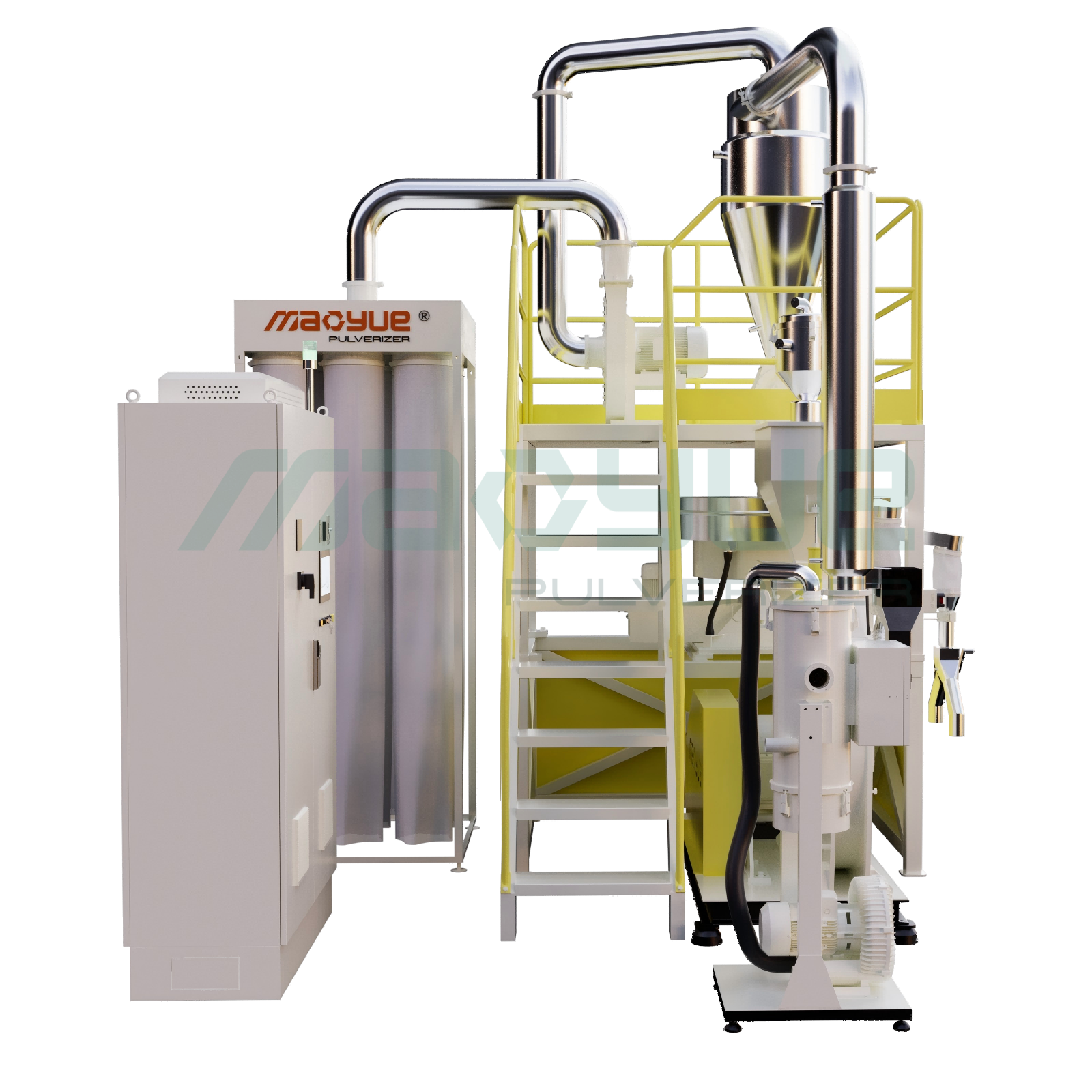
Plastic pulverizers are essential tools in the production of fine powders for masterbatch applications. They operate through a straightforward yet effective pulverizing process. Here’s how it works:
● Description of the Pulverizing Process: The process begins with the feed material being introduced into the pulverizer. As the material enters, it is subjected to high-speed rotation from the grinding discs. This rotation creates intense friction and shear forces, effectively breaking down the material into fine particles. The finely ground powder is then transported through an airflow system that helps in controlling the particle size.
● Key Components of a Plastic Pulverizer:
○ Grinding Discs: These are the heart of the pulverizer. They come in various designs, allowing for customized grinding based on the material being processed. The gap between the discs can be adjusted to achieve the desired particle size.
○ Airflow Systems: This system plays a crucial role in transporting the powdered material and maintaining the right temperature during the grinding process. Proper airflow prevents overheating, which could degrade the quality of the powder.
There are several models of plastic pulverizers available, each tailored for specific applications. Here’s a look at some popular options:
● Overview of Different Models:
○ MYMF-600: Designed specifically for PE masterbatch production, this model features high grinding efficiency and a robust cooling system. It can handle a wide range of materials, producing fine powders with excellent consistency.
○ Model 800: This model is versatile and suitable for various plastics, including HDPE and PVC. It offers adjustable grinding settings, making it a flexible choice for manufacturers.
Model | Power (kW) | Grinding Disc Diameter (mm) | Capacity (kg/h) | Typical Applications |
MYMF-600 | 55-75 | 600 | 300-500 | PE masterbatch production |
Model 800 | 75-132 | 800 | 550-950 | HDPE, PVC, recycling |
Changzhou Maoyue Intelligent Equipment Co., Ltd. is a key player in this space, providing advanced models like the MYMF-600. Their expertise in designing efficient plastic pulverizers has made them a trusted name in the industry.
Using a plastic pulverizer like the MYMF-600 not only enhances the quality of the end product but also improves overall production efficiency. By ensuring the right particle size and quality, manufacturers can achieve better mixing and dispersion of additives, leading to superior masterbatch performance.
In summary, understanding how plastic pulverizers work is crucial for anyone involved in masterbatch production. These machines are vital for achieving the fine powders necessary for high-quality products.
Achieving the right particle size is crucial in masterbatch production. This is where plastic pulverizers shine.
● Importance of Uniform Particle Size Distribution: A consistent particle size ensures even dispersion of pigments and additives. This uniformity is key to preventing defects like color streaks in the final product. It also enhances the overall mechanical properties of the masterbatch.
● How Pulverizers Achieve Precise Control: Plastic pulverizers allow operators to adjust the gap between grinding discs. This adjustability lets manufacturers fine-tune the particle size according to specific requirements. Advanced models, like the MYMF-600 from Changzhou Maoyue Intelligent Equipment Co., Ltd., feature sophisticated controls for precise adjustments, ensuring optimal results.
Contamination can severely impact the quality of masterbatch products.
● Built-in Metal Separators and Fully Enclosed Designs: Many modern plastic pulverizers include built-in metal separators. These components help remove unwanted metallic particles during the grinding process. Fully enclosed designs further minimize contamination risks by preventing external particles from entering the system.
● Impact on Masterbatch Purity: By reducing contamination, these features preserve the purity of the masterbatch. This purity is vital for maintaining consistent color and performance in the final products.
Cooling is essential during the pulverization process to maintain material integrity.
● Role of Cooling in Preventing Material Degradation: Excessive heat can degrade polymers, affecting their properties. Efficient cooling systems help maintain optimal temperatures, ensuring that the material retains its quality throughout the grinding process.
● Types of Cooling Methods Used: Many plastic pulverizers utilize a combination of water and air cooling. This dual approach effectively dissipates heat and keeps the material stable. For instance, the MYMF-600 model employs a robust cooling system that enhances efficiency and product quality.
Durability is a significant factor when selecting a plastic pulverizer.
● Benefits of Using High-Hardness Steel Grinding Discs: These grinding discs are designed to withstand the rigors of continuous operation. Using high-hardness steel not only extends the life of the components but also ensures consistent performance over time.
● Long Service Life and Stable Performance: Because of their robust construction, wear-resistant components contribute to reduced maintenance costs and downtime. This reliability is essential for manufacturers aiming to optimize production efficiency.
Feature | Description | Benefits |
Precise Particle Control | Adjustable grinding disc gap | Ensures uniform particle size |
Low Contamination Design | Built-in metal separators | Preserves masterbatch purity |
Efficient Cooling Systems | Water and air cooling methods | Prevents material degradation |
Wear-Resistant Components | High-hardness steel grinding discs | Long service life and stable performance |
Understanding these core features of plastic pulverizers can significantly impact the quality of masterbatch production. By focusing on precise control, contamination prevention, effective cooling, and durability, manufacturers can enhance their processes and achieve superior results.
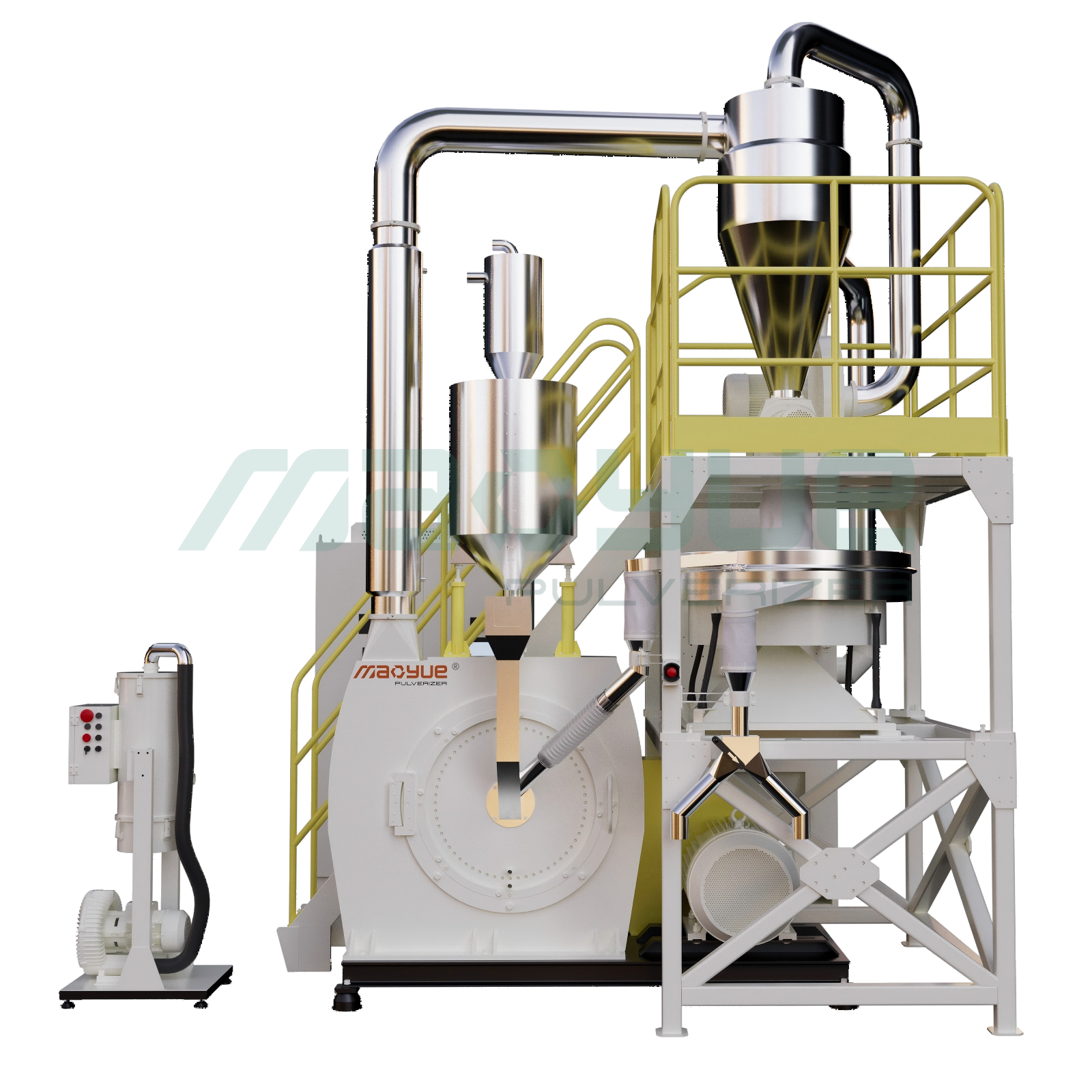
Fine powder plays a vital role in achieving uniform dispersion of additives in masterbatch production.
● How Fine Powder Contributes to Even Dispersion: When the particle size is reduced, fine powders create a larger surface area. This increased surface area allows for better interaction between the pigments and the base polymer. As a result, additives blend more evenly, ensuring consistent color and performance.
● Avoidance of Color Streaks and Localized Density Differences: Uniform dispersion helps prevent common issues like color streaks or variations in density. When additives are evenly distributed, the final product exhibits a uniform appearance and consistent properties, which is crucial for customer satisfaction.
Using fine powder significantly enhances mixing efficiency in the production process.
● Larger Specific Surface Area Benefits: Fine powders have a larger specific surface area compared to coarser materials. This characteristic improves the adhesion of additives to the polymer matrix, facilitating a more effective mixing process.
● Reduced Mixing Time and Energy Consumption: Because fine powders mix more easily, manufacturers can achieve the desired blend in less time. This efficiency not only speeds up production but also reduces energy consumption, leading to lower operational costs.
The use of fine powder contributes to stable product performance, which is essential in the competitive market.
● Consistency in Final Product Properties: Fine powders ensure that each batch of masterbatch maintains consistent quality. This consistency is vital for applications where precise color matching and mechanical properties are required.
● Reduction of Defects and Variability: By minimizing the risk of uneven mixing, fine powders help reduce defects in the final product. This reduction in variability leads to fewer customer complaints and higher satisfaction rates.
Benefit | Description |
Uniform Dispersion | Ensures even mixing of additives and pigments |
Avoidance of Color Streaks | Reduces visual defects in the final product |
Enhanced Mixing Efficiency | Shortens mixing time and lowers energy costs |
Stable Product Performance | Maintains consistent quality across batches |
The impact of fine powder on mixing quality in masterbatch production cannot be overstated. By utilizing a Plastic Pulverizer to achieve the right particle size, manufacturers can enhance dispersion, improve efficiency, and ensure stable product performance. This approach ultimately leads to better quality products and greater customer satisfaction.
Plastic pulverizers are essential for masterbatch production. They ensure fine powder, which improves mixing quality and product consistency. Key points include uniform dispersion, enhanced mixing efficiency, and stable product performance.
Looking ahead, innovations in plastic pulverization technology will continue to meet the evolving needs of the masterbatch industry. As manufacturers seek better quality and efficiency, advancements will play a critical role in shaping future production processes.
A: Plastic pulverizers can process materials like HDPE, PP, PVC, EVA, and PET, making them suitable for various applications.
A: Consider factors like the material type, desired particle size, production capacity, and specific application requirements.
A: Regular maintenance includes checking grinding discs, cleaning the cooling system, and inspecting for wear and tear to ensure optimal performance.
A: Yes, plastic pulverizers are effective in recycling processes, allowing for the reprocessing of various plastic materials into fine powders.


