English


Views: 0 Author: Site Editor Publish Time: 2026-11-26 Origin: Site
TPU is known for its excellent elasticity, flexibility, and wear resistance. It is widely used in footwear materials, automotive components, hot-melt adhesives, textile composites, and various industrial products.
In some manufacturing processes, TPU needs to be converted from pellets into fine powder to meet the requirements of powder coating, hot-melt bonding, and other powder-processing applications.
However, compared with many rigid plastics, TPU is more difficult to pulverize. Its high elasticity and toughness can cause the material to deform during grinding, while frictional heat may soften the material, leading to sticking and agglomeration.
So, how can TPU pellets be pulverized into fine powder? Is conventional mechanical grinding sufficient, or is cryogenic grinding with liquid nitrogen necessary?
This article explains the TPU pulverizing process, grinding methods, particle size control, equipment selection, and how to evaluate actual qualified powder output.
TPU presents several challenges during mechanical grinding.
When TPU pellets are subjected to mechanical forces, they may compress and deform rather than break immediately. This can reduce grinding efficiency, especially when processing highly elastic TPU grades.
Continuous contact between the material and grinding components generates frictional heat. If the temperature becomes too high, TPU may soften and stick to the grinding discs, causing material buildup or powder agglomeration.
Not all TPU grades can achieve the same particle size requirements through conventional mechanical grinding.
Before selecting a pulverizing solution, several factors need to be evaluated:
Shore hardness: Shore A or Shore D hardness can provide an initial indication of material properties.
Elasticity and formulation: Highly elastic TPU grades may require different grinding conditions.
Thermal properties: The material's softening characteristics affect temperature control during grinding.
Target particle size: Fine powder generally requires more demanding grinding and classification conditions.
Powder quality: Particle size distribution, particle morphology, and flowability may affect downstream applications.
Some TPU grades can be processed using conventional mechanical grinding, while others may require cryogenic treatment to achieve the desired particle size.
Therefore, actual material testing is recommended before purchasing a TPU pulverizer.
TPU pulverizing generally involves several stages, including raw material preparation, grinding, temperature control, screening, and powder collection.

Check the TPU grade, pellet size, moisture condition, and material cleanliness.
Moisture, impurities, or mixed TPU grades may affect powder quality and production stability. Whether drying, cleaning, or other pretreatment is necessary should be determined according to the material supplier's recommendations and actual processing conditions.

Choose the grinding equipment and process according to the TPU grade, hardness, elasticity, and target particle size.
For TPU materials that can be processed under conventional temperature conditions, a disc-type plastic pulverizer can be evaluated.
If the material easily deforms, softens, or sticks during conventional grinding, or cannot achieve the required particle size, cryogenic grinding should be considered.

Frictional heat generated during grinding must be properly controlled to reduce the risk of TPU softening and sticking.
Depending on the equipment structure and material requirements, air cooling and water cooling can be used to control operating temperatures.
However, conventional air cooling and water cooling are not equivalent to cryogenic grinding. They mainly help remove heat generated during equipment operation and cannot provide the deep-cooling conditions required to embrittle certain TPU grades.

After grinding, the material passes through a screening system to separate qualified powder from oversized particles.
If the production line is equipped with a recirculation system, oversized particles can be returned to the grinding chamber for further processing.
Screening and collection efficiency affect powder recovery, production stability, and final product consistency.
The choice between conventional mechanical grinding and cryogenic grinding depends on the properties of the TPU material.
Comparison |
Conventional Mechanical Grinding |
Liquid Nitrogen Cryogenic Grinding |
|---|---|---|
Basic principle |
Reduces particle size through mechanical grinding under conventional temperature conditions |
Cools the material to reduce its toughness before grinding |
Material condition |
Retains its normal material properties under conventional temperatures |
Is cooled to a low temperature suitable for grinding |
Suitable materials |
TPU grades that can achieve the target particle size under conventional conditions |
TPU grades that are difficult to break or cannot achieve the required fineness at normal temperatures |
Temperature control |
Focuses on controlling frictional heat generated during grinding |
Requires control of both pre-cooling and grinding temperatures |
System requirements |
Pulverizer with appropriate cooling configurations |
Additional cryogenic cooling equipment and supporting systems |
Operating costs |
Mainly electricity, cooling, and maintenance costs |
Also includes liquid nitrogen consumption and cryogenic system costs |
When TPU can be sufficiently broken down under conventional temperature conditions without significant deformation or sticking, conventional mechanical grinding can be considered.
Air cooling and water cooling can help control frictional heat generated during grinding. However, the actual cooling performance depends on the material properties, equipment configuration, and operating conditions.
If conventional grinding already meets the required particle size and powder quality, additional investment in cryogenic equipment and liquid nitrogen consumption may be avoided.
If TPU remains highly elastic at normal temperatures, easily deforms or sticks, or cannot achieve the required particle size after conventional grinding, cryogenic grinding should be evaluated.
Liquid nitrogen cryogenic grinding lowers the material temperature, making TPU more brittle and improving its ability to break during grinding.
However, not all TPU grades require liquid nitrogen, and using liquid nitrogen does not guarantee a specific particle size or production capacity.
The required cooling temperature, liquid nitrogen consumption, and grinding configuration should be determined through actual material testing.
The final decision should consider grinding results, powder specifications, and overall production costs rather than simply comparing the two grinding methods.
TPU powder particle size is commonly expressed in microns or mesh sizes.
However, mesh size and the actual particle size distribution are not exactly the same.
The following table shows approximate conversions for commonly used screen specifications.
These values are based on commonly used US standard sieve specifications. Actual aperture sizes should be confirmed according to the applicable screening standard.
Mesh Size |
Approximate Aperture Size |
|---|---|
20 mesh |
850 μm |
30 mesh |
600 μm |
40 mesh |
425 μm |
60 mesh |
250 μm |
80 mesh |
180 μm |
100 mesh |
150 μm |
These values are provided only as references for common screen aperture sizes. They do not mean that every TPU pulverizer can consistently achieve these particle sizes.
For example, if a customer requires 80-mesh TPU powder, it is necessary to clarify whether the requirement means passing through an 80-mesh screen or achieving a specific particle size distribution.
For applications with higher powder quality requirements, particle size parameters such as D10, D50, and D90 should also be considered.
Therefore, when purchasing equipment, buyers should clearly define the target particle size, allowable oversized particle content, and testing methods.
In addition to the properties of TPU itself, equipment parameters and production conditions also affect the final powder quality.
For disc-type plastic pulverizers, the grinding disc gap affects the degree of material grinding.
A gap that is too large may result in a higher proportion of coarse particles, while a gap that is too small may increase frictional heat and equipment load.
The gap should be adjusted according to the TPU grade and target particle size.

Excessive feeding may cause material accumulation inside the grinding chamber, increasing equipment load and temperature.
A stable feeding rate helps maintain continuous and consistent grinding.
Insufficient cooling may cause TPU to soften or stick to grinding components.
The cooling system should be configured according to the material properties and actual operating conditions.
An unsuitable screening configuration or material accumulation in the collection system may reduce powder recovery efficiency and affect final product consistency.
Common Problem |
Possible Causes |
Recommended Checks |
|---|---|---|
TPU pellets are difficult to grind into fine powder |
High material elasticity or unsuitable grinding method |
Check the TPU grade, hardness, and whether cryogenic grinding is required |
Powder sticks to grinding discs |
Frictional heat or material softening |
Check temperature, cooling, and feeding conditions |
Powder agglomeration |
Temperature rise, static electricity, or material surface properties |
Check cooling, screening, and collection conditions |
Uneven particle size |
Fluctuations in grinding gap, feeding, or screening |
Check equipment parameters and classification efficiency |
Low qualified powder output |
Insufficient fine powder generation or low screening efficiency |
Measure the actual amount of qualified powder collected |
Unstable continuous operation |
Material accumulation, heat buildup, or inconsistent feeding |
Conduct continuous-load testing |
It is important to note that TPU powder agglomeration is not necessarily caused entirely by grinding temperature. Static electricity, powder morphology, and environmental conditions may also affect powder flowability and collection.
Therefore, the source of the problem should be identified before adjusting the equipment to avoid unnecessary replacement of grinding components.
Selecting a TPU pulverizer should involve more than comparing motor power or rated processing capacity. The following factors should also be evaluated.
Provide the equipment manufacturer with the TPU grade, hardness, and actual pellet samples to evaluate whether the equipment is suitable for processing the material.
Clearly define the target mesh size, screening pass rate, and particle size distribution requirements.
Confirm how much powder meeting the required specifications the machine can produce per hour, rather than relying only on its nominal processing capacity.
Determine whether air cooling, water cooling, or cryogenic grinding is appropriate based on actual material testing results.
Understand the materials, manufacturing processes, replacement costs, and supply availability of wear parts such as grinding discs and blades.
Depending on production requirements, evaluate PLC control, temperature monitoring, current monitoring, and other operating data management functions.
Equipment should be selected based on verified material processing results rather than technical specifications alone.
Equipment processing capacity is not the same as the final amount of powder that can be sold or used in production.
For TPU pulverizing projects, three different indicators should be distinguished:
Processing Capacity: The weight of raw material fed into the equipment per unit of time.
Actual Powder Output: The weight of powder obtained after grinding and collection.
Qualified Powder Output: The weight of powder that meets the customer's particle size and quality requirements.
The formula for calculating the qualified powder yield is:
Qualified Powder Yield = Qualified Powder Weight ÷ Input Raw Material Weight × 100%
For example:
Assume a machine processes 500 kg of TPU pellets per hour. After grinding and screening:
Input raw material: 500 kg/h
Collected powder: 420 kg/h
Powder meeting the target particle size: 380 kg/h
Therefore:
Qualified Powder Yield = 380 ÷ 500 × 100% = 76%
This means the machine actually produces 380 kg of qualified TPU powder per hour.
For production lines that recirculate oversized particles for further grinding, the material accounting method should also be clearly defined to avoid double-counting.
Therefore, when evaluating a TPU pulverizer, buyers should focus on qualified powder output under specified material and particle size conditions, rather than relying solely on the machine's nominal processing capacity.
Actual material testing is an important step in evaluating a TPU pulverizing solution.
During testing, the following information should be recorded:
TPU grade and Shore hardness;
Raw material pellet size;
Grinding method used;
Equipment operating parameters;
Temperature changes during grinding;
Final powder screening results;
Powder collection weight and qualified powder output.
These results help determine whether the TPU material is suitable for conventional mechanical grinding, whether cooling adjustments are necessary, and whether the equipment configuration can meet the required particle size and production capacity.
Different TPU grades should not be evaluated using the same processing assumptions. Testing with the customer's actual material provides a more reliable basis for equipment selection.
Mao Yue is a manufacturer specializing in the development and production of plastic pulverizing equipment, with more than 30 years of experience in plastic pulverizer manufacturing and development.
For TPU pulverizing projects, we focus not only on whether the equipment can operate, but also on material compatibility, final powder quality, qualified powder output, and long-term maintenance costs.

Mao Yue has in-house manufacturing capabilities for core grinding components, including grinding disc tooling, machining, and precision grinding processes.
Core grinding components, including grinding discs and blades, are manufactured in our own factory.
This allows customers to have greater visibility into component manufacturing quality, spare parts availability, and future maintenance requirements, reducing dependence on external component suppliers.
For TPU pulverizing projects requiring long-term continuous production, in-house manufacturing of core components also helps improve the control and reliability of spare parts supply and maintenance arrangements.
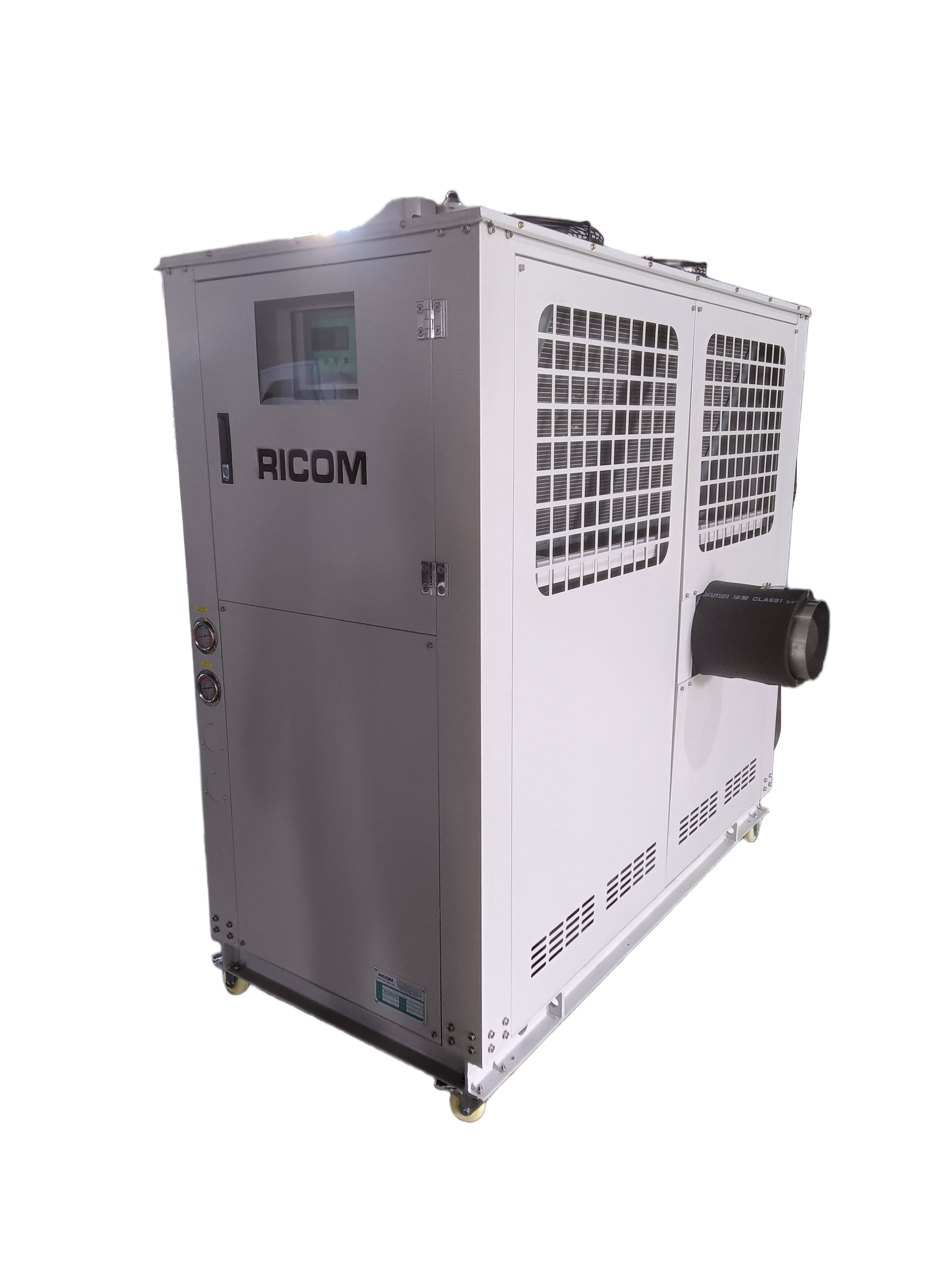
Different TPU grades have different temperature control requirements.
Depending on the equipment model and actual material testing results, Mao Yue can evaluate cooling configurations such as air cooling and water cooling.
For TPU materials requiring cryogenic treatment, the cryogenic grinding process and supporting equipment should be evaluated separately.
Conventional cooling systems cannot replace liquid nitrogen cryogenic grinding.
By determining the cooling configuration according to material characteristics, customers can avoid unsuitable cooling solutions and unnecessary equipment investment.

A TPU pulverizer should be selected according to actual processing requirements rather than simply applying a standard machine model.
Mao Yue recommends that customers provide actual TPU pellets for evaluation. The key testing points include:
Whether the material is suitable for pulverizing;
Whether the target particle size can be achieved;
Final powder quality and particle size distribution;
Actual qualified powder output;
The appropriate grinding method and cooling configuration.
Through actual material testing, processing feasibility can be verified before equipment investment, reducing the risk of selecting equipment that does not match the customer's production requirements.
Our focus is not simply on how much raw material a machine can process per hour, but on how much qualified TPU powder customers can actually obtain.

Grinding discs and blades directly affect equipment performance and maintenance costs.
With our in-house manufacturing capabilities for core components, Mao Yue can provide customers with more direct spare parts supply and equipment maintenance support.
We also provide technical assistance and on-site after-sales service to help customers address issues during equipment installation, commissioning, and production.
No. Some TPU materials can be processed using conventional mechanical grinding after proper testing. If the material is difficult to break or cannot achieve the required particle size, cryogenic grinding should be further evaluated.
No. Finer powder may increase grinding difficulty, energy consumption, and the risk of agglomeration. The ideal particle size should be determined by the downstream application, while also considering particle size distribution, flowability, and processing performance.
Customers are advised to provide the TPU grade, Shore hardness, raw material form, target mesh size or particle size distribution, expected production capacity, and final application.
Providing actual TPU pellet samples will make it easier to evaluate and verify the grinding solution.
The specified TPU material should be tested, with records of raw material input, powder collection weight, screening results, and qualified powder output.
Actual production capacity should not be determined solely by the equipment's rated processing capacity.
Converting TPU pellets into fine powder requires comprehensive consideration of material properties, grinding methods, temperature control, particle size requirements, and actual qualified powder output.
Some TPU materials can be processed using conventional mechanical grinding, while others may require cryogenic treatment.
The most reliable way to select a TPU pulverizer is to start with actual material testing and determine the appropriate equipment configuration based on final powder quality and production performance.
Are you looking for a TPU pulverizer or a complete TPU powder production solution?
Send your TPU grade, Shore hardness, pellet samples, target mesh size, and production capacity requirements to Mao Yue.
With more than 30 years of experience in plastic pulverizer development and manufacturing, together with in-house production capabilities for core grinding components, Mao Yue can evaluate your grinding process and recommend suitable equipment configurations based on actual material testing results.
Contact Mao Yue to discuss your TPU pulverizing requirements and request an actual material grinding test.

