English


Views: 0 Author: Site Editor Publish Time: 2026-11-04 Origin: Site
During color masterbatch pulverizing, prolonged equipment operation may lead to an increase in coarse particles, unstable particle size distribution, reduced qualified powder output, or higher processing temperatures. These changes may be related to grinding disc wear, but they can also be influenced by raw materials, feeding conditions, cooling performance, or screening efficiency.
Grinding discs are critical components of a color masterbatch pulverizer. Their cutting edge condition, tooth geometry, and operating gap directly influence the pulverizing process. As the grinding discs gradually wear, the equipment may continue operating normally but become less capable of consistently producing powder that meets the required specifications.
Therefore, determining whether grinding discs need regrinding or replacement should not depend solely on the degree of wear. Particle size distribution, qualified powder output, and continuous operating performance should also be evaluated.
This article explains the main causes of grinding disc wear, its effects on color masterbatch powder quality and production output, practical diagnostic methods, and how Mao Yue helps customers select suitable maintenance and replacement solutions through in-house grinding disc manufacturing and application evaluation.
Color masterbatch typically consists of polymer carriers, pigments, fillers, and other additives. During pulverizing, the material continuously comes into contact with rotating and stationary grinding discs, undergoing cutting, impact, and friction. Over time, the cutting edges and tooth profiles of the grinding discs gradually change.
The rate of wear is mainly influenced by the following factors:
Material formulation and fillers: Certain hard inorganic pigments or mineral fillers may increase abrasive wear, depending on their hardness, concentration, and particle characteristics.
Grinding disc gap and operating conditions: An excessively narrow gap, improper alignment, abnormal contact, or unstable feeding may increase localized mechanical loads and wear risks.
Operating time and material contaminants: Wear accumulates during prolonged operation, while hard foreign particles entering the grinding chamber may cause edge chipping or localized damage.
Different types of grinding disc wear may affect pulverizing performance in different ways.
Type of Wear |
Changes to the Working Surface |
Potential Technical Effects |
|---|---|---|
Cutting edge dulling |
Cutting edges gradually become rounded and blunt |
Reduced effective cutting performance and a possible increase in coarse particles |
Tooth profile wear |
Original tooth geometry gradually changes |
Changes in material cutting behavior and potentially wider particle size distribution |
Uneven wear |
Different areas experience different degrees of wear |
Inconsistent local operating gaps and pulverizing performance |
Localized edge chipping |
Parts of the tooth surface or cutting edges become damaged |
Abnormal pulverizing performance and potential mechanical safety concerns |
Grinding disc wear involves more than the gradual dulling of cutting edges. It may also change tooth geometry, local operating gaps, and the forces acting on materials within the grinding zone.
When effective cutting action decreases, the material may require repeated processing to reach the target particle size, potentially affecting powder quality, mechanical load, and processing temperature.
The actual effects depend on grinding disc design, material properties, and operating conditions. Therefore, grinding disc service life should not be determined solely by operating hours.
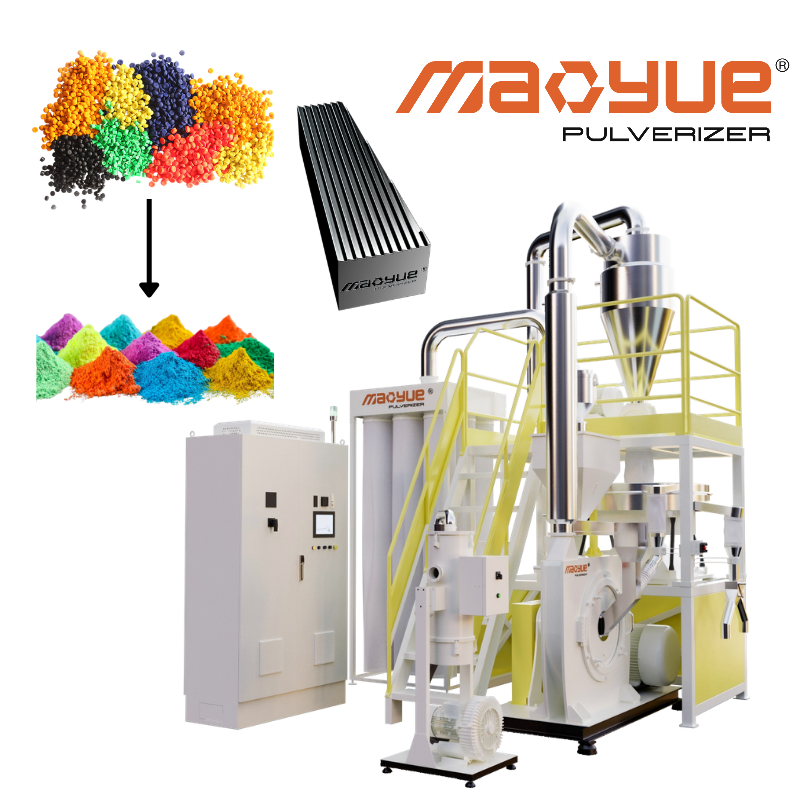
Grinding disc wear may affect particle size distribution, qualified powder output, processing temperature, and continuous production stability.
As grinding disc cutting edges become dull or tooth geometry changes, effective cutting action may decrease, while repeated friction or compression of the material may increase.
Under similar raw material and operating conditions, worn grinding discs may produce a higher proportion of coarse particles or a wider particle size distribution.
Some operators attempt to compensate for reduced cutting performance by narrowing the grinding disc gap. However, excessive gap adjustment may increase the proportion of fine particles, frictional heat, or mechanical load.
Therefore, grinding disc performance should not be evaluated solely by whether the powder reaches the target mesh size. The complete particle size distribution (PSD), including coarse and fine particle fractions, should also be considered.
Grinding disc wear does not necessarily cause an immediate reduction in equipment throughput. In some cases, the feeding rate and actual collected powder output remain relatively stable, while the proportion of powder meeting the required specifications decreases.
Three key indicators should be distinguished:
Indicator |
Definition |
Evaluation Purpose |
|---|---|---|
Feed rate |
Mass of raw material entering the pulverizing system per hour (kg/h) |
Indicates actual material feeding throughput |
Actual collected powder output |
Mass of powder collected per hour (kg/h) |
Indicates the amount of powder recovered |
Qualified powder output |
Mass of collected powder meeting the target specifications per hour (kg/h) |
Indicates actual usable powder production capacity |
Qualified Powder Output = Actual Collected Powder Output × Qualified Powder Percentage
For example, consider a color masterbatch pulverizer with a feed rate of 500 kg/h and an actual collected powder output of 480 kg/h.
When the qualified powder percentage is 80%, qualified powder output is 384 kg/h.
When the qualified powder percentage decreases to 65%, qualified powder output falls to 312 kg/h.
Even if the feed rate and collected powder output remain unchanged, qualified powder output decreases by 72 kg/h, representing an 18.75% reduction.
This is a calculation example only and does not represent actual Mao Yue test data. The difference between feed rate and collected powder output should not automatically be treated as material loss, as material retained within the system and measurement conditions must also be considered.
For manufacturers, qualified powder output provides a more meaningful indication of how grinding disc wear affects actual production efficiency than equipment throughput alone.
When grinding disc cutting efficiency decreases, more mechanical energy may be dissipated through friction and repeated material deformation, increasing heat generation during pulverizing.
For certain heat-sensitive color masterbatch formulations, higher processing temperatures may cause polymer softening, material adhesion, or powder agglomeration, affecting powder discharge and production stability.
However, a temperature increase alone does not confirm grinding disc wear. Cooling system performance, feeding rate, and raw material properties should also be examined.
Uneven grinding disc wear may cause variations in local pulverizing conditions, leading to fluctuations in particle size distribution or qualified powder output during continuous operation.
When the grinding discs can no longer consistently meet the required powder specifications, operators may need to adjust the grinding gap frequently, reduce the feeding rate, or stop the equipment for maintenance.
Therefore, grinding disc performance should be evaluated using continuous production data under stable operating conditions rather than relying solely on short-duration test runs.
An increase in coarse particles, higher processing temperatures, or reduced qualified powder output does not necessarily mean that the grinding discs need replacement.
Diagnosis should begin by identifying abnormal operating symptoms, followed by inspection and controlled testing to determine the actual cause.
Operating Symptoms |
Priority Inspection Areas |
Key Verification Methods |
|---|---|---|
Continuous increase in coarse particles |
Grinding disc cutting edges, tooth geometry, and screening mesh |
Compare PSD results and grinding disc condition |
Wider particle size distribution |
Grinding disc gap and feeding stability |
Compare particle size distribution under similar operating conditions |
Higher processing temperature |
Grinding discs, cooling system, and feeding rate |
Compare temperature profiles and operating records |
Reduced qualified powder output |
Grinding discs, screening, and powder collection systems |
Measure collected powder output and qualified powder percentage |
Frequent grinding gap adjustments |
Cutting edge wear, tooth geometry, and installation condition |
Check grinding disc dimensions and actual operating gap |
This table is intended to help narrow down potential causes. Grinding disc wear should not be confirmed based on a single symptom.
After safely shutting down the equipment, disconnecting the power supply, and completing the required lockout procedures, inspect the grinding disc cutting edges, tooth geometry, localized damage, and uneven wear.
Where necessary, measure critical dimensions and the operating gap, then compare the results with the tolerances specified by the equipment manufacturer.
At the same time, verify whether raw material batches, feed particle sizes, cooling performance, screening conditions, or powder collection conditions have changed.
This helps prevent problems in other parts of the system from being incorrectly attributed to grinding disc wear.
Where equipment design and testing conditions permit, use the same material to compare worn grinding discs with grinding discs in good condition that are properly matched to the equipment.
During testing, keep the material formulation, feeding conditions, cooling conditions, and screen specifications as consistent as possible.
Record the actual grinding disc gap, equipment load, and sampling time after stable operation has been established.
If the grinding discs being compared have different geometries or structural designs, these differences should be clearly documented to avoid attributing all performance changes directly to wear.
Test Indicator |
Main Evaluation Purpose |
|---|---|
Particle size distribution (PSD) |
Evaluate powder consistency and changes in particle size |
Coarse and fine particle fractions |
Determine the proportion of powder outside the target particle size range |
Feed rate (kg/h) |
Confirm actual material processing conditions |
Actual collected powder output (kg/h) |
Evaluate powder recovery quantity |
Qualified powder output (kg/h) |
Evaluate effective production capacity |
Processing temperature |
Identify temperature changes during pulverizing |
Specific energy consumption per kilogram of qualified powder (kWh/kg) |
Compare energy efficiency in producing qualified powder |
Continuous operation records |
Evaluate the stability of powder quality and production output |
If particle size distribution, qualified powder output, or temperature performance improves after the grinding discs are repaired or replaced, while other operating conditions remain substantially unchanged, the results can provide further evidence of the effects of grinding disc wear.
However, if the improvement is insignificant, the raw materials, screening system, cooling system, and powder collection system should be investigated further rather than automatically attributing the problem to the grinding discs.
Not all worn grinding discs require immediate replacement. The appropriate maintenance method depends on the degree of wear, remaining dimensions, structural design, and actual production requirements.
Grinding Disc Condition |
Recommended Action |
Evaluation Criteria |
|---|---|---|
Minor wear with stable powder quality |
Continue operation and monitor performance |
Dimensions remain within allowable limits and qualified powder output is normal |
Cutting edge wear affecting powder quality |
Evaluate regrinding |
Sufficient regrinding allowance remains and the required tooth geometry can be restored |
Severe localized wear or tooth damage |
Evaluate repair or replacement |
Degree of damage and repair limitations of the disc structure |
Cracks, severe edge chipping, or dimensions outside safe limits |
Stop using the discs and evaluate replacement |
Mechanical safety requirements and manufacturer specifications |
Grinding discs are in good condition but collected powder output decreases |
Inspect other system components |
Check screening, conveying, and powder collection systems |
Grinding disc wear accompanied by a continuous decline in qualified powder output |
Evaluate replacement and verify performance |
Wear measurements, PSD results, and actual production records |
For grinding discs suitable for regrinding, the tooth geometry, dimensions, installation accuracy, and operating gap must still meet the required specifications after regrinding.
If the necessary geometry cannot be restored or insufficient material remains to ensure safe operation, replacement should be considered.
Grinding disc maintenance decisions should not be based solely on the cost of regrinding versus purchasing new discs. Downtime, maintenance frequency, spare parts costs, and qualified powder output should also be considered.
For color masterbatch manufacturers, replacement grinding discs must meet more than basic installation dimensions. Tooth geometry, material selection, manufacturing accuracy, and actual powder requirements are also important.
Mao Yue manufactures plastic pulverizer grinding discs and cutting tools in-house, combining critical component machining, dimensional matching, and application evaluation to provide grinding disc solutions for compatible equipment.
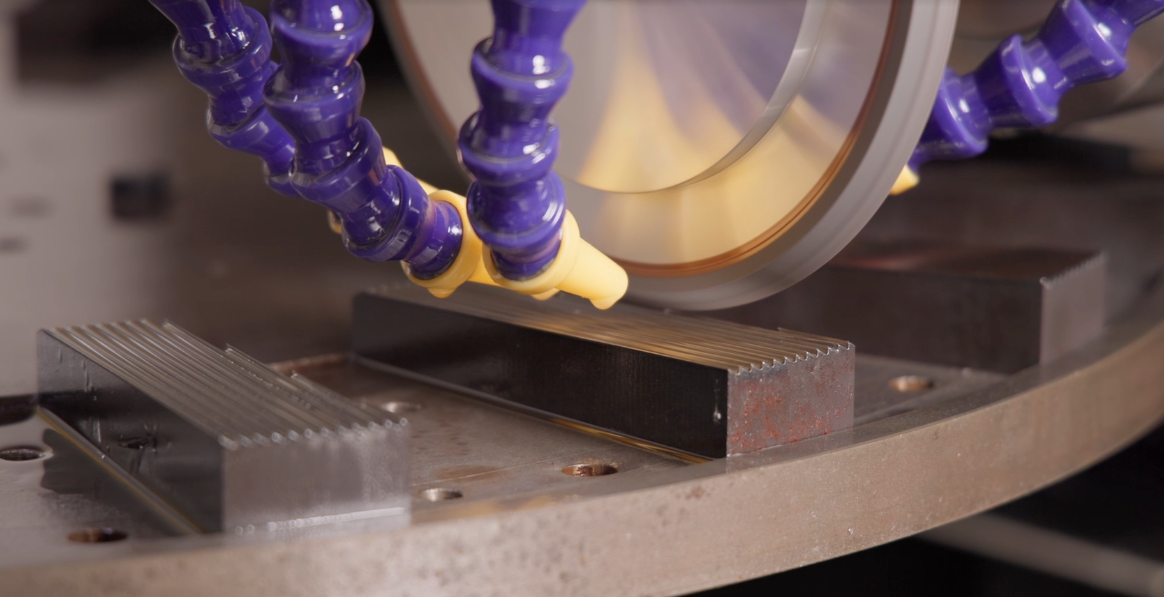
Even when replacement grinding discs have the same outer diameter, differences in thickness, mounting hole positions, tooth geometry, or working surface dimensions may affect installation and pulverizing performance.
Mao Yue has in-house manufacturing capabilities for grinding discs and cutting tools. Based on equipment models, technical drawings, or physical dimensions provided by customers, Mao Yue can evaluate critical mounting dimensions, tooth geometry, and manufacturing requirements.
Through in-house machining and precision grinding, Mao Yue can control critical working surfaces, tooth profiles, and related dimensions during manufacturing rather than relying solely on standard spare part models.
This provides a manufacturing foundation for grinding disc compatibility and machining consistency.
Before purchasing, customers can review grinding disc drawings, critical dimensions, tolerances, and relevant inspection records according to project requirements, helping reduce installation and commissioning risks caused by incompatible spare parts.
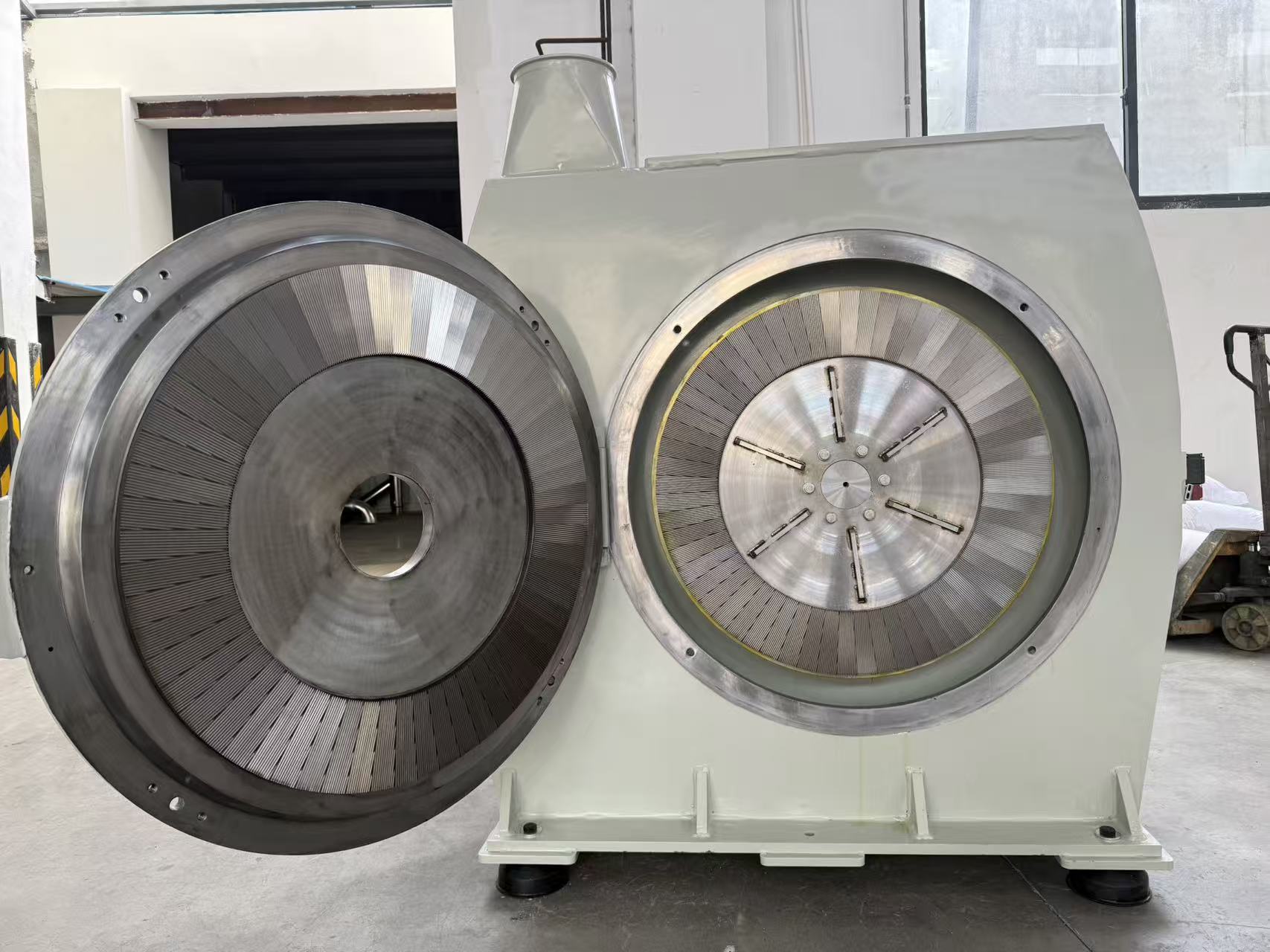
Certain pigments and mineral fillers in color masterbatch may increase grinding disc wear. Therefore, material selection and manufacturing processes are important considerations when choosing grinding discs.
Mao Yue uses DC53 tool steel in applicable grinding disc and cutting tool configurations, combining heat treatment and precision grinding according to component requirements.
Grinding disc wear performance depends not only on the material grade but also on hardness, heat treatment condition, cutting edge geometry, and machining accuracy.
Through material selection and manufacturing process control, Mao Yue provides a foundation for maintaining the intended cutting performance of grinding discs.
Customers can verify material information, hardness inspection records, tooth profile dimensions, and machining tolerances according to specific product requirements.
Actual service life must still be evaluated based on material abrasiveness, operating conditions, and maintenance practices. It cannot be determined solely by the material grade.
Different grinding disc structures have different maintenance methods and spare parts costs.
Mao Yue provides solid and segmented grinding disc solutions for different compatible equipment configurations.
Solid grinding discs: Regrinding or replacement is evaluated based on the wear condition of the entire working surface.

Segmented grinding discs: Certain designs allow individual worn grinding elements to be replaced according to the structural design.

For production lines requiring frequent maintenance, segmented grinding discs may reduce the number of grinding components that need replacement under certain conditions. However, actual maintenance time and costs depend on structural design and operating conditions.
Mao Yue can help customers compare the compatibility and long-term maintenance costs of different grinding disc solutions based on equipment mounting dimensions, disc structure, and maintenance requirements.
Not all equipment can be directly converted between solid and segmented grinding disc designs. Structural compatibility must be confirmed before selection.

Even when grinding disc materials and manufacturing accuracy meet the required specifications, different color masterbatch formulations may exhibit different pulverizing characteristics.
Mao Yue can evaluate suitable grinding disc configurations and testing conditions based on customers' color masterbatch materials, target particle sizes, and production capacity requirements.
Where project conditions permit, actual material pulverizing tests can be conducted to record:
Particle size distribution and coarse/fine particle fractions
Actual collected powder output and qualified powder output
Processing temperature and continuous operating performance
This evaluation approach connects grinding disc selection with the actual amount of qualified powder customers can obtain, rather than relying solely on material grades, motor power, or nominal processing capacity.
For buyers, actual test records also help compare powder quality, effective output, and operating conditions across different configurations.
For customers looking for replacement grinding discs for color masterbatch pulverizers, purchasing evaluations should focus on four key areas: technical compatibility, manufacturing quality, performance verification, and long-term costs.
Purchasing Criteria |
Information to Confirm with Suppliers |
Value for Buyers |
|---|---|---|
Technical compatibility |
Grinding disc diameter, thickness, mounting dimensions, tooth geometry, and equipment model |
Reduce the risk of installation incompatibility |
Manufacturing quality |
Material, heat treatment, hardness, critical dimensional tolerances, and inspection records |
Evaluate manufacturing requirements and consistency |
Performance verification |
Target PSD, coarse/fine particle fractions, qualified powder output, and testing conditions |
Determine whether the grinding discs meet actual production requirements |
Maintenance and costs |
Regrinding feasibility, replacement methods, spare parts availability, and delivery lead time |
Evaluate downtime and long-term maintenance costs |
The purchase price of a grinding disc alone does not fully represent its long-term operating cost.
Buyers should also consider maintenance frequency, downtime, off-specification powder handling, and actual qualified powder output.
Therefore, when selecting a supplier, priority should be given to whether the supplier can provide clear manufacturing specifications, installation compatibility evaluation, and necessary technical support rather than comparing quotations alone.
Grinding disc service life depends on material formulation, filler abrasiveness, operating conditions, grinding disc material, and maintenance practices.
Rather than relying on a fixed service life, a more reliable approach is to evaluate grinding disc condition together with powder production records.
Yes, it can. Worn cutting edges or changes in tooth geometry may reduce effective pulverizing performance and increase the proportion of coarse particles under similar operating conditions.
However, screening and feeding conditions should also be checked.
Yes, it can. When cutting efficiency decreases and friction or repeated material deformation increases, grinding disc wear may contribute to higher processing temperatures.
However, cooling performance and feeding conditions must also be evaluated.
Not necessarily. The decision should be based on the wear condition of both grinding discs, matching tooth geometry, remaining dimensions, and manufacturer recommendations.
Before replacement, both working surfaces should be inspected to determine whether individual replacement or replacement as a set is more appropriate.
Mao Yue provides grinding disc manufacturing and dimensional customization services for compatible pulverizer designs.
Customers can provide their equipment model, existing grinding disc drawings, dimensions, and material requirements for compatibility evaluation.
Grinding disc wear may affect cutting efficiency, particle size distribution, processing temperature, and continuous production stability during color masterbatch pulverizing.
However, an increase in coarse particles or a decline in output does not necessarily mean that the grinding discs must be replaced.
The grinding disc condition should first be inspected, while potential influences from raw materials, feeding, cooling, screening, and powder collection systems should be eliminated before evaluating maintenance solutions through actual testing.
For manufacturers, the key consideration is not simply whether the grinding discs can continue operating, but whether the equipment can consistently produce powder that meets the required specifications at a reasonable maintenance cost.
Is your pulverizer experiencing an increase in coarse particles, unstable particle size distribution, or reduced qualified powder output?
Mao Yue manufactures plastic pulverizer grinding discs and cutting tools in-house, providing dimensional customization, replacement grinding discs, and application evaluation support for compatible equipment.
Please provide Mao Yue with the following information:
Pulverizer model and existing grinding disc dimensions or technical drawings
Basic information about the color masterbatch carrier, pigments, and fillers
Target powder particle size or mesh requirements
Current pulverizing problems and relevant production records, if available
The Mao Yue technical team can assist in evaluating grinding disc compatibility, wear-related problems, and suitable replacement solutions.
Submit your grinding disc specifications today and request a technical evaluation from Mao Yue.

