Specializing in the production of Plastic Pulverizer Machines.

Views: 0 Author: Site Editor Publish Time: 2026-10-22 Origin: Site
During color masterbatch pulverizing, a machine may maintain normal output at startup, but production may gradually decline after a period of continuous operation. In other cases, operating conditions may appear unchanged, yet the amount of powder collected varies between production periods.
Unstable output makes production planning, actual capacity assessment, and continuous production management more difficult. However, a decline in the final collected powder does not necessarily mean that the pulverizer motor lacks sufficient power or that the grinding discs are worn.
Potential causes include unstable feeding, material adhesion, changes in grinding disc condition, temperature fluctuations, and blockages in the discharge or powder collection system. Troubleshooting should begin by identifying which stage is responsible for the change before deciding whether to adjust operating parameters or replace components.
The timing and characteristics of output changes can help narrow down the possible causes.
Observed Symptom | Possible Causes |
|---|---|
Output gradually decreases during continuous operation | Material buildup, changes in material flow, or temperature-related issues |
Output fluctuates between production periods | Uneven feeding, intermittent discharge, or unstable powder collection |
Output changes after switching materials or formulations | Changes in material properties or unsuitable processing conditions |
The machine continues running, but the final collected powder decreases | Reduced pulverizing performance or restrictions in downstream conveying and collection |
These symptoms are troubleshooting clues rather than definitive diagnoses. Operating records and actual material conditions must also be checked to identify the underlying cause.
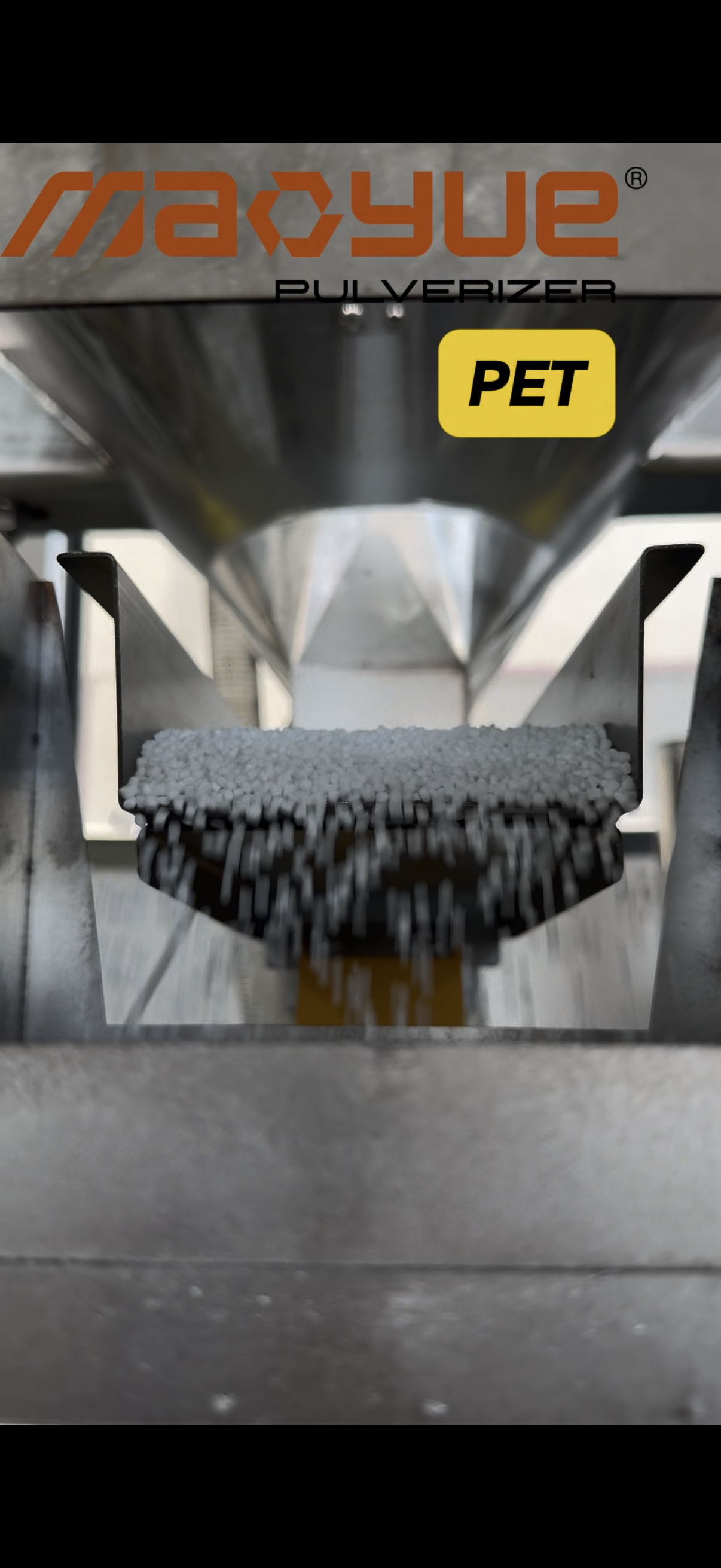
Insufficient feeding limits the actual throughput of the machine, while frequent changes in feed rate can cause fluctuations in grinding load and output.
What to check:
Whether material feeding is continuous or affected by bridging, blockages, or intermittent interruptions.
Whether changes in feed rate coincide with changes in output.
Whether the current feeding conditions are suitable for the material form and the machine's processing capacity.
Recommended actions:
First, check the operating condition of the feeding system. Then adjust the feed rate according to actual processing performance. If output continues to decline after feeding becomes stable, inspect the pulverizing process and downstream systems rather than simply increasing the feed rate.
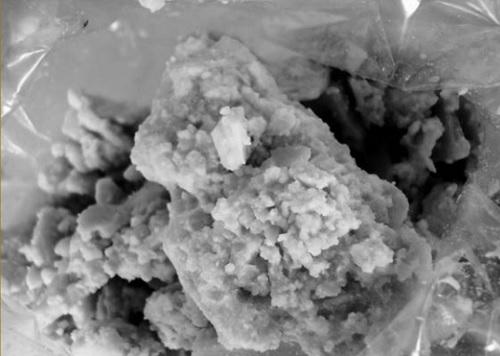
Different polymer carriers, formulations, and additives can affect the softening, adhesion, and flow characteristics of color masterbatch materials. If material adheres to the grinding disc surfaces or the inner walls of the grinding chamber, it may gradually accumulate and interfere with continuous processing and discharge.
What to check:
Whether visible material buildup has formed on the grinding discs or inside the grinding chamber.
Whether the discharged powder contains agglomerates.
Whether processing performance changes after a material batch or formulation is changed.
Recommended actions:
Evaluate temperature, feeding, and cooling conditions in relation to the location of material buildup and the observed material condition. For formulations that repeatedly cause adhesion, conduct material testing to identify suitable processing conditions rather than treating a lower feed rate as a universal solution.
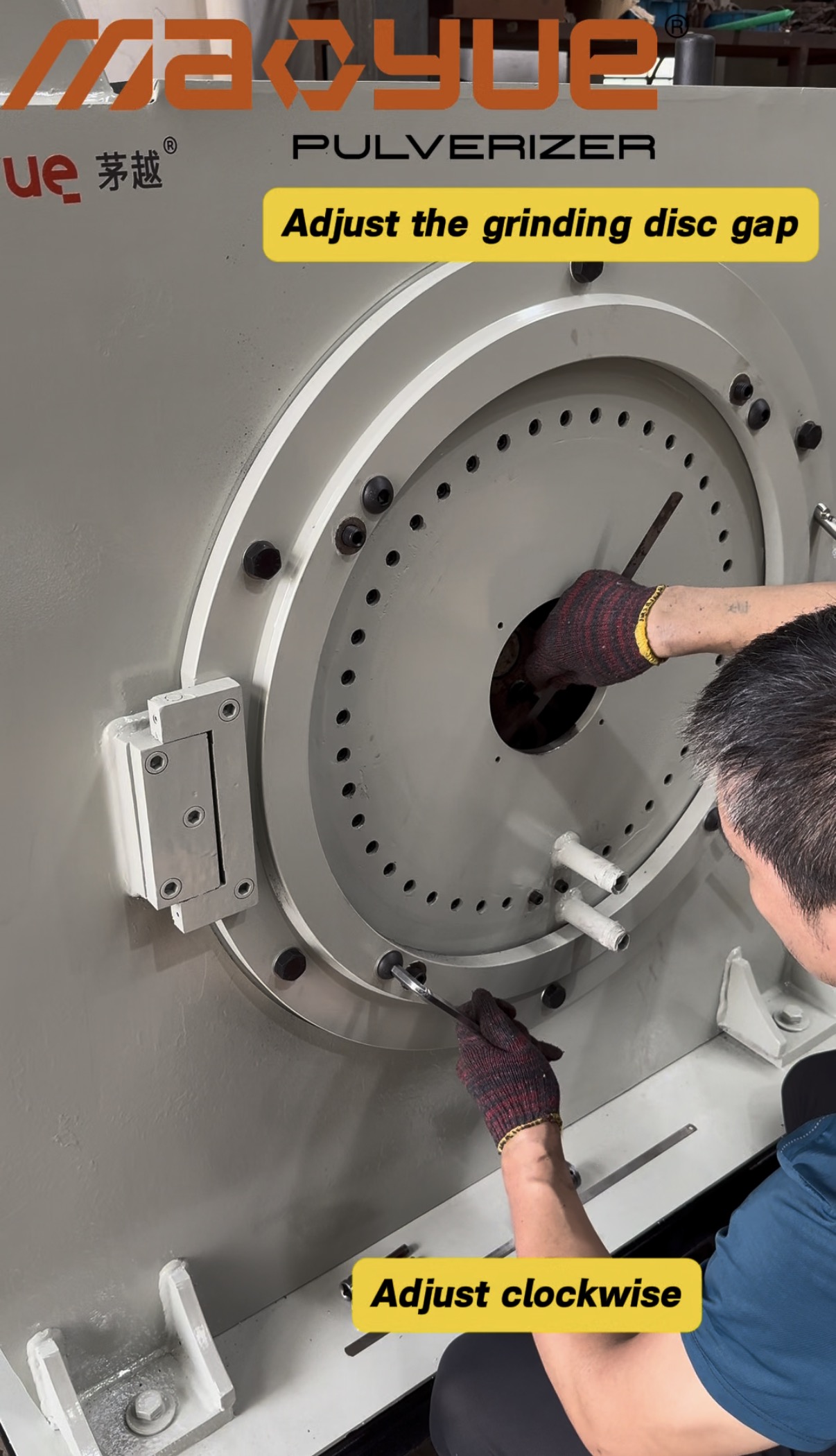
The grinding disc gap and working surface condition affect the grinding process and the fineness of the resulting powder. An unsuitable gap setting, disc wear, or surface damage may change the machine's processing performance.
However, declining output alone does not prove that the grinding discs are worn or need replacement.
How to diagnose the problem:
Verify that the grinding disc gap meets the operating and maintenance requirements of the specific machine model.
Inspect the grinding disc surfaces for abnormal wear or damage.
Compare powder fineness and particle size distribution before and after the output change.
If abnormal vibration or noise occurs at the same time, conduct further inspections according to the machine's maintenance procedures.
Recommended actions:
After shutting down the machine and following the required safety and maintenance procedures, inspect the grinding discs and related components and verify the gap setting. Compare test results before and after any adjustment. Adjust or replace components only when inspection findings indicate that their condition or the gap setting may be affecting production performance.
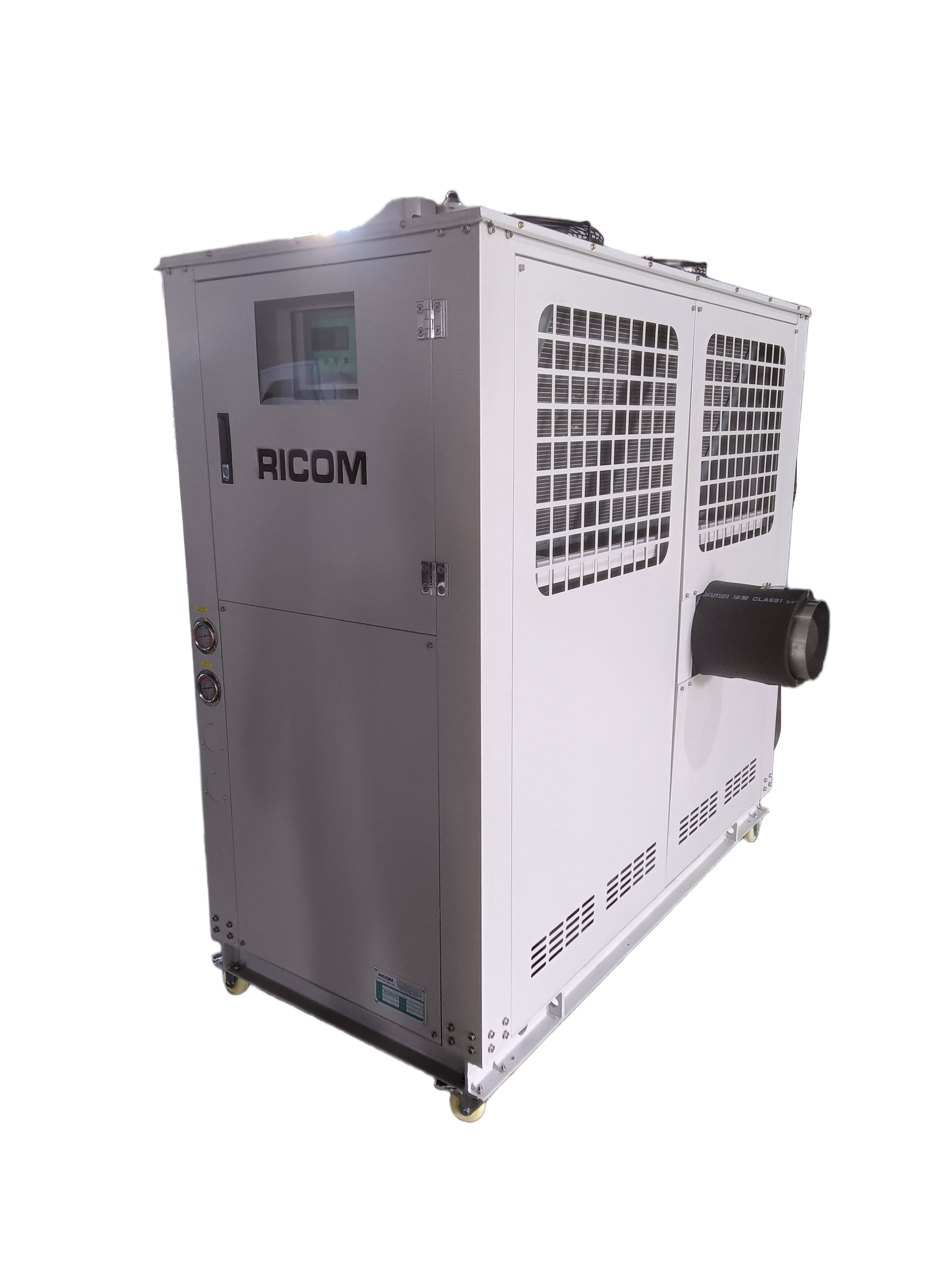
The heat generated during pulverizing is affected by material properties, processing conditions, and machine load. For materials that soften easily, temperature changes may further affect adhesion and discharge performance.
A temperature increase does not necessarily indicate a cooling system failure. It may also be related to changes in feed load or material properties.
What to check:
Whether material or grinding chamber temperatures differ significantly before and after the output change.
Whether the air-cooling and water-cooling systems are operating properly.
Whether cooling passages are blocked or actual cooling performance has changed.
Recommended actions:
Compare temperature records with output, material adhesion, and feeding conditions. If a temperature increase occurs alongside changes in processing performance, investigate cooling capacity and related operating conditions to verify the cause.

Final collected output depends not only on the pulverizing process but also on powder conveying, separation, and collection efficiency. Material buildup in pipelines, blockages in cyclone separators or collection hoppers, and dust collection system abnormalities may reduce the amount of powder ultimately collected.
What to check:
Whether powder is discharged continuously.
Whether material has accumulated in conveying pipelines, cyclone separators, or collection hoppers.
Whether airflow, sealing, and dust collection equipment are operating properly.
Recommended actions:
Inspect the entire path from discharge to final collection to identify material retention or losses. If the main machine shows no obvious change in operating condition while collected output continues to decline, prioritize checking the downstream system to avoid misdiagnosing a collection problem as insufficient main-machine processing capacity.
A machine's rated capacity does not mean that the same output can be achieved with every material and under all processing conditions. Material properties, target fineness, required throughput, and continuous operating requirements can all affect equipment suitability.
Short-duration tests can provide an initial understanding of material processing performance, but they may not fully represent conditions during extended operation.
What to check:
Whether the current material matches the material used during the original equipment selection tests.
Whether the actual powder characteristics meet the target fineness requirements.
Whether the existing main machine and auxiliary systems are suitable for the required output and operating duration.
Recommended actions:
Reassess the equipment configuration against the actual material and production requirements. If equipment suitability has not been adequately verified, first define the required fineness, output, and operating conditions before deciding whether configuration changes are necessary.
After the initial troubleshooting, a consistent measurement method is needed to confirm whether collected output has actually declined and to help identify which stage is responsible.
Choose a clearly defined measurement period and record the machine's actual operating time and the net weight of the powder collected.
For example, if the machine collects 120 kg of net powder during 30 minutes of actual operating time:
Average powder collection rate = 120 kg ÷ 0.5 h = 240 kg/h
This represents the average powder collection rate during that period. It does not necessarily equal the pulverizer's actual material throughput because some material may temporarily remain inside the machine or conveying system, while other material may be lost before reaching the collection point.
Compare the data recorded during stable operation with the data collected after output declines. Review feeding, temperature, powder condition, and discharge records at the same time.
Where conditions permit, a simplified material balance can be used for verification:
Material input during the period = Collected powder during the period + Accounted material losses + Increase in material inventory within the system
The increase in material inventory is calculated as the amount of material remaining in the system at the end of the measurement period minus the amount remaining at the beginning. If the amount of material retained in the system decreases, this value can be negative.
The measurement periods and system boundaries must be consistent across all terms, and measurement errors should also be considered.
If actual throughput during the pulverizing stage cannot be measured directly, the result should be reported as the average powder collection rate rather than being treated as the machine's actual processing capacity.
Based on the suspected factors identified in the first two steps, adjust one relevant variable at a time and repeat the test under comparable operating conditions. Keep the material batch, target fineness, and measurement method consistent wherever possible, and document any conditions that cannot be held constant.
Evaluate the following indicators together:
Output or average powder collection rate.
Powder fineness and particle size distribution.
Temperature changes and material adhesion.
Discharge and powder collection conditions.
An adjustment should be considered effective only when the improvement is repeatable and does not create other unacceptable production problems.
For color masterbatch processing projects where output fluctuations are a concern, Mao Yue focuses on more than simply recommending a pulverizer. Through actual material testing, equipment configuration matching, in-house manufacturing of critical components, and evaluation of the complete processing line, Mao Yue helps customers assess whether the equipment is suitable for their real production requirements.
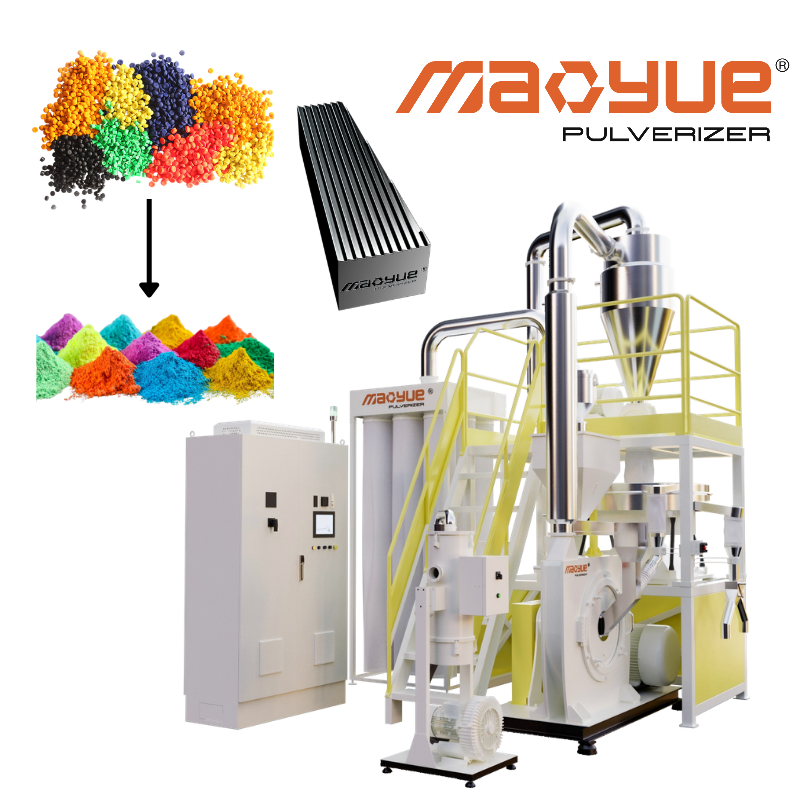
Mao Yue evaluates equipment based on customers' actual materials and production requirements rather than relying solely on material names or rated machine capacity.
By testing material samples supplied by customers and considering target fineness, expected output, and application requirements, Mao Yue can evaluate powder quality, particle size distribution, material flowability, and temperature changes under the test conditions.
For applications requiring continuous operation, the test duration and evaluation criteria can also be agreed upon in advance.
These test results give customers a more reliable basis for assessing equipment suitability before purchasing.
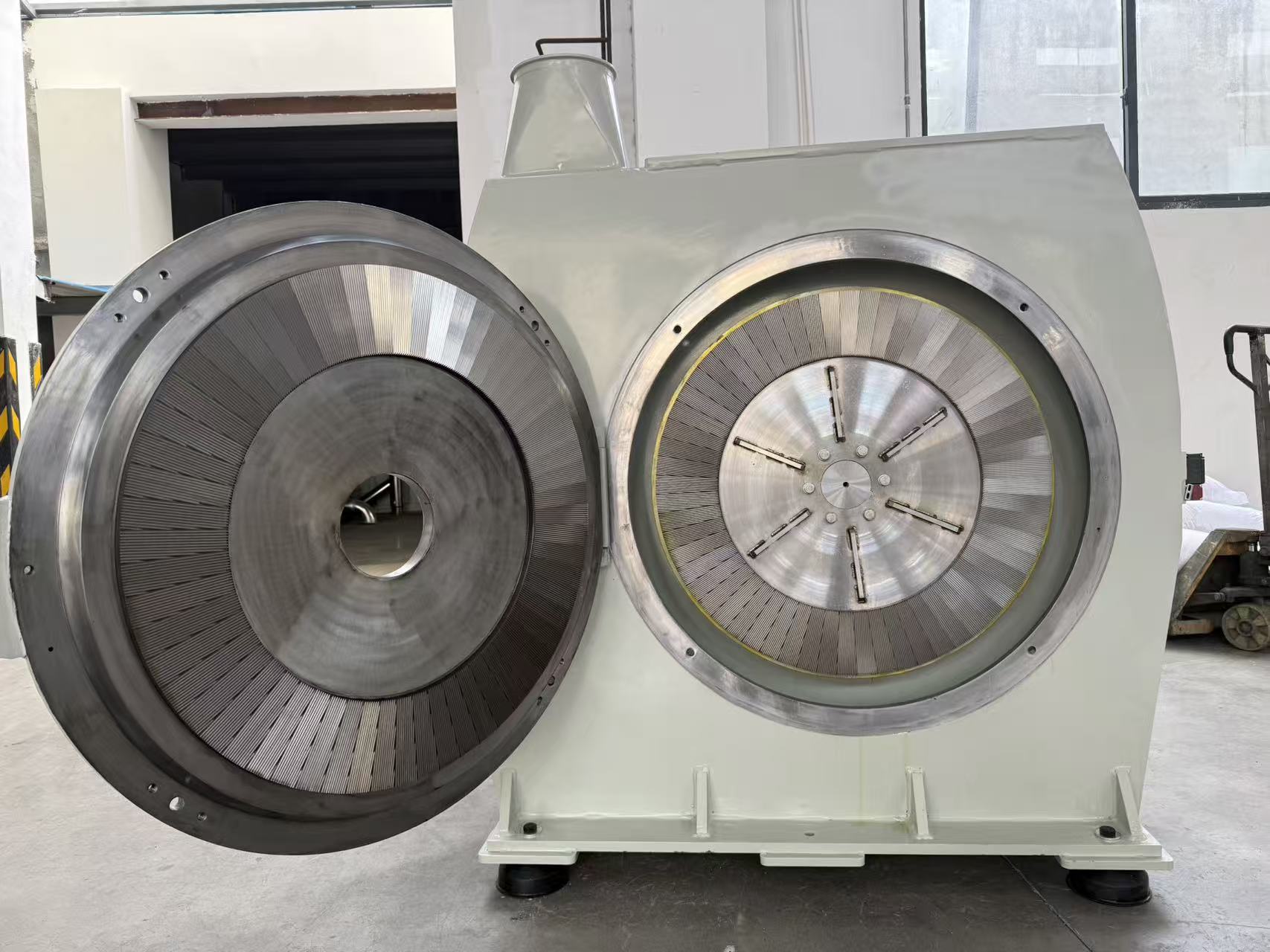
Test results can help identify which parts of the production line require closer evaluation. Depending on the customer's target output and powder specifications, the equipment configuration assessment may cover the main pulverizer, feeding system, cooling system, screening equipment, and powder conveying and collection units.
For example, if the powder already meets the required fineness but the final collected output remains low, the discharge and collection stages should be investigated rather than focusing exclusively on the main pulverizer.
If temperature increases occur alongside material adhesion, material properties, feeding conditions, and cooling configuration should be evaluated together.
Mao Yue focuses on matching the complete processing line to the customer's material and production requirements rather than simply selecting a machine with a higher rated capacity.
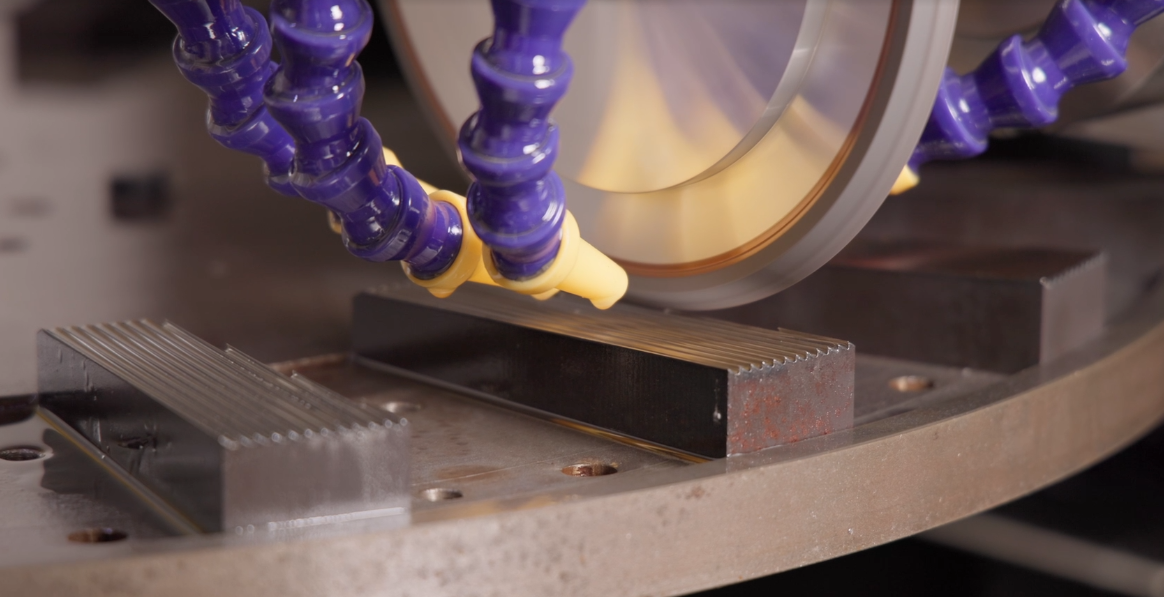
Mao Yue manufactures its own grinding discs and blades, allowing greater control over key manufacturing and inspection processes for these critical components.
Grinding disc design, machining accuracy, surface condition, and wear can all affect pulverizing performance during operation. By managing critical component manufacturing and inspecting component condition, Mao Yue can provide more targeted technical support when customers assess grinding disc wear, maintenance requirements, or replacement timing.
For customers, this provides a clearer basis for understanding the condition of critical wear components and planning maintenance and replacement during machine operation.
If your color masterbatch pulverizer experiences declining output, fluctuating powder collection rates, or unstable continuous operation, prepare the following information to support a more targeted assessment:
Material information: Polymer carrier, relevant formulation details, and material batch.
Feeding conditions: Material form, particle or pellet size, feeding method, and approximate feed rate.
Powder requirements: Target fineness and required particle size distribution.
Production targets: Required output in kg/h and expected operating hours per day.
Problem description: Initial output, subsequent output, actual operating duration, and when the decline begins.
Operating conditions: Temperature records, material adhesion, operating interruptions, or material buildup.
Existing equipment: Pulverizer model and motor power, cooling method, discharge configuration, and powder collection setup.
If your color masterbatch pulverizer experiences declining output, fluctuating powder collection rates, or material adhesion during continuous production, contact Mao Yue.
Provide your material type, target powder fineness, current output, target capacity, and operating conditions. Based on your actual production requirements, Mao Yue can help assess the equipment configuration and discuss a material testing plan where appropriate.
Test results apply to the specific materials and testing conditions used. Actual production performance may still be affected by formulation, operating parameters, and on-site conditions.


