Specializing in the production of Plastic Pulverizer Machines.

Views: 0 Author: Site Editor Publish Time: 2026-10-05 Origin: Site
PE rotomolding powder can become too hot during pulverizing when the heat generated during the process exceeds the system’s actual heat dissipation capacity. Mechanical friction, impact, shearing, feeding conditions, pulverizing gap, target particle size, and continuous operating time can all affect temperature rise.
The key is not simply to add more cooling equipment, but to maintain a stable balance between heat generation, heat dissipation, powder quality, and continuous production.
During pulverizing, PE material is continuously subjected to impact, shearing, and grinding. Part of the mechanical energy is converted into heat.
If the pulverizing process requires excessive mechanical action, more heat may be generated, causing the powder temperature to rise.
A finer target particle size usually requires more intensive pulverizing, which may increase the mechanical load and heat generation.
Therefore, target particle size and temperature control need to be considered together rather than treated as completely separate factors.
Unstable feeding can cause fluctuations in the material load inside the pulverizing chamber.
Excessive feeding may increase the mechanical load and heat generation, while insufficient or unstable feeding can make the pulverizing process less stable.
The pulverizing gap needs to be matched with the PE material, feed size, target particle size, and required capacity.
A smaller pulverizing gap is not always better. An excessively small gap may increase mechanical load, friction, and temperature rise.
The PE pulverizer may operate at a normal temperature when production first starts, but the temperature can gradually increase during continuous operation.
This can happen when the rate of heat accumulation exceeds the actual heat dissipation capacity. Therefore, temperature performance should be evaluated under real continuous production conditions.
Excessive temperature can affect the stability of the PE pulverizing process and may further affect the final powder condition.
Excessive temperature may cause PE material to soften, increasing the risk of material sticking to the pulverizing chamber or internal components.
This can cause material buildup and make continuous pulverizing more difficult.

When PE powder becomes too hot, fine particles may begin to form agglomerates.
Agglomeration can affect powder flowability, screening efficiency, and powder collection.
When temperature fluctuations are accompanied by softening, sticking, or agglomeration, the particle size and flow behavior of the powder may change.
Therefore, temperature control affects not only equipment operation but also final powder quality.
Controlling PE pulverizing temperature should not rely on the cooling system alone. Unnecessary heat generation should first be reduced, followed by improving the system’s effective heat dissipation capacity.
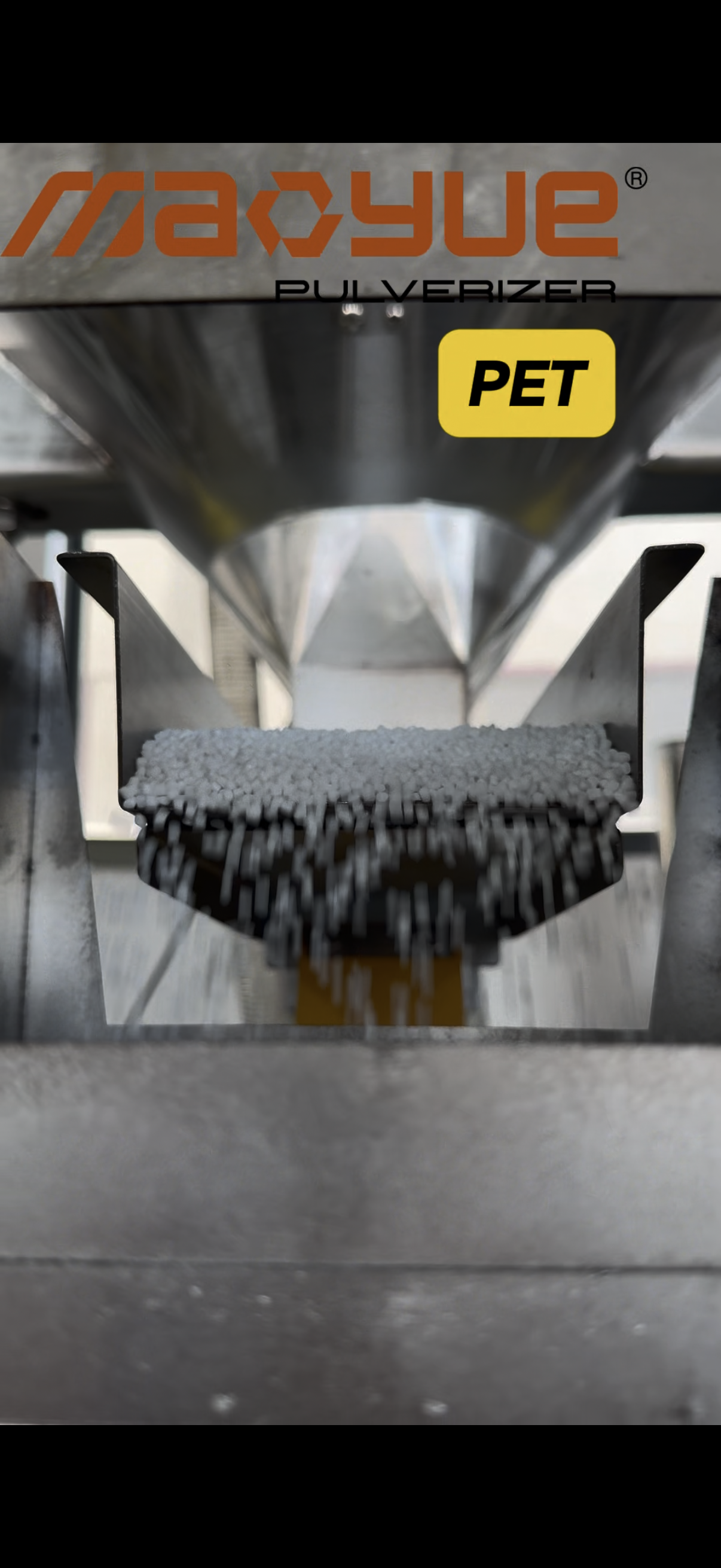
Feeding conditions should be controlled according to the PE material characteristics, feed size, target particle size, and required capacity to reduce fluctuations in the material load inside the pulverizing chamber.
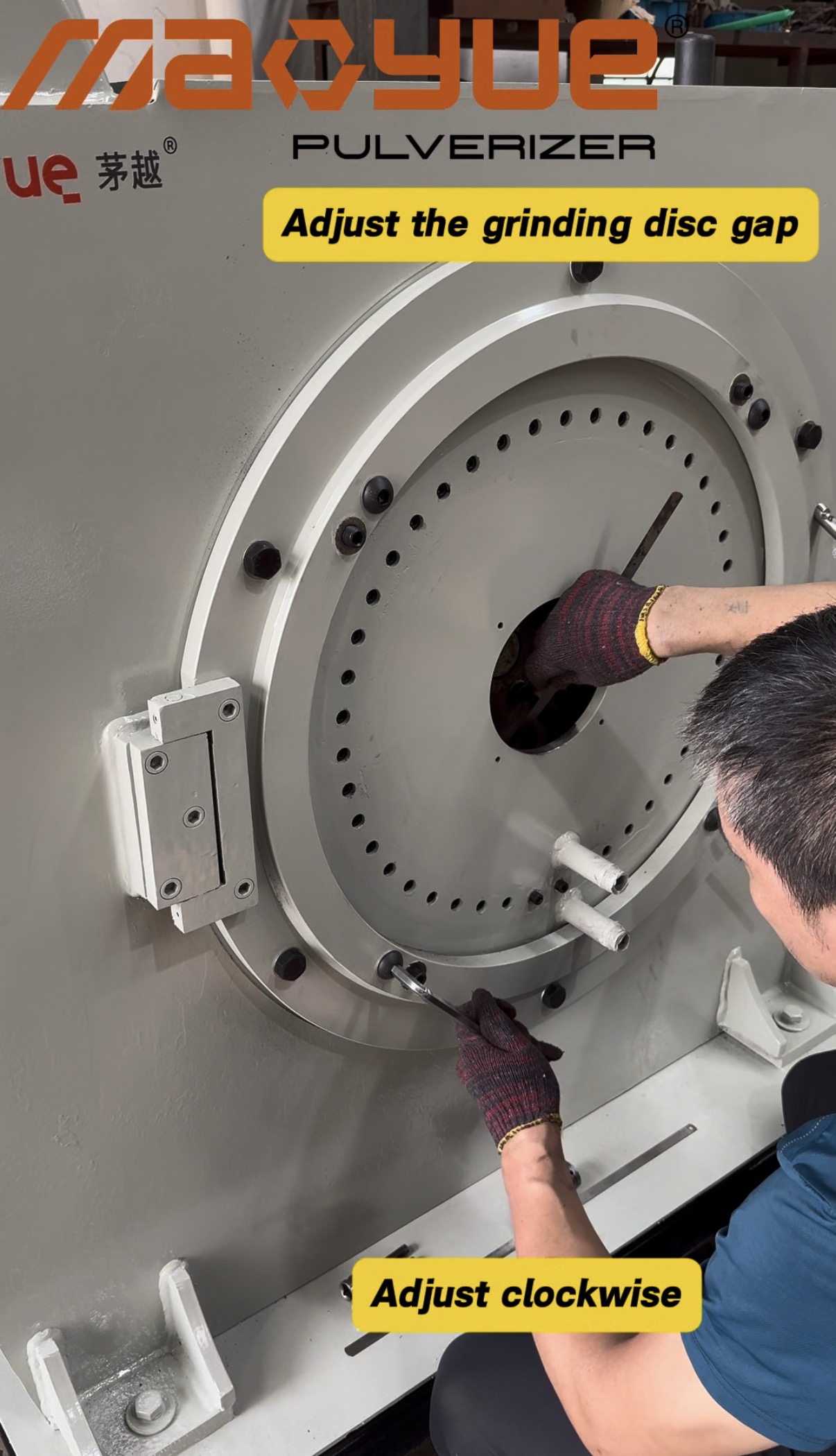
The appropriate pulverizing gap should be determined according to the actual material and target powder specifications.
The goal is to achieve the required particle size while avoiding unnecessary mechanical energy input.

Air cooling can continuously remove heat generated during the pulverizing process.
When heat generation is relatively high or the temperature continues to rise during continuous operation, water cooling can be added to increase the overall heat dissipation capacity.
Therefore, the cooling method should be selected according to actual production conditions rather than using the same configuration for every PE project.
PE pulverizing temperature essentially depends on the balance between heat generation and heat dissipation.
The complete process should be considered as a whole:
Feeding → Iron Removal → Pulverizing → Cooling → Screening → Collection
Feeding affects the pulverizing load; pulverizing conditions affect heat generation; cooling affects heat dissipation; while screening and collection affect the final powder condition.
Therefore, if excessive heat is already being generated during pulverizing, simply adding a larger cooling system may not solve the root cause.
For PE rotomolding powder applications, Mao Yue does not solve temperature problems simply by adding cooling equipment.
Instead, Mao Yue evaluates the actual material, pulverizing conditions, core components, cooling capacity, and continuous production performance as a complete system.
Mao Yue’s PE pulverizing temperature control approach includes:
Actual Material Testing → Pulverizing Condition Matching → Stable Core Components → Cooling Capacity Matching → Continuous Production Verification

Before determining the equipment and process solution, Mao Yue can test the customer’s actual material under the required production conditions.
Testing may include:
Test Information | Main Purpose |
|---|---|
PE material type | Evaluate material characteristics |
Feed size | Determine suitable feeding conditions |
Target particle size | Match pulverizing conditions |
Required capacity | Evaluate equipment load |
Daily operating time | Evaluate heat accumulation during continuous operation |
Final rotomolding application | Determine powder requirements |
Current temperature problem | Analyze existing production conditions |
The purpose of testing is not simply to confirm whether “PE can be pulverized.”
It is to verify whether the equipment can achieve the required combination of:
Target Particle Size + Required Capacity + Stable Temperature + Continuous Operation
This is why Mao Yue conducts actual material testing before determining the equipment solution.
Mao Yue does not determine pulverizing parameters simply based on the material name “PE.”
PE pellets, recycled PE, film edge trim, production scrap, and different grades of rotomolding PE may behave differently during feeding and pulverizing.
Therefore, pulverizing conditions need to be matched according to the actual material, feed size, target particle size, required capacity, and operating conditions.
The goal is not simply to produce finer powder, but to achieve the required powder specification while reducing unnecessary mechanical action and temperature rise.

Mao Yue manufactures its own core pulverizing components, including pulverizing discs and blades.
From machining and grinding to inspection, these core components are subject to internal quality control to maintain stable operating conditions.
For PE pulverizing, the stability of core components affects not only service life, but also pulverizing gap stability, mechanical action, and long-term operating performance.
Stable core components help maintain consistent pulverizing conditions, making mechanical load and temperature rise easier to control.
Once the pulverizing conditions are determined, the cooling capacity needs to match the actual heat generated during production.
Depending on the production conditions of different PE projects, Mao Yue can evaluate:
Air cooling continuously removes heat generated during pulverizing and is suitable for production conditions where temperature rise is relatively controllable.

When heat generation is relatively high or the temperature continues to rise during continuous operation, water cooling can be added to increase overall heat dissipation capacity.
Therefore, air + water cooling is not a fixed configuration for every PE pulverizing project.
Mao Yue evaluates the actual material test results, target particle size, required capacity, operating time, and temperature rise performance to determine a more suitable cooling method.
A PE pulverizer operating at a normal temperature when production starts does not necessarily mean that the temperature will remain stable during long-term continuous operation.
As operating time increases, if the rate of heat generation remains higher than the heat dissipation capacity, heat may gradually accumulate, eventually causing the powder temperature to rise, soften, stick, or agglomerate.
Therefore, temperature control should not be evaluated only based on the short-term performance after startup.
Mao Yue pays attention to the following factors during actual continuous production:
Powder temperature changes
Temperature rise trend during continuous operation
Feeding stability
Pulverizing load
Powder particle size
Powder flowability
Sticking or agglomeration
Cooling performance
These production results help determine whether the pulverizing conditions and cooling solution are properly matched.
For PE rotomolding powder, temperature control does not depend on a single component or a single cooling method.
Mao Yue evaluates the complete production condition through:
Actual Material Testing
↓
Pulverizing Condition Matching
↓
Stable Core Components
↓
Cooling Capacity Matching
↓
Continuous Production Verification
The final goal is to maintain stable temperature and continuous production while meeting the requirements for target particle size, capacity, and powder quality.
This is also a key part of Mao Yue’s equipment and process evaluation for PE rotomolding powder projects.
Excessive temperature during PE pulverizing may appear in different forms during production.
Production Symptom | What to Check |
|---|---|
Powder temperature rises rapidly | Feeding and pulverizing load |
PE sticks to the pulverizing chamber | Temperature and cooling |
Powder begins to agglomerate | Temperature and continuous operating conditions |
Temperature rises after long-term operation | Heat dissipation capacity and heat accumulation |
Powder quality begins to change | Pulverizing conditions and temperature stability |
This approach is more useful than simply asking whether the pulverizer has a cooling system.
PE is a thermoplastic material. During high-speed pulverizing, the material is subjected to impact, shearing, and grinding, and mechanical energy is converted into heat.
When PE powder becomes too hot, part of the material may soften, increasing the risk of sticking to the inside of the pulverizing chamber.
If feeding is unstable, the pulverizing load is high, or the machine operates continuously for a long time, heat may accumulate further.
Whether air cooling alone is sufficient depends on the actual PE material, target particle size, required capacity, and continuous operating time.
For production conditions with relatively controllable temperature rise, air cooling can continuously remove heat generated during pulverizing.
If heat generation is relatively high or tighter temperature control is required during continuous operation, water cooling may be added to improve overall heat dissipation.
Therefore, whether water cooling is required cannot be determined simply from the fact that the material is PE.
Yes. Mao Yue can test the customer’s actual PE material based on the feed size, target particle size, required capacity, and operating conditions to evaluate the pulverizing conditions, temperature performance, and cooling solution.
If your PE rotomolding powder is experiencing any of the following problems:
Powder temperature rises too quickly during pulverizing
PE powder sticks to the pulverizing chamber
Powder agglomeration
Unstable powder flowability
Powder quality variation
Reduced screening efficiency
Difficulty maintaining continuous production
Do not select a cooling system based only on equipment specifications.
Send Maoyue your actual PE material and production requirements.
We can evaluate the PE pulverizing and cooling solution based on your material, target particle size, required capacity, operating time, and temperature control requirements.
Material: PE / HDPE / LDPE / LLDPE
Feed Size: _______
Target Particle Size: _______
Capacity: _______ kg/h
Daily Operating Time: _______ h/day
Final Application: Rotomolding / Other
Current Problem: Excessive Temperature / Sticking / Agglomeration / Other
Send your PE material information to Mao Yue to get a pulverizing and cooling solution matched to your production conditions.


