Specializing in the production of Plastic Pulverizer Machines.

Views: 0 Author: Site Editor Publish Time: 2026-10-04 Origin: Site
PE rotomolding powder may still contain too many coarse particles even when its target average particle size is achieved. Average particle size reflects the overall condition of the powder, while the coarse fraction represents the proportion of oversized particles that fall outside the target particle size range.
Therefore, the real question is not simply whether the PE powder is fine enough, but:
Where are these oversized particles coming from, and how can the coarse fraction be controlled?
In PE rotomolding powder, coarse particles generally refer to oversized particles that fall outside the target particle size range.
For example, if a specific PE rotomolding application has a target range of 20–40 mesh, particles significantly larger than this range may be considered part of the coarse fraction.
The coarse fraction is not the same as the average particle size. A batch of powder may have an average particle size that meets the target while still containing a relatively high proportion of oversized particles.
Therefore, production control needs to consider both:
Target Particle Size + Controlled Coarse Fraction
Visual inspection can identify some obvious coarse particles, but it cannot accurately determine the proportion of coarse particles.
A more reliable approach is to use the same sampling, screening, or particle size analysis method across different production batches.
In actual production, the following data can be monitored:
Particle size distribution
Coarse fraction
Throughput
Powder temperature
Grinding gap
Operating time and condition of the grinding components
The purpose of testing is not only to determine the coarse fraction, but more importantly, to identify the source of the problem:
Are these oversized particles generated during the pulverizing process, or are they remaining in the final powder because of insufficient screening efficiency?
This distinction determines which stage of the process should be adjusted.
This is one of the most important steps in diagnosing excessive coarse particles.
Not all coarse particle problems originate in the pulverizing chamber.
In some cases, the pulverizer has already produced a particle size distribution that meets the target requirements, but the screening system fails to effectively remove oversized particles, allowing them to enter the final powder.
Therefore, these two situations need to be distinguished.
Focus on checking:
Grinding gap
Disc and blade condition
Feeding stability
Pulverizing operating conditions
In this case, the pulverizing process should be the main focus for adjustment.
Focus on checking:
Screen opening size
Screening efficiency
Screen condition
Possible blockage
Powder flow through the screening system
In this case, if the actual problem comes from the screening system, repeatedly adjusting the grinding gap may not solve the root cause.

Once the source of the coarse particles has been identified, the corresponding process conditions can be checked and adjusted.
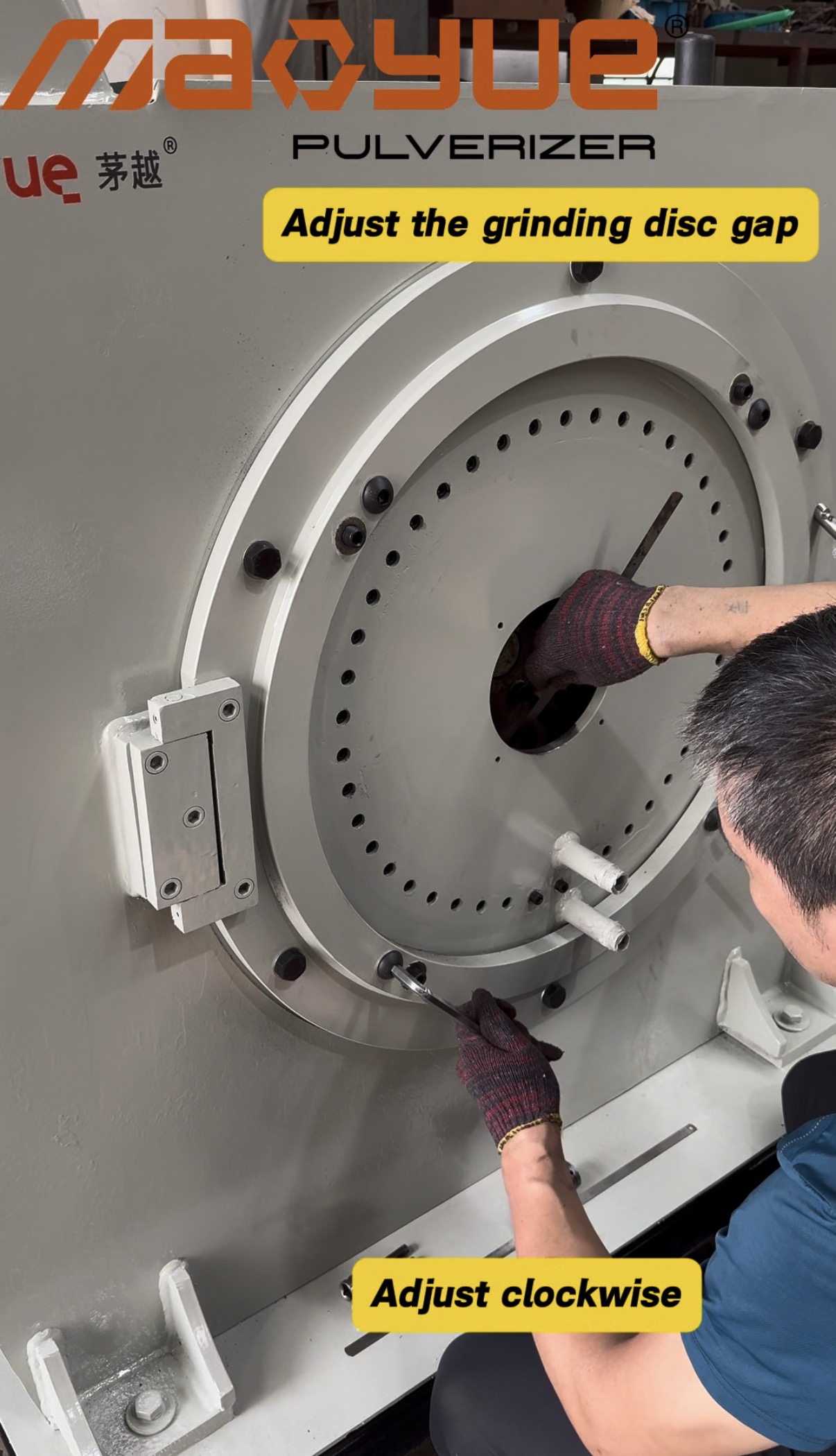
In a disc-type plastic pulverizer, PE material passes through the grinding zone between the rotating disc and stationary disc.
If the grinding gap is too large, some material may leave the grinding zone without receiving sufficient grinding action, which can increase the proportion of oversized particles in the final powder.
However, a smaller grinding gap is not always better.
An excessively small gap can increase friction, temperature rise, energy consumption, and disc wear.
The goal is to establish a stable grinding gap that matches the PE material, feeding condition, target particle size, and throughput requirements.
The focus should not be on achieving the smallest possible gap, but on maintaining suitable and stable pulverizing conditions for actual production.

Grinding components do not maintain exactly the same working geometry throughout their entire service life.
As the working edges gradually wear, the actual grinding conditions may change. Even if the machine continues to operate normally, the proportion of coarse particles in the final powder may gradually increase.
Therefore, wear should not be judged only by whether the equipment can still operate.
It is more useful to compare:
Coarse fraction
Particle size distribution
Throughput
Power consumption
Powder temperature
Grinding gap adjustments
If these data show continuous changes as operating time increases, the condition of the grinding discs and blades should be inspected.
The key question is whether the grinding components can still maintain the required particle size control.

PE materials entering the pulverizer may have different forms and particle sizes, such as pellets, recycled material, production scrap, and pre-processed PE material.
Large variations in feed particle size can change the grinding load.
Feeding stability is equally important. If the feed rate fluctuates continuously, the material load inside the pulverizing chamber will also change, which can affect throughput and particle size distribution.
Therefore, feed particle size and feed rate need to be controlled together.
Stable feeding helps the pulverizer maintain a more consistent grinding load and particle size distribution.
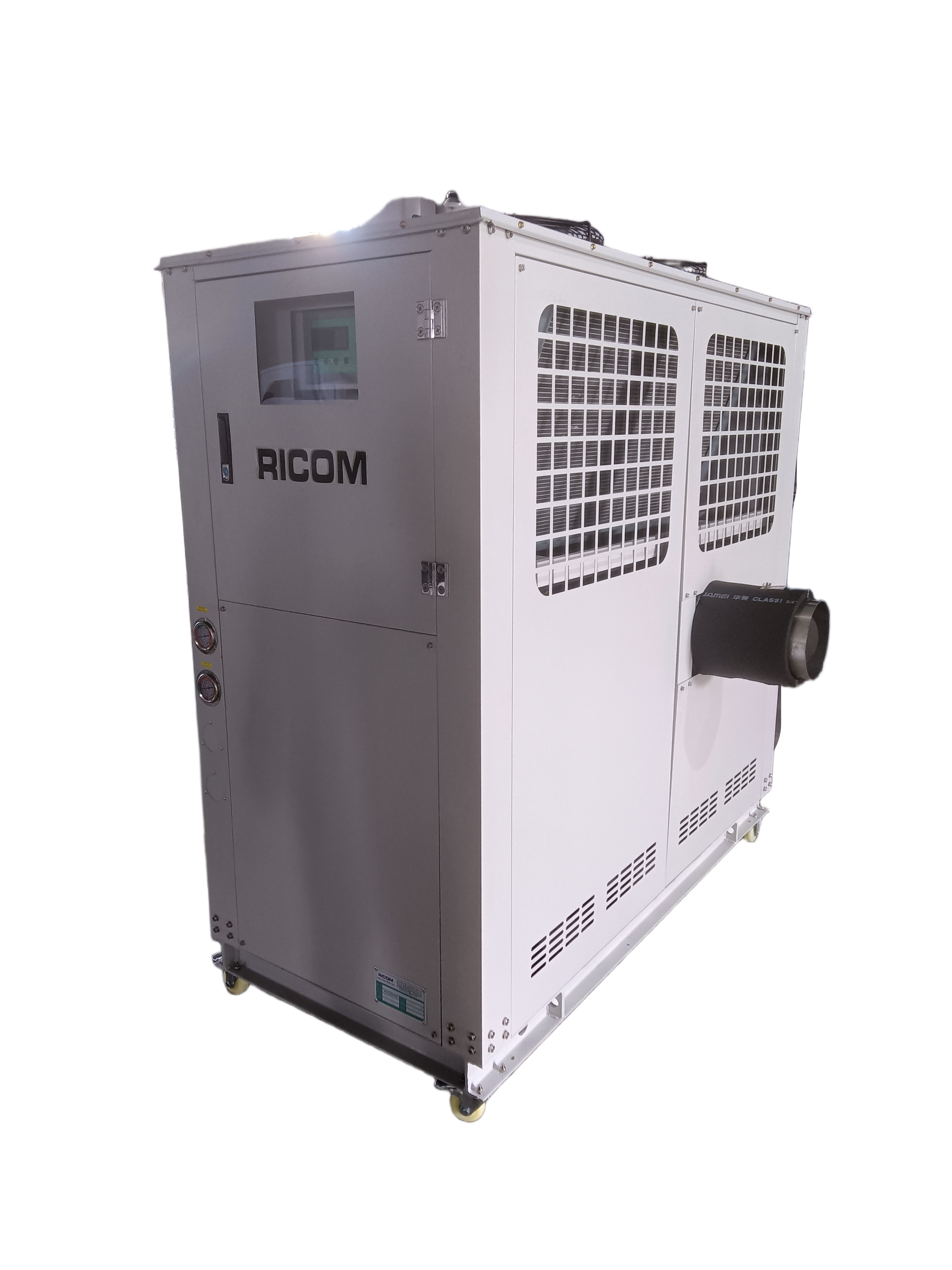
PE is relatively sensitive to temperature during mechanical pulverizing.
If the material temperature becomes too high, PE may soften, making the pulverizing process less stable and potentially affecting particle size control.
Therefore, the purpose of the cooling system is not simply to achieve the lowest possible temperature, but to maintain suitable and stable processing conditions.
Depending on the material and equipment configuration, air cooling, water cooling, or a combination of both can be used.
The goal is to maintain stable pulverizing conditions and consistent powder quality.

Yes. This is an important factor to consider when diagnosing excessive coarse particles.
If the pulverizing process has already produced a relatively suitable particle size distribution, but the screening system fails to effectively remove oversized particles, coarse particles may remain in the final PE powder.
Therefore, the screening system should be evaluated as part of the overall pulverizing process rather than treated as a completely separate stage.
The most effective way to reduce coarse particles is not to change multiple equipment parameters at the same time.
First, identify the source of the coarse particles, then adjust the relevant process conditions and verify the results through actual production data.
A practical approach is:
Use a consistent testing method to measure the coarse fraction and particle size distribution.
Determine whether the oversized particles are generated during pulverizing or remain after screening.
Based on the test results, check the relevant pulverizing, feeding, cooling, or screening conditions.
Compare the coarse fraction, particle size distribution, throughput, and powder condition before and after the adjustment.
A data-based approach is more reliable than judging powder quality by visual inspection alone.
When choosing a PE plastic pulverizer, motor power and theoretical throughput alone cannot determine whether the machine can effectively control oversized particles.
A more practical evaluation should focus on four areas.
Check whether the grinding gap can be adjusted according to the material and target particle size and maintained consistently during production.
Evaluate the material, machining precision, heat treatment, and wear condition of the grinding discs and blades.
Consider feeding control, cooling conditions, and monitoring of operating parameters.
Check whether the screening system can effectively separate oversized particles and maintain stable powder collection.
The most important question is:
Can the PE pulverizer maintain the target particle size range and a controlled coarse fraction during continuous production?
When customers experience excessive coarse particles in PE powder, the solution should not start with simply increasing motor power or changing a single equipment parameter.
The first step is to establish the relationship between the material, pulverizing conditions, particle size distribution, and screening results.
When material testing is required, Mao Yue can use the customer's actual PE material for pulverizing tests.
The test can be conducted based on the following information:
PE material type
Current feed particle size
Target powder particle size
Required throughput
Daily operating hours
Current coarse-particle problem
This helps determine whether the problem is related to the material condition, feeding conditions, or pulverizing process.
Pulverizing conditions should be matched to the actual PE material rather than selected based only on the equipment's rated motor power.
The evaluation may include:
Grinding gap
Feeding condition
Cooling conditions
Grinding load
Target particle size
The goal is to establish stable pulverizing conditions that achieve the target particle size while avoiding unnecessary friction, temperature rise, and component wear.
If the pulverized material already has a relatively suitable particle size distribution but the final powder still contains too many oversized particles, the screening process should be examined further.
This helps avoid repeatedly adjusting the pulverizer when the actual problem comes from the screening system.
After the process adjustments are completed, the results should be verified using actual production data.
The following data can be compared:
Coarse fraction
Particle size distribution
Throughput
Powder temperature
Operating stability
This creates a complete process loop:
Actual Material → Pulverizing Conditions → Screening → Particle Size Data → Process Adjustment
Rather than choosing a pulverizer based only on the equipment specification sheet, it is more effective to evaluate the equipment and process as a whole according to the actual powder requirements.
Excessive coarse particles in PE rotomolding powder are not simply a matter of the powder being “not fine enough.”
Effective coarse particle control requires consideration of both the pulverizing and screening processes while maintaining a balance between target particle size, controlled coarse fraction, and production stability.
A stable PE rotomolding powder production process should ultimately achieve:
Target Particle Size + Controlled Coarse Fraction + Stable Production + Consistent Powder Quality
If your PE rotomolding powder contains too many oversized particles, you can provide Maoyue with your actual production information.
We recommend providing:
PE material type
Current feed particle size
Target powder particle size
Required throughput
Existing pulverizer model, if available
Coarse particle or particle size test data, if available
If you already have particle size test data, you can send it together with the above information.
If you do not have complete test data, you can simply provide your PE material, target powder particle size, and required throughput.
Mao Yue can evaluate the pulverizing process based on your actual material and production requirements and arrange material testing when needed.
Send us your PE material, target powder particle size, and required throughput to discuss your pulverizing solution and material testing.


