Specializing in the production of Plastic Pulverizer Machines.

Views: 0 Author: Site Editor Publish Time: 2026-09-30 Origin: Site
For rotomolding production, PE powder is not simply a matter of grinding the material fine enough.
The particle size and particle size distribution of PE rotomolding powder can affect feeding, conveying, powder distribution inside the mold, heating, melting, and fusion.
When the proportion of coarse particles and fines varies between batches, powder flowability, feeding, mold distribution, and heating and melting behavior may also be affected.
So, why is PE rotomolding powder particle size inconsistent?
In most cases, it is not caused by a single factor.
Pulverizer disc gap, disc and blade wear, feeding stability, raw material characteristics, grinding temperature, screening, and operating conditions can all affect the final powder particle size.
Therefore, for PE processors and rotomolding powder producers, the key question is not simply whether a pulverizer can produce fine powder, but whether the pulverizing process can remain stable and continuously produce PE powder within the target particle size range.
This is why equipment design, process control, and actual material testing are important.
Particle size refers to the size of individual powder particles produced after PE material is pulverized.
However, in actual production, PE powder quality cannot be evaluated based on a single particle size value.
Particle size distribution also needs to be considered. It describes the proportion of particles with different sizes within the powder.
For example, a batch of powder may have an average particle size that meets the target, while still containing too many coarse particles or excessive fines.
Therefore, simply saying:
“This pulverizer can produce 40-mesh powder.”
does not fully describe the quality of the powder.
For rotomolding applications, several factors should be considered together:
Target particle size
Particle size distribution
Coarse particle content
Fines content
Powder flowability
Powder temperature
Feeding stability
Final application requirements
Therefore, stable particle size is not simply a pulverizer specification. It is part of overall production quality control.

Changes in PE rotomolding powder particle size during production can usually be related to several factors.
The gap between the rotating disc and fixed disc directly affects the pulverizing process.
If the gap is too large, the material may not be sufficiently pulverized.
If the gap is too small, it may increase the pulverizing load and friction, resulting in more fines and higher temperature rise.
More importantly, if the pulverizing gap changes during operation, the final powder particle size may also change.
Therefore, a PE pulverizer should have a reliable and adjustable disc gap design.
For continuous production, setting the gap once is not enough. The pulverizing conditions need to remain appropriate for the raw material and production target, with the ability to adjust the gap when necessary.
The core pulverizing components of a plastic pulverizer are exposed to continuous friction and mechanical forces during operation.
As operating time increases, the working surfaces of the discs and blades gradually wear, and their original geometry may change.
This can affect:
Pulverizing efficiency
Material residence time
Powder particle size
Particle shape
Energy consumption
Temperature rise
A new machine may produce the target powder consistently, while powder performance may change after extended operation.
Therefore, disc and blade wear should be evaluated together with particle size stability.
The key question is not simply:
“What is the blade hardness?”
A more important question is:
“Can the equipment maintain stable pulverizing conditions and the target powder specification after continuous production?”
This is why blade material, heat treatment, machining accuracy, dynamic balancing, and maintenance all matter.
Even when the pulverizer itself has been properly adjusted, unstable feeding can still cause fluctuations in the final powder.
If too much material suddenly enters the grinding chamber, the pulverizing load may increase rapidly.
If the feed rate suddenly decreases, the equipment will operate under a different load condition.
These changes may affect:
Pulverizing efficiency
Material residence time
Temperature
Particle size distribution
Actual output
Therefore, for PE rotomolding powder production, stable feeding is also part of particle size control.
A stable feeding system helps maintain a more continuous and controllable material flow into the pulverizing chamber.
Different PE raw materials do not necessarily behave the same way during pulverization.
PE materials may differ in:
Hardness
Melting characteristics
Original particle size
Moisture or contaminants
Additive content
Material temperature
Bulk density
PE pellets, recycled PE, film edge trim, and production waste may also require different pulverizing conditions.
Therefore, using exactly the same equipment settings for all PE materials does not necessarily produce the same powder results.
A more reliable approach is to test the actual material first and then determine the appropriate pulverizing parameters.
PE generates heat through friction during high-speed mechanical pulverization.
If the temperature becomes too high, the PE may soften, making it difficult for the material to maintain the desired grinding behavior.
Depending on the material and operating conditions, excessive temperature may lead to:
Powder agglomeration
Stringing or material adhesion
Reduced flowability
Inconsistent particle size
Reduced screening efficiency
Therefore, temperature control should be considered together with particle size control.
Cooling is not a solution to every particle size problem, but it can be an important part of maintaining a stable PE pulverizing process.
Pulverization alone does not automatically produce a stable final particle size distribution.
The screening stage determines which particles enter the final powder product.
If screening conditions change, the proportion of coarse particles and fines in the final powder may also change.
Therefore, a complete PE powder production system should consider:
Feeding → Pulverizing → Cooling → Screening → Powder Collection
rather than focusing only on the pulverizer itself.
When particle size changes during production, the first step is to identify which part of the process is causing the variation.
Observed Problem | Possible Cause | What to Check |
|---|---|---|
More coarse particles | Disc gap too large or changes in grinding conditions | Disc gap and component condition |
More fines | Disc gap too small or over-pulverization | Disc gap, load, and temperature |
Particle size changes after extended production | Component wear or temperature changes | Disc/blade condition and temperature |
Output fluctuates | Unstable feeding | Feeding system and material flow |
Powder agglomeration | Excessive temperature | Cooling system and temperature |
Final particle size distribution changes | Changes in screening conditions | Screen and airflow conditions |
This troubleshooting approach can help identify whether the variation comes from the pulverizing, feeding, cooling, or screening stage.
Once the potential causes are identified, the methods for controlling particle size become clearer.
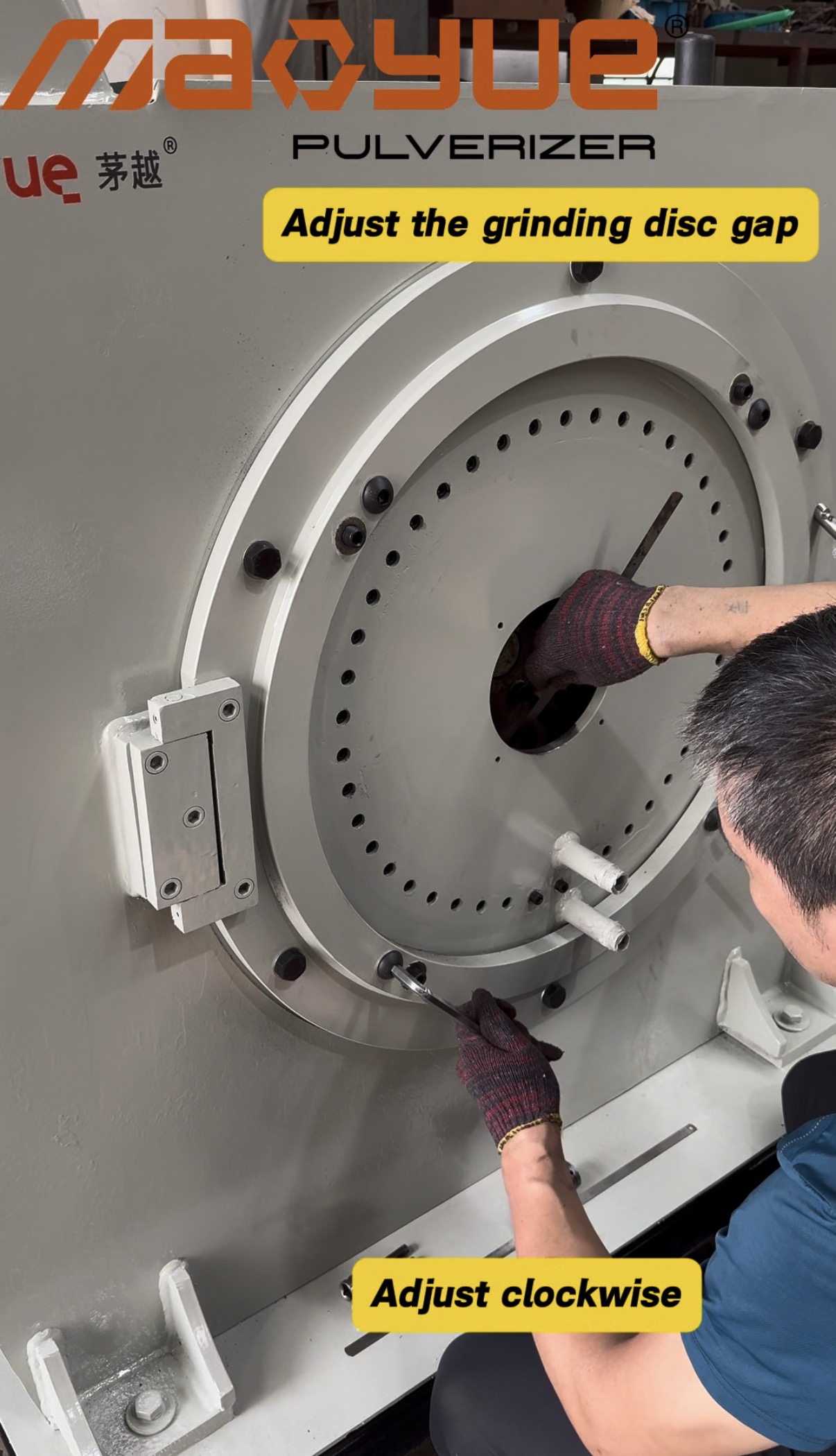
A stable and adjustable disc gap can be adjusted according to the PE raw material, feed particle size, target powder size, and required output. Do not simply pursue a smaller gap; the goal should be to consistently achieve the target particle size.

Regularly inspect the discs and blades for wear, and maintain or replace them when necessary.
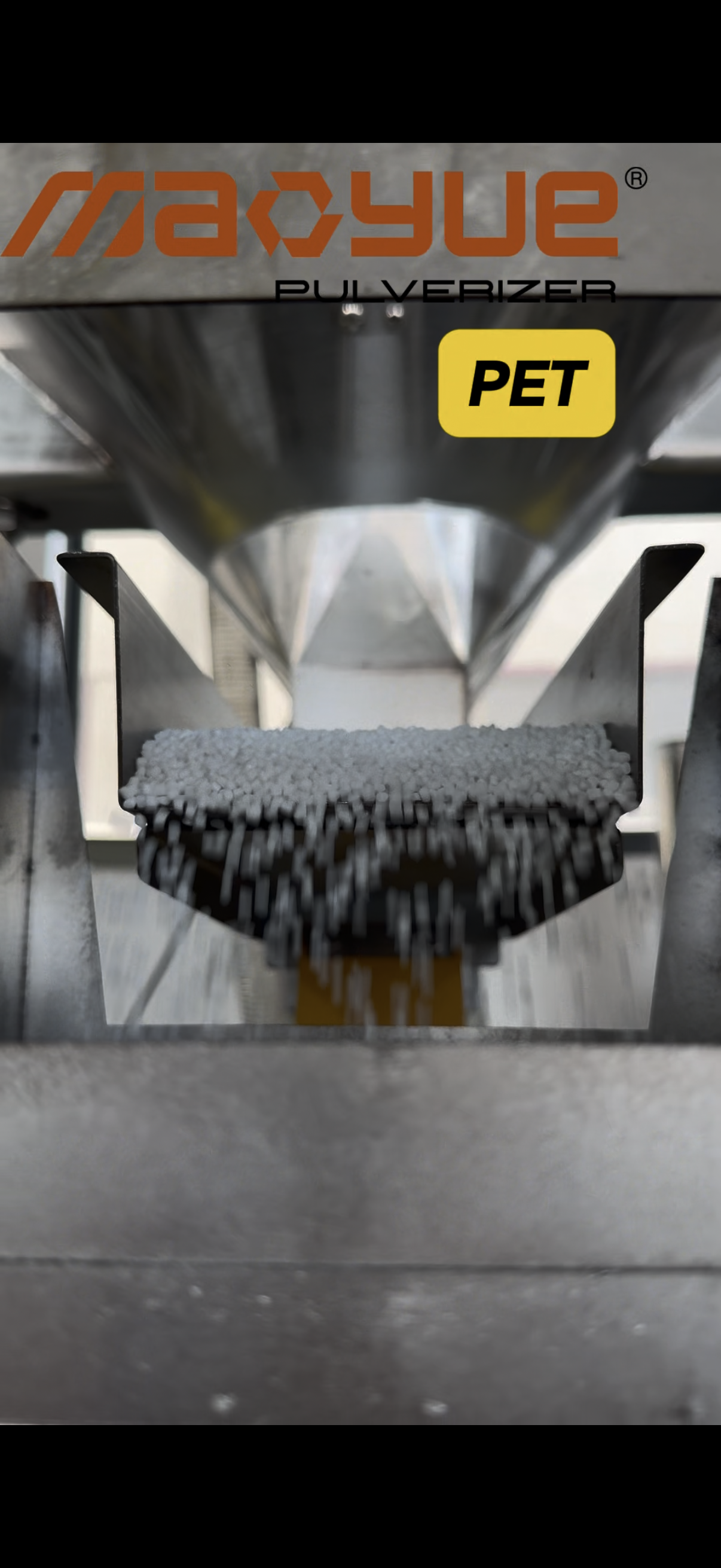
Depending on the raw material and production requirements, automatic, vibrating, vertical, vacuum, or iron-removal feeding systems can be used to maintain a stable material flow into the pulverizing chamber.
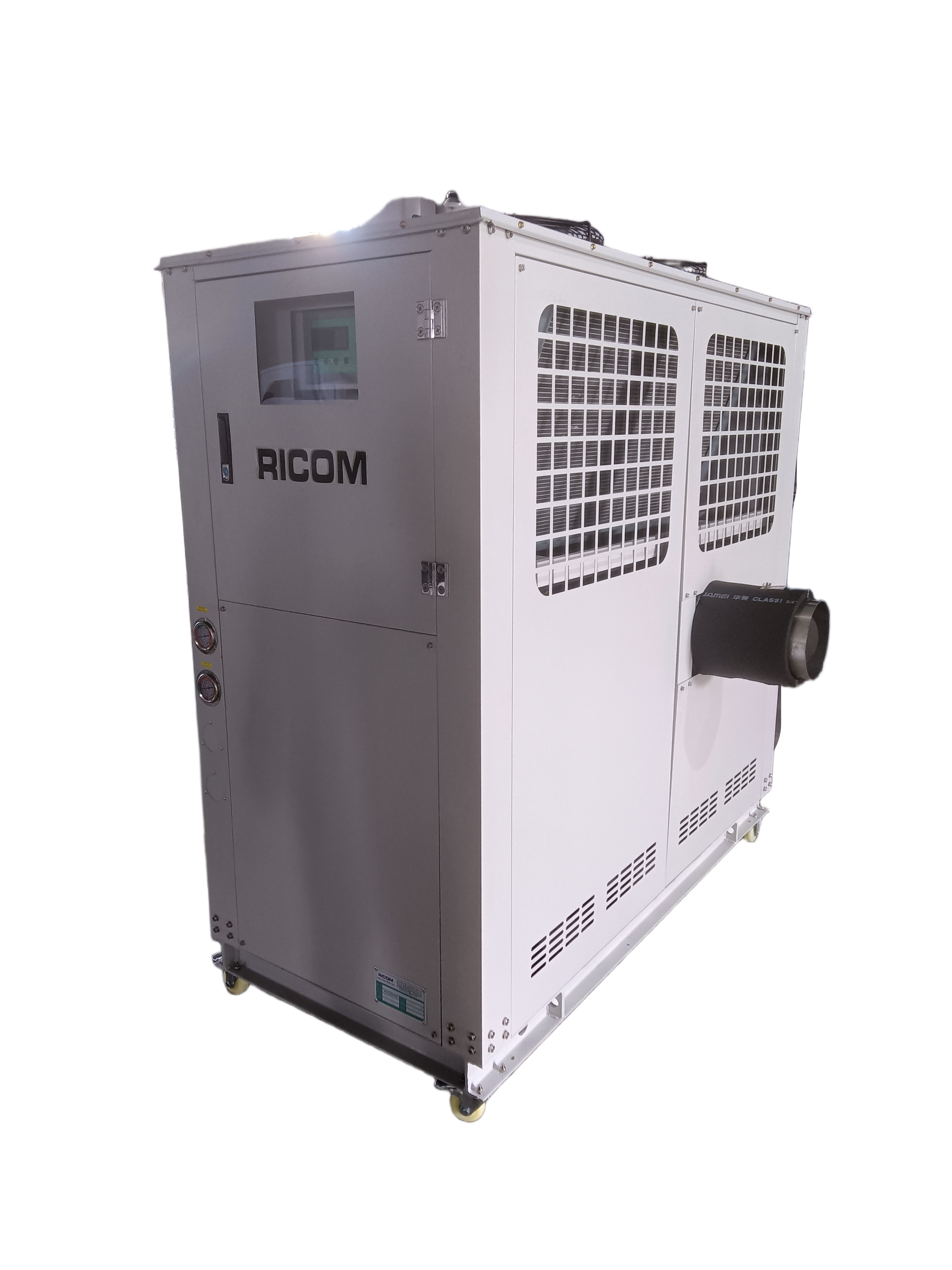
Select air cooling, water cooling, or air + water cooling according to the material and required output, and monitor the operating temperature.

The final powder should be evaluated after screening rather than based only on the powder coming directly out of the pulverizing chamber.
Screening can help separate:
Coarse particles
Target-size particles
Excessive fines
This helps further control the particle size distribution of the final powder.
The appropriate screen specification should be determined according to the target powder size and final application.
“Can your machine produce 40-mesh powder?”
This is a common question when customers are selecting a PE pulverizer.
The question is important, but 40 mesh alone does not fully define powder quality.
Two powders may both be described as 40 mesh, while their actual particle size distributions can be different.
For example, one powder may contain a higher proportion of coarse particles, while another may contain more fines.
Therefore, PE powder should be evaluated based on multiple parameters:
Parameter | What to Consider |
|---|---|
Target particle size | Does it meet the requirements of the actual application? |
Particle size distribution | Is the distribution stable? |
Coarse particles | Is the proportion of large particles controlled? |
Fines | Are excessive fines controlled? |
Temperature | Is temperature rise under control? |
Flowability | Can the powder be conveyed and fed consistently? |
Output | Does the capacity meet actual production requirements? |
Long-term stability | Can the powder remain consistent during continuous production? |
This approach provides a more practical evaluation of PE powder than simply comparing a single mesh specification.
Don't choose a pulverizer based on mesh size alone. Send us your PE material and target particle size for testing.

Mao Yue manufactures its own pulverizer discs and blades, with control over mold development, machining, edge processing, and inspection. This helps maintain the machining accuracy and working geometry of the core pulverizing components.

Pulverizer discs need to maintain stable geometry and balance during high-speed operation. Mao Yue uses precision machining and dynamic balancing to reduce operating variation and help maintain stable pulverizing conditions.
Mao Yue does not select equipment based only on disc diameter, motor power, or target mesh size. Instead, the complete pulverizing process is evaluated based on feeding, disc gap, component condition, temperature, screening, and actual material testing.
Mao Yue focuses not on a single pulverizer parameter, but on the complete PE pulverizing process.
Depending on project requirements, the system can integrate:
Feeding → Iron Removal → Pulverizing → Air/Water Cooling → Screening → Cyclone Separation → Dust Collection → Powder Collection

Different PE raw materials can behave differently during the pulverizing process. As a result, the same equipment configuration may produce different results with different materials.
Testing the actual material before final equipment selection provides a more direct way to evaluate pulverizing performance and operating conditions.
Mao Yue can test and evaluate your PE material based on the following information:
PE material and feed particle size
Target powder mesh or particle size
Required output
Working hours per day
Final rotomolding application
Current powder-related problems
The testing focuses on:
Powder fineness and particle size distribution
Production capacity
Temperature rise
Feeding performance
Powder collection performance
Based on the test results, a more suitable pulverizer configuration, cooling method, and operating conditions can then be determined.
For recycled PE and materials with significant variations in characteristics, actual material testing can be particularly useful.
No. The appropriate powder particle size depends on the raw material, processing conditions, mold, and final application. What matters is achieving a stable particle size distribution that meets the application requirements, rather than simply producing finer powder.
Yes. Wear on the blades and discs can change their working geometry, which may gradually affect pulverizing efficiency and the final powder particle size.
The cooling capacity should be matched to the raw material and required output. Depending on the actual production conditions, air cooling, water cooling, or air + water cooling can be used.
Start with the actual raw material, target particle size, required output, working hours, and final application. Testing the actual material before final equipment selection can provide a more reliable basis for choosing the right pulverizer.
Yes. You can provide a PE material sample, target powder particle size, required output, working hours per day, and final application. Mao Yue can test the actual material to evaluate pulverizing performance and discuss a suitable equipment configuration.
Common causes include an excessive disc gap, disc or blade wear, changes in feeding conditions, and changes in screening conditions. The cause should be identified by considering production time, changes in powder quality, and equipment operating conditions.
If your PE rotomolding powder shows batch-to-batch variation, excessive coarse particles, excessive fines, unstable feeding, or output fluctuations, the problem may not be the powder itself.
The more important question is:
Where does the particle size variation occur in the pulverizing process?
We can evaluate:
Target mesh size
Raw material characteristics
Required output
Cooling method
Pulverizer configuration
Actual material testing
Mao Yue can test your actual PE material, evaluate the pulverizing process, and discuss a suitable PE pulverizer configuration based on the test results.
Looking for a PE pulverizer that can produce stable rotomolding powder? Test your actual material before final equipment selection.


