Specializing in the production of Plastic Pulverizer Machines.

Views: 0 Author: Site Editor Publish Time: 2026-11-13 Origin: Site
Recycled PVC powder allows window profile manufacturers to reuse production scrap, reduce material waste, and improve raw material utilization. However, adding recycled material can sometimes lead to surface defects in finished profiles, including black spots, rough surfaces, raised particles, streaks, and uneven gloss.
Does recycled PVC powder always cause these problems? No. Surface quality is influenced by several factors, including material contamination, particle size distribution, previous thermal processing history, formulation compatibility, and extrusion conditions.
The key is to identify whether the problem originates from the recycled material, the pulverizing process, or the downstream extrusion line.
This article examines the main causes of surface defects in recycled PVC window profiles, explains how to identify their sources, and discusses how proper PVC pulverizing processes and raw material control can improve powder consistency.
Different surface defects may indicate different problems related to raw materials, extrusion, or downstream processing. Their appearance, location, and frequency can provide useful clues for identifying the source.
Surface Defect | Possible Causes | What to Check First |
|---|---|---|
Black spots | Contamination, PVC thermal degradation, or equipment buildup | Recycled material, extruder, and die |
Rough surfaces | Inadequate fusion, material incompatibility, or unstable extrusion | Powder condition and extrusion parameters |
Raised particles | Foreign materials, insufficiently processed particles, or uneven filler dispersion | Material composition and dispersion |
Surface streaks | Raw material variation, unstable melt flow, or die buildup | Material batches and die condition |
Uneven gloss | Inconsistent fusion, surface contamination, or cooling variations | Extrusion and calibration conditions |
Pinholes and bubbles | Moisture, volatile contaminants, entrained air, or insufficient venting | Material condition and venting system |
These relationships are preliminary diagnostic indicators rather than definitive cause-and-effect conclusions. The same defect can result from multiple factors, so production records and controlled trials are needed for further investigation.

Black spots are particularly noticeable on white or light-colored PVC window profiles. Even a small number of spots can affect product appearance and quality acceptance.
They may originate from foreign materials in recycled PVC, previously degraded material, or accumulated deposits inside the extruder or die.
If black spots increase significantly after introducing a particular batch of recycled material, the raw material and pulverized powder from that batch should be checked first. If black spots gradually appear during continuous production, equipment buildup and localized overheating inside the extrusion system should also be investigated.

Rough surfaces may be associated with insufficient fusion, material incompatibility, or unstable melt processing. Raised particles may indicate foreign materials, insufficiently processed particles, or uneven filler dispersion.
It is important to distinguish three different concepts: powder particle size, material dispersion, and PVC fusion. Even when the powder meets the required particle size specification, this does not necessarily mean that all components are evenly dispersed or that PVC can achieve sufficient fusion under the existing extrusion conditions.
Surface streaks require a different approach. If streaks consistently appear in the same position on the profile, the die surface, flow channels, and calibration equipment should be inspected. If they change with different raw material batches, material consistency and extrusion stability should be investigated.
Recycled PVC does not necessarily mean poor-quality material. Clean production scrap with a known source and relatively consistent composition can often be reused.
The real challenge is controlling variations in recycled materials and ensuring that powder quality matches downstream extrusion requirements.
Five factors deserve particular attention.
Recovered PVC window profiles may contain rubber sealing strips, metal fragments, adhesive residues, protective films, dust, or other polymers.
These contaminants may behave differently from rigid PVC during extrusion. Some may remain as foreign inclusions, while others may soften, decompose, or exhibit different processing behavior under extrusion conditions. This can contribute to black spots, raised particles, or surface irregularities.
Pulverizing reduces material size, but it cannot remove incompatible polymers or chemical contaminants. In some cases, reducing mixed materials into smaller particles can make subsequent identification and separation more difficult.
Therefore, material sorting, metal removal, and necessary cleaning should be completed before fine pulverizing.

Particle size distribution refers to the proportion of particles within different size ranges in a powder sample. Meeting an average particle size target does not necessarily mean that the entire batch has a consistent particle size distribution.
If coarse particles are unsuitable for the existing mixing and extrusion processes, they may affect feeding stability, mixing uniformity, and subsequent fusion. An excessive proportion of fines may increase dust generation, material segregation, and feeding instability.
Three concepts need to be distinguished:
Particle size: The physical dimensions and distribution of the powder particles.
Material dispersion: How PVC, fillers, and other components are distributed throughout the mixture.
Degree of fusion: The formation of a homogeneous PVC melt during extrusion.
These factors are related, but they are not interchangeable. Finer powder does not necessarily result in better material dispersion or fusion.
Therefore, the objective of pulverizing should not simply be to produce the finest possible powder. Instead, the target should be a consistent particle size distribution that meets actual processing requirements based on the customer's mixing equipment, feeding method, and extrusion process.
PVC is sensitive to excessive heat exposure. Recycled PVC has usually undergone at least one previous processing cycle, and some recovered materials may have experienced additional heating or repeated processing.
One important degradation mechanism is dehydrochlorination. During this process, PVC releases hydrogen chloride (HCl), forming conjugated structures along the polymer chains. This can cause discoloration and may further accelerate thermal degradation.
The remaining thermal stability of recycled PVC depends on its previous processing history, stabilizer system, formulation, and actual heat exposure.
Mechanical energy is also introduced during pulverizing, and part of this energy is converted into heat. Insufficient cooling, unsuitable operating conditions, or worn grinding components may cause unnecessary temperature increases.
However, an increase in powder temperature does not necessarily mean that PVC has undergone thermal degradation. Temperature records, material discoloration, appropriate thermal stability tests, and controlled extrusion trials should be considered together when evaluating potential degradation.
Different PVC window profile manufacturers may use different stabilizer systems, filler contents, lubricants, pigments, and processing additives.
Two batches of recycled PVC may look similar but behave differently during extrusion. Variations in filler content or lubrication systems can affect fusion behavior, melt processing, and die buildup.
A pulverizer can control the physical size reduction process, but it cannot make chemically different PVC formulations fully compatible or restore the original formulation of the material.
Therefore, recycled materials should be classified according to their sources and available formulation information before deciding whether they can be mixed and reused.
Recycled PVC powder may contain residual moisture from washing, cleaning agent residues, or other volatile contaminants introduced during recycling and storage.
Different gas sources can produce similar surface defects during extrusion, but their underlying mechanisms are not necessarily the same:
Moisture: May form water vapor under processing conditions.
Volatile contaminants: May release volatile substances at extrusion temperatures.
Entrained air: May form bubbles or voids within the melt.
Insufficient venting: May prevent gases from being effectively removed.
Therefore, pinholes or bubbles should not automatically be attributed to moisture. Material condition, the venting system, and extrusion parameters should be evaluated together.
If recycled material has been washed, its drying condition should be verified. Powder should also be stored in a clean, controlled environment to prevent moisture absorption and cross-contamination between batches.
When surface defects appear after adding recycled PVC, it is easy to blame powder quality directly. However, extrusion parameters, die conditions, and material buildup inside processing equipment can produce similar defects.
Reliable diagnosis requires separating raw material factors from processing conditions. Whenever possible, change only one variable at a time and record the actual results.
First, establish a reference formulation that has already demonstrated stable production of acceptable window profiles.
Under extrusion conditions that remain as consistent as possible, introduce a controlled proportion of recycled PVC from a specific batch.
Compare profile appearance, extrusion pressure, screw load, fusion behavior, and production stability.
If defects repeatedly increase after adding a particular recycled material batch and decrease when that batch is removed, the material should be investigated further.
Additional testing is still needed to determine whether the actual cause is contamination, formulation differences, or previous thermal degradation.
Once recycled material becomes the main suspected source, its physical and chemical characteristics should be checked before making immediate adjustments to the pulverizing equipment.
The inspection should answer several practical questions:
Is the powder contaminated?
Is the particle size distribution consistent?
Are there excessive coarse particles or fines?
Does the material composition match the confirmed formulation?
Are there signs of thermal degradation?
Does the powder contain residual moisture or volatile contaminants?
Inspection Item | Testing Method | Evaluation Purpose |
|---|---|---|
Particle size | Sieve analysis | Identify coarse particles and fines |
Contamination | Visual inspection, microscopy, and separation tests | Identify foreign materials |
Thermal stability | Appropriate PVC thermal stability testing | Evaluate material stability |
Formulation consistency | Material identification, ash content, and formulation analysis | Identify batch variations |
Moisture and volatiles | Appropriate moisture and volatile content tests | Investigate gas-related defects |
Bulk density | Standard bulk density testing | Evaluate bulk characteristics and consistency in volumetric feeding |
For particle size testing, the retained percentage on each sieve should be recorded rather than reporting only the average particle size.
If contamination is suspected, both the original recycled material and the pulverized powder should be inspected. Some incompatible materials become more difficult to identify after size reduction.
If powder testing does not reveal obvious abnormalities, the downstream extrusion line should be investigated.
Key inspection points include:
Barrel and die temperature distribution
Screw load and extrusion pressure
Material residence time
Feeding stability
Fusion and melt processing conditions
Die buildup or surface damage
Calibration equipment condition
The location and timing of defects can provide useful clues. Streaks that consistently appear in fixed positions may be related to localized die or calibration problems. Defects that increase after introducing a particular recycled material batch indicate that the raw material deserves closer inspection.
These observations should guide further investigation rather than be treated as final conclusions.
Inspection Result | Possible Cause | Recommended Action |
|---|---|---|
Defects increase after adding a specific recycled material batch | Contamination or material degradation | Inspect the raw material and powder |
Coarse particle proportion increases | Changes in grinding or screening conditions | Check grinding components and screening system |
Powder temperature increases during continuous operation | Abnormal cooling or operating conditions | Check cooling, feeding, and discharge |
Processing performance varies between batches | Formulation or material source differences | Separate batches and conduct testing |
Defects consistently appear in the same profile location | Die or calibration equipment issues | Inspect the die and calibration surfaces |

Once the possible source of a defect has been identified, corrective measures should target the relevant processing stage rather than making unnecessary adjustments throughout the entire production line.
Priority should be given to PVC production scrap with a known source and relatively consistent composition. Clean in-house production scrap should be handled separately from complex post-consumer recycled materials.
Before fine pulverizing, remove metal components, rubber sealing strips, protective films, adhesive residues, and other non-PVC materials. Depending on the raw material, metal detection, washing, air separation, or other suitable separation methods may be used.
Contamination control should be completed before pulverizing because a pulverizer reduces material size but does not replace sorting or separation equipment.
The target particle size distribution should be determined through actual mixing and extrusion trials. Grinding gap, feeding rate, grinding component condition, and screening configuration can then be adjusted accordingly.
Both coarse particles and excessive fines should be monitored during production. Simply pursuing finer powder is not an effective quality control strategy.
Suitable powder specifications may vary depending on PVC formulations and extrusion processes. A stable particle size distribution that meets downstream processing requirements is generally more valuable than unnecessarily fine powder.
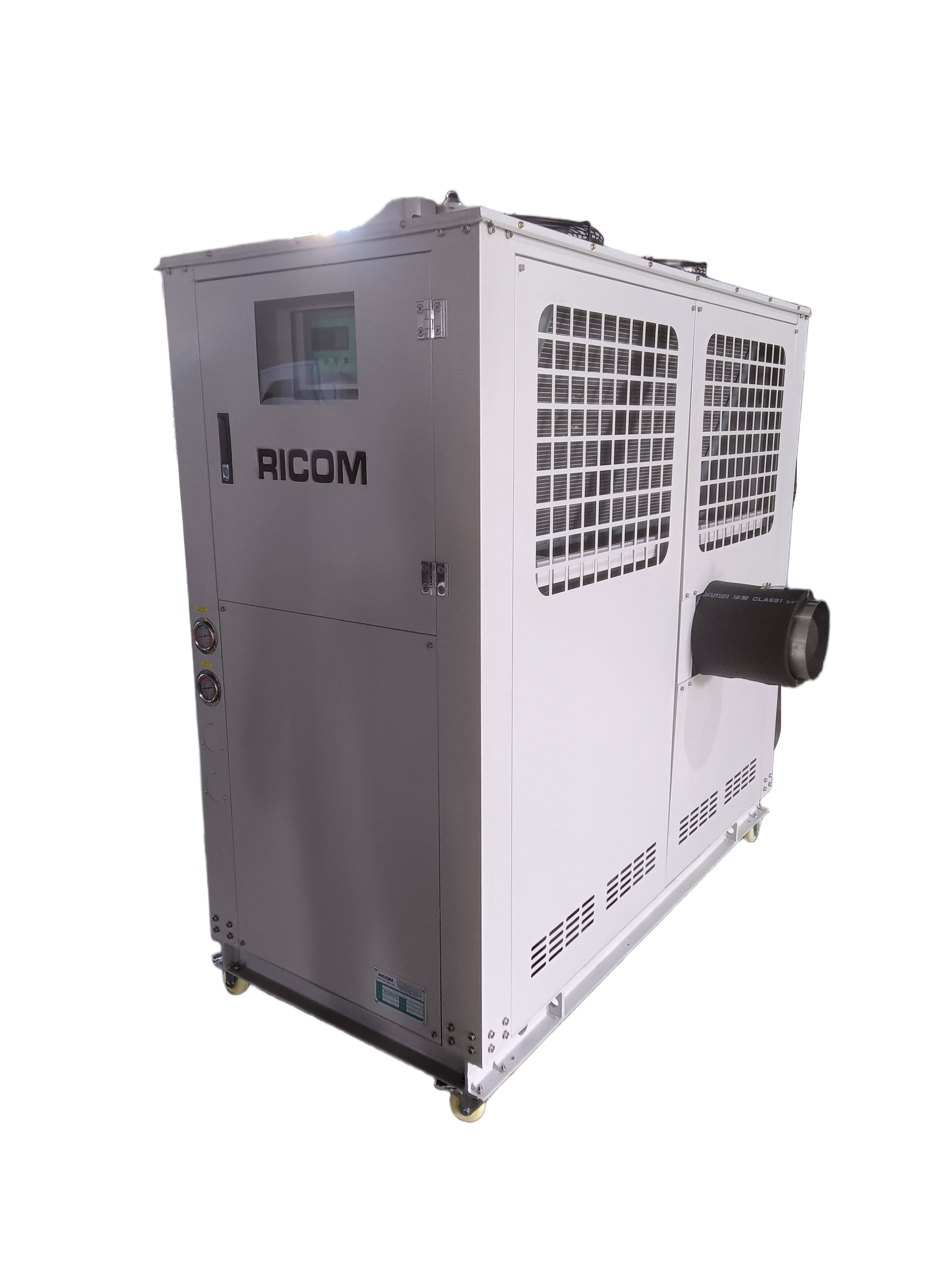
PVC pulverizing requires appropriate temperature management.
Cooling performance, feeding rate, grinding component wear, and discharge efficiency should be checked. During material trials, temperatures should be recorded at consistent measurement locations to compare changes under different operating conditions.
If powder discoloration, sticking, or abnormal processing behavior occurs, the cause should be investigated before increasing production capacity or adjusting operating parameters.
The suitable proportion of recycled PVC should be determined according to material quality, product structure, extrusion capability, and applicable requirements.
Some window profile systems use recycled PVC in the internal core layer while applying suitable materials to the outer layer to meet appearance and weather resistance requirements. Material suitable for internal structural applications may not necessarily meet the requirements of exposed surfaces.
Controlled production trials should be conducted to evaluate recycled material ratios. The formulation should only be approved for regular production after verifying surface appearance, mechanical properties, and dimensional stability.
If recycled PVC powder quality is inconsistent, replacing the pulverizer should not be the first decision. Buyers should first identify which part of the existing process fails to meet the required powder specifications.
For PVC window profile recycling applications, three equipment factors deserve particular attention.

The grinding structure directly affects the size reduction performance of rigid PVC profile scrap.
Grinding tooth geometry, material hardness, machining accuracy, installation condition, and wear condition can all influence powder particle size distribution and processing stability.
Buyers should ask suppliers to specify the material, dimensions, structure, and maintenance requirements of grinding components. They should also confirm whether replacement parts can be supplied according to the original specifications.
It is also important to understand how wear part replacement intervals are evaluated, whether spare parts can be supplied consistently, and whether maintenance requires replacing an entire assembly.
The long-term value of a pulverizer depends not only on its initial operating performance but also on the availability and maintainability of critical wear parts.

The cooling system helps control temperature increases during grinding, while screening equipment classifies powder according to the required particle size.
However, screening cannot remove all incompatible polymers or restore PVC that has already undergone degradation. Each processing stage serves a different purpose.
During equipment evaluation, buyers should request continuous operation demonstrations and records of feeding rate, processing temperature, particle size distribution, actual powder recovery, and qualified powder output.
Two production indicators deserve particular attention:
Actual powder recovery: The quantity of powder physically collected from the processing system within a defined period, evaluated in relation to the feed quantity.
Qualified powder output: The quantity of powder produced per hour that meets the agreed particle size and quality requirements.
A higher feeding rate does not necessarily mean a higher usable output. Some collected powder may fail to meet the target specifications, while other material may remain inside the system or be lost during processing.
For buyers, qualified powder output provides a more realistic indication of equipment productivity and investment value than the rated feeding capacity alone.
A PVC pulverizer should be tested using materials that represent the buyer's actual production conditions.
Clean in-house production scrap and mixed recycled window profiles may behave differently because of variations in contamination, dimensions, formulations, and previous processing history.
Before testing, the target particle size distribution, required processing capacity, temperature monitoring method, and sampling procedure should be clearly defined.
After testing, the results should be compared with the agreed technical requirements. For applications with strict surface quality requirements, the resulting powder should also be evaluated through the customer's downstream extrusion process.
A successful pulverizing trial demonstrates the equipment's powder processing capability, but it does not automatically guarantee defect-free finished profiles. Material compatibility and extrusion conditions still require further verification.
For window profile manufacturers, the value of a PVC pulverizer is not simply whether it can process production scrap into powder. More importantly, the equipment should consistently produce powder that meets the required specifications while allowing equipment configuration, operating performance, and long-term maintenance costs to be evaluated.
Mao Yue supports equipment selection and performance verification through three key areas: in-house manufacturing of critical grinding components, equipment configuration evaluation, and actual material testing.

Mao Yue manufactures critical PVC grinding components in-house, including rotors, tooth plates, and blades.
For manufacturers operating PVC pulverizers over the long term, grinding components affect not only processing performance but also maintenance planning and spare parts costs.
Mao Yue's in-house manufacturing capability allows customers to confirm the material, dimensions, structure, and supply scope of critical grinding components before purchasing. Spare parts and replacement requirements can also be planned according to actual operating conditions.
This means buyers do not need to compare equipment quotations based solely on the main machine price. They can also evaluate the supply arrangements for critical wear parts and estimate future maintenance expenses in advance.
For PVC recycling companies that require continuous production, clearly specified components and reliable spare parts arrangements help reduce uncertainty in long-term maintenance.

Mao Yue PVC pulverizers adopt a rotor-and-stator grinding structure and are equipped with corresponding cooling systems according to actual application requirements.
Different PVC materials vary in dimensions, formulation, feeding conditions, and target particle size. Therefore, equipment configuration should not be determined solely by motor power or rated capacity.
During equipment evaluation, Mao Yue can assess the grinding structure, operating conditions, and cooling configuration based on the customer's material condition, target particle size, and required processing capacity.
During material trials, processing temperature and powder particle size distribution can also be recorded to evaluate whether the selected configuration meets the expected processing requirements.
This material-based configuration assessment helps customers reduce purchasing risks associated with selecting equipment based only on technical specifications.
What customers really need to confirm is not simply whether a pulverizer can operate normally, but whether it can process their actual PVC window profile scrap into powder suitable for their recycling requirements.
Mao Yue can conduct pulverizing trials using actual PVC materials provided by customers and evaluate the results through the following stages.

Before Testing: Define the Test Conditions
Source and basic composition of the PVC material
Raw material dimensions and feeding condition
Target powder particle size distribution
Expected processing capacity
During Testing: Record Equipment Performance
Actual feeding rate
Processing temperature
Grinding and cooling performance
Continuous operating performance
After Testing: Evaluate Powder Processing Results
Particle size distribution and coarse particle proportion
Actual powder recovery
Qualified powder output
Powder appearance and other agreed specifications
These results allow customers to compare equipment performance with their actual production requirements and determine whether the selected configuration is suitable for their recycling application.
For window profile manufacturers, the trial powder should also be evaluated through the intended downstream extrusion process to further verify material compatibility and finished profile quality.
It is important to clarify that a pulverizing trial verifies the equipment's powder processing capability. It cannot independently guarantee that the finished profiles will be free from surface defects. Raw material formulation, extrusion conditions, and die conditions must still be evaluated separately.
Yes. Recycled PVC can be used in suitable window profile manufacturing processes when its material composition, contamination level, thermal stability, and other required properties meet the relevant technical specifications.
Some manufacturers use recycled PVC in the internal structure of profiles while applying suitable materials to the exposed outer surfaces.
The specific application depends on product design, processing conditions, and applicable quality requirements.
No. Finer PVC powder does not necessarily produce smoother window profile surfaces.
Particle size is only one factor affecting mixing, feeding, and fusion. Excessive fines may increase powder handling difficulties, while unsuitable formulations or unstable extrusion conditions can still cause surface defects.
The appropriate powder specifications should be determined through actual processing trials.
A PVC pulverizer cannot eliminate black spots from every source.
Improved grinding control may help reduce powder quality variations associated with the pulverizing process. However, if black spots originate from incompatible contaminants, previously degraded material, or deposits inside the extruder, other corrective measures are required.
The source of the black spots should be identified before deciding which equipment or processing stage needs adjustment.
Buyers should first define the required powder specifications and provide representative samples of their actual materials.
Pulverizing trials can be used to evaluate particle size distribution, temperature performance, powder recovery, and qualified powder output.
The resulting powder should then be tested under the intended extrusion conditions to confirm whether it meets the required profile appearance and product performance specifications.
Surface defects in recycled PVC window profiles may result from contamination, unsuitable particle size distribution, material thermal degradation, formulation differences, or unstable extrusion conditions.
Effective solutions should begin by identifying the actual source of the problem rather than automatically blaming recycled powder or the pulverizer.
For manufacturers recycling PVC window profile offcuts, proper sorting, controlled pulverizing, temperature management, and material testing are important steps toward improving powder consistency.
When purchasing a PVC pulverizer, buyers should focus on measurable powder specifications, qualified powder output, grinding component quality, and long-term maintenance requirements rather than comparing only rated capacity or maximum grinding fineness.
Are you recycling PVC window profile offcuts but experiencing inconsistent powder quality, excessive coarse particles, or unstable processing performance?
Mao Yue can evaluate your actual PVC material, target particle size distribution, and required processing capacity to help identify a suitable pulverizing configuration.
With in-house manufactured PVC rotors, tooth plates, and grinding components, together with actual material testing capabilities, Mao Yue helps customers evaluate grinding performance, powder consistency, qualified powder output, and future maintenance requirements before investing in equipment.
Please provide Mao Yue with the following information:
Photos and material details of your PVC window profile scrap
Target powder particle size
Required processing capacity
Current production challenges


