English


Views: 0 Author: Site Editor Publish Time: 2026-10-13 Origin: Site
The quality of rotomolded products depends not only on the polyethylene raw material but also on powder particle size, particle size distribution, flowability, and actual processing conditions.
For rotomolding manufacturers, grinding PE material to the target mesh size does not necessarily mean that the resulting powder is suitable for production. An excessive proportion of coarse particles, variations in particle size distribution, or temperature increases during continuous operation can all affect downstream processing performance.
So, how can you produce PE powder suitable for rotomolding?
The key is to match the raw material characteristics, pulverizing equipment, cooling method, screening conditions, and finished powder inspection requirements rather than simply aiming for finer powder.
This article explains the PE rotomolding powder production process, key factors in pulverizer selection, powder quality verification methods, and how Mao Yue helps customers evaluate suitable PE pulverizing solutions through actual material testing and in-house manufacturing of core components.
Rotomolding is a process in which a heated mold rotates so that the plastic material gradually melts and coats the inner surface of the mold. For many rotomolding applications, polyethylene must first be pulverized into powder suitable for subsequent processing.
PE powder for rotomolding should be evaluated according to the resin grade, product structure, and molding process. The key factors include:
Target particle size: The powder must meet the fineness requirements of the specific rotomolding application.
Particle size distribution: In addition to average particle size, the proportions of coarse particles, fine particles, and particles outside the target range should be considered.
Powder flowability: Particle shape and the proportion of fine particles can affect how the powder moves and distributes inside the mold.
Temperature stability: Temperature rise during pulverizing should be properly controlled to reduce the risk of material softening, adhesion, and agglomeration.
Batch-to-batch consistency: Different production batches should maintain reasonably consistent powder specifications and processing characteristics.
For some PE rotomolding applications, 20–40 mesh can serve as a reference range. However, it is not a universal standard for every product. The actual target should be determined according to the raw material characteristics, product structure, and rotomolding process.
Therefore, suitable PE rotomolding powder must not only meet the target fineness but also pass particle size inspection and, when necessary, actual molding trials to verify whether it meets production requirements.
PE rotomolding powder production typically involves raw material evaluation, feeding, pulverizing, cooling, screening, powder collection, and finished product inspection.
A typical production process is:
PE Raw Material Evaluation → Feeding → Pulverizing → Cooling → Screening → Powder Collection → Finished Powder Inspection
Each stage serves a different purpose.
Raw material evaluation: Confirm the PE material type, resin grade, feed size, and target powder specifications to support equipment selection and process evaluation.
Feeding: Control the condition and rate of material entering the pulverizer according to equipment requirements to reduce the impact of feeding fluctuations on production.
Pulverizing: Use core working components, such as grinding discs and blades, to process the PE material into the target powder size range.
Cooling: Help control the heat generated during pulverizing. The cooling configuration should match the material characteristics and equipment operating requirements.
Screening: Separate powder that meets the specified screening requirements from particles requiring further processing, reducing the proportion of out-of-specification particles in the finished product.
Powder collection: Convey and collect the qualified powder while managing dust, leakage, and material loss.
Finished powder inspection: Check whether the powder meets the predefined specifications and verify other key parameters according to customer requirements.
The entire production line must maintain a balance between the processing capacities of individual stages. For example, if the screening or collection system cannot handle the pulverizer's output, overall production may be limited even when the main machine has sufficient processing capacity.
A plastic pulverizer is a core piece of equipment in PE rotomolding powder production. When selecting a system, manufacturers should consider more than motor power and rated capacity. Core component quality, grinding gap adjustment, and the ability of the complete system to meet the target powder specifications and production requirements should also be evaluated.
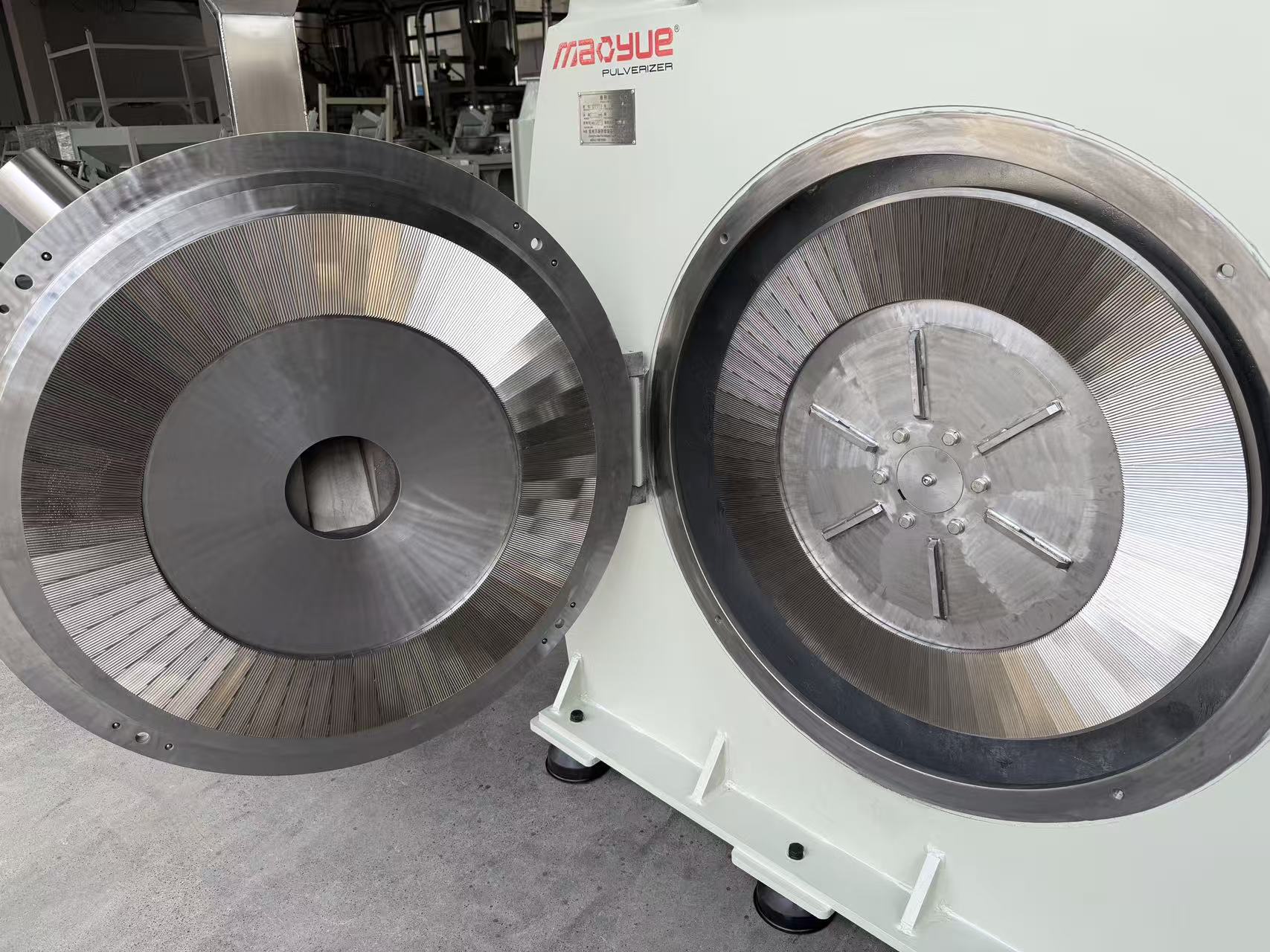
The working geometry, machining accuracy, and wear condition of grinding discs and blades affect the pulverizing process. As these components wear, their actual working conditions may change, potentially affecting powder particle size and output.
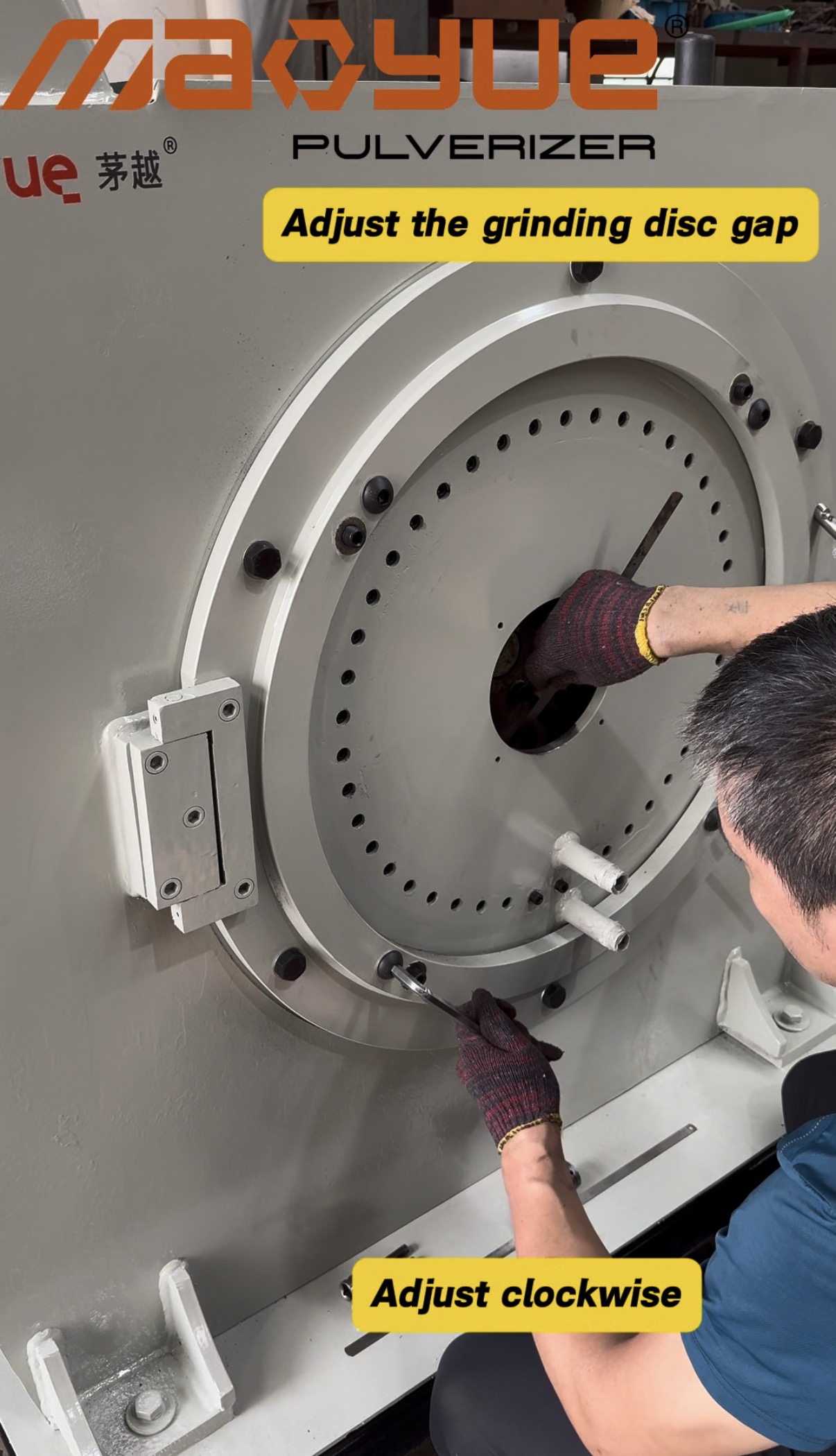
The grinding gap must be matched to the raw material characteristics and target powder specifications.
A suitable gap setting helps balance target fineness, production output, and equipment operating conditions. For long-term production, manufacturers should also consider whether the gap can remain stable and whether appropriate working conditions can be restored after maintenance.
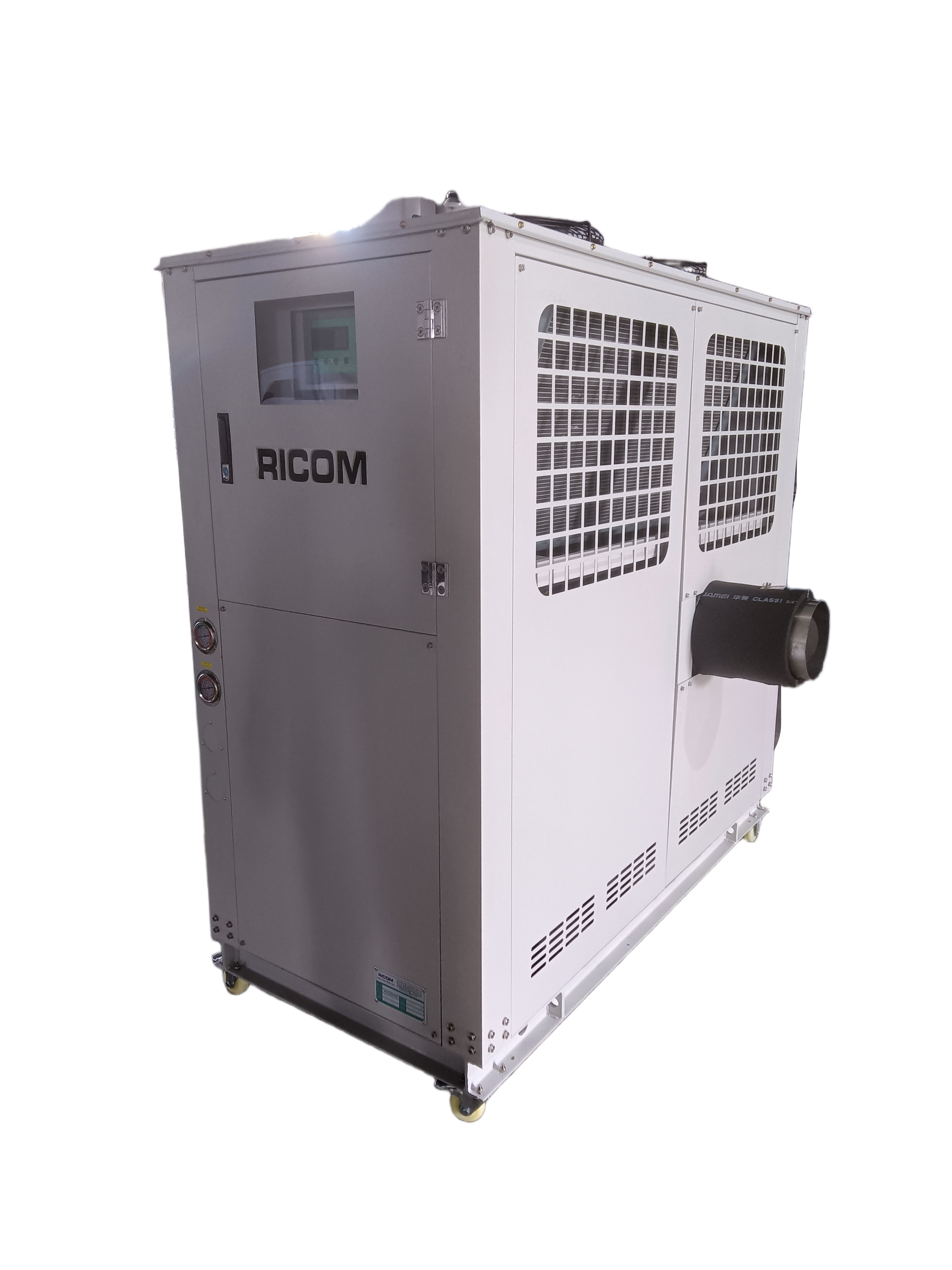
Cooling capacity should be evaluated according to the raw material characteristics, target fineness, pulverizing load, and expected operating time. The selected cooling configuration must be capable of meeting the intended production requirements.

Rated equipment capacity does not necessarily equal actual output when processing a specific material to a particular fineness.
When evaluating equipment, clarify the raw material type, target fineness, operating conditions, and auxiliary equipment associated with the stated capacity. If the production line includes feeding, screening, conveying, and powder collection systems, the processing capacity of each stage should also be checked.
A suitable PE pulverizing system should be selected according to actual production objectives rather than by comparing motor power or machine models alone.
The primary objective of the pulverizing stage is to bring the raw material within the target powder specifications while monitoring the process for deviations.
In actual production, powder quality and production stability can be evaluated in three ways.
First, check whether the particle size distribution meets requirements.
Test the proportions of particles within different size ranges according to predefined product specifications to determine whether the finished powder meets the target requirements.
Second, compare inspection results from different production periods.
If the particle size distribution changes persistently under otherwise similar production conditions, further checks of equipment condition and operating parameters are needed to determine whether the process has deviated from its intended state.
Third, analyze abnormalities alongside output and operating conditions.
If the powder gradually becomes coarser while output decreases, or if equipment operating conditions change, inspect the grinding discs and blades, grinding gap, and feeding conditions.
Combining powder inspection results with equipment operating records provides a more reliable basis for deciding whether process adjustments or equipment maintenance are necessary, rather than relying on a single test result.
The cooling system should be evaluated according to raw material characteristics, target powder specifications, equipment load, and continuous operating requirements. Air cooling or combined air-and-water cooling should be selected according to actual processing conditions rather than machine model alone.
When the heat generated exceeds the system's heat dissipation capacity, the material temperature may gradually rise. If the PE softens or becomes sticky, powder agglomeration, reduced flowability, or changes in production performance may occur.
Controlling this risk requires an assessment of processing conditions, cooling capacity, and actual operating performance.
Feed rate, target fineness, and equipment load all influence heat generation during pulverizing.
If the feed rate is increased or finer powder is targeted without evaluating heat dissipation capacity at the same time, equipment operating conditions may become unstable. Operating parameters should therefore be adjusted according to the actual material and production objectives.
Air cooling helps remove heat generated during pulverizing. With an appropriately designed system, water cooling can provide additional heat dissipation.
The actual performance of a combined air-and-water cooling system depends on equipment design, cooling conditions, raw material characteristics, and operating load.
A pulverizer performing normally during a short trial does not necessarily maintain the same processing conditions during extended production.
For continuous production projects, operating duration, temperature changes, powder agglomeration, and output should be evaluated together to determine whether the equipment can consistently meet production requirements.
It is also important to recognize that agglomeration is not always caused solely by insufficient cooling. Raw material characteristics, feeding conditions, and pulverizing parameters may also contribute. If agglomeration occurs, identify where the problem develops before deciding whether to adjust operating conditions or reassess the system configuration.
For Mao Yue, a PE rotomolding pulverizer project is not simply about supplying a machine. The goal is to evaluate a suitable pulverizing solution based on the customer's raw material, target powder specifications, and output requirements.
Our approach focuses on three key areas.
Different PE materials may exhibit different processing characteristics. The actual pulverizing results cannot be fully determined from the resin name, motor power, or theoretical capacity alone.
Mao Yue can conduct actual material tests using customer-provided raw materials and evaluate the equipment solution according to the target particle size, expected output, and production requirements.
Testing may focus on the following areas:
Powder inspection: Record test results against customer-defined specifications to support equipment configuration and process evaluation.
Production capacity: Record actual output when processing the specified material to the target fineness, providing a reference for equipment selection.
Temperature changes: Monitor temperature rise during pulverizing to evaluate whether the cooling configuration and operating conditions are suitable.
Operating performance: Assess powder condition and equipment performance to identify processing parameters that require further adjustment or verification.
These test results help customers understand powder quality, actual output, and temperature changes for a specific PE material under defined processing conditions. They can also help identify production risks that require further verification.
However, material test results do not replace long-term continuous operation verification or actual rotomolding trials.

Mao Yue manufactures its own grinding discs and blades, using machining and inspection processes to control critical working geometry and dimensional accuracy.
During long-term production, the value of core components lies not only in their initial machining accuracy but also in the ability to inspect and maintain them according to their actual wear condition.
When powder particle size or output changes, the working condition of the grinding discs and blades, the grinding gap, and relevant operating records can be checked to determine whether maintenance or adjustments are necessary. This provides a more informed basis for maintenance decisions than relying solely on blade hardness or a fixed replacement interval.
PE rotomolding powder production involves feeding, pulverizing, cooling, screening, conveying, and powder collection. Different projects have different raw materials, target specifications, output requirements, and operating schedules, so their system configurations may also differ.
For each project, Mao Yue can evaluate:
Whether the pulverizer's processing capacity meets the target output.
Whether the cooling configuration suits the raw material characteristics and continuous operating requirements.
Whether screening capacity meets the target powder specifications.
Whether the conveying and collection systems can handle the expected production capacity.
Our objective is not to provide every customer with an identical configuration. Instead, we evaluate how the different stages work together under actual processing conditions to help customers select equipment and plan their production lines.
If you are planning a new PE rotomolding powder production line, or your existing equipment has problems such as inconsistent particle size, excessive coarse particles, temperature rise, powder agglomeration, or lower-than-expected output, contact Mao Yue for a technical evaluation.
Share your PE material type, target powder specifications, expected output, and current production challenges. If some parameters have not yet been determined, you can still provide the information available. We can then discuss material testing and equipment selection based on your actual production requirements.
There is no single mesh size suitable for every rotomolding application. A range of 20–40 mesh can serve as a reference for some PE rotomolding powders. The actual requirements should be determined according to the resin grade, product structure, and rotomolding process.
Possible causes include the working condition of the grinding discs and blades, the grinding gap, raw material feeding conditions, or screening performance. First determine whether the coarse particles are being generated during pulverizing or are not being effectively separated during screening.
Temperature rise may cause PE to soften and become sticky, but raw material characteristics, feeding conditions, and pulverizing parameters can also contribute to agglomeration. The actual production process should be examined to identify where the problem occurs.
Liquid nitrogen cooling is not necessary for every PE rotomolding powder application. The need for a specialized cooling method should be evaluated according to material characteristics, target fineness, output requirements, and temperature control needs. For suitable PE materials, ambient-temperature mechanical pulverizing with an appropriate air-cooling or combined air-and-water cooling system may be considered.
Evaluate actual material test results, target particle size, output requirements, continuous operating conditions, cooling systems, and core component manufacturing quality. Do not compare equipment based on motor power or machine model alone.


