English


Views: 0 Author: Site Editor Publish Time: 2026-10-14 Origin: Site
During continuous production, a masterbatch pulverizer may experience a steady rise in temperature, even when the machine appears to be operating normally.
Excessive heat may cause certain polymer carriers to soften or become tacky, allowing material to adhere to the grinding surfaces and potentially leading to powder agglomeration and unstable production. These issues can affect downstream powder handling, production efficiency, and product consistency.
However, a temperature rise does not necessarily mean that the cooling system has insufficient capacity. To identify the underlying cause, it is necessary to evaluate the actual operating conditions and the changes observed during the grinding process.
During plastic pulverizing, mechanical energy is converted into heat through friction, impact, and material deformation. During continuous production, if heat is generated faster than the system can dissipate it, heat may gradually accumulate, causing the grinding chamber temperature to rise continuously.
During continuous pulverizing, the heat generated inside the grinding chamber must be dissipated in a timely manner. If the cooling airflow is insufficient, water circulation is restricted where applicable, or the cooling configuration cannot meet the demands of the current operating load, heat may gradually accumulate.
Insufficient heat dissipation may not be obvious during a short trial run, but the problem can become more pronounced as continuous operating time increases.
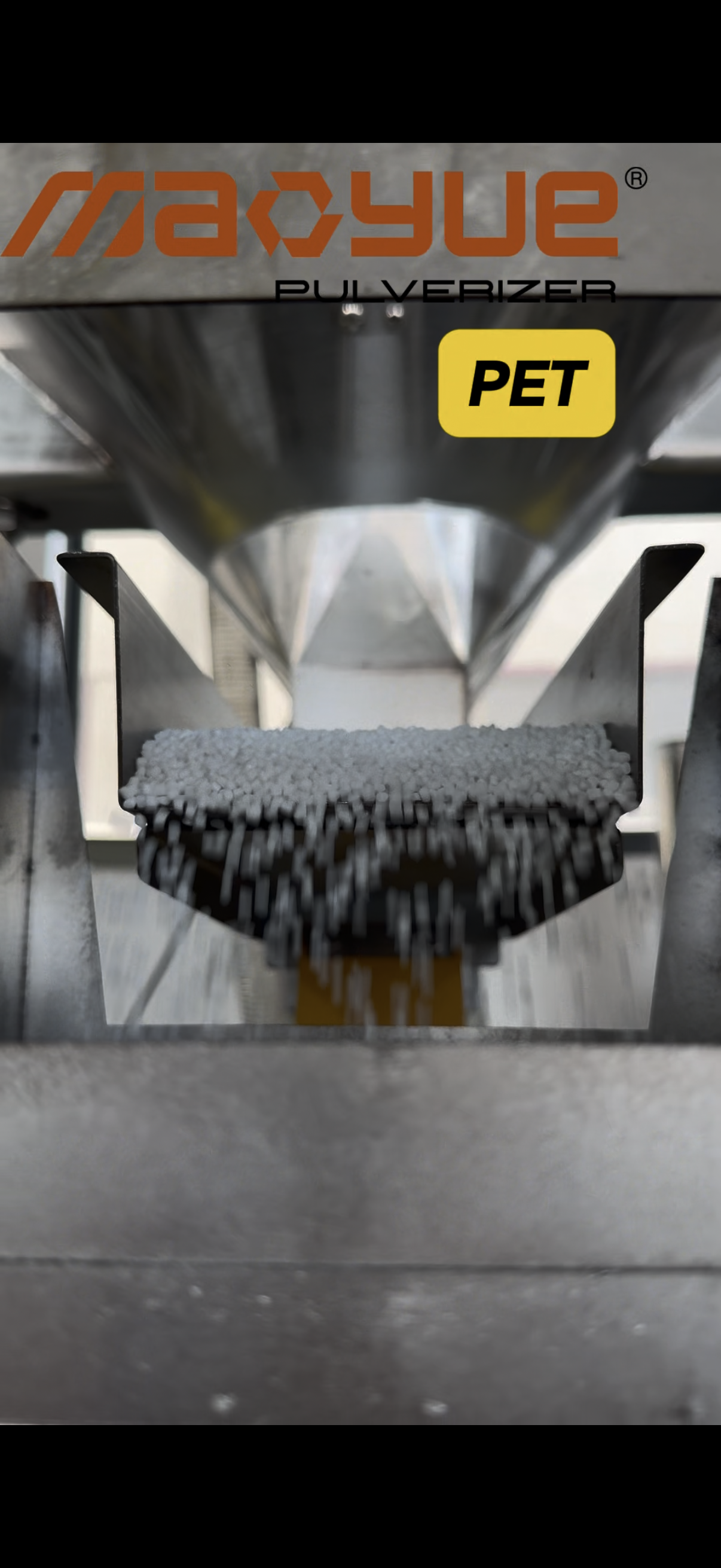
Feeding conditions determine how much material enters the grinding chamber and also affect the stability of the machine's operating load.
When the feed rate exceeds the machine's effective processing capacity under the current operating conditions, the grinding load and material discharge behavior may change, affecting temperature stability during continuous production.
Unstable feeding can also cause repeated fluctuations in the operating load, making temperature control more difficult.
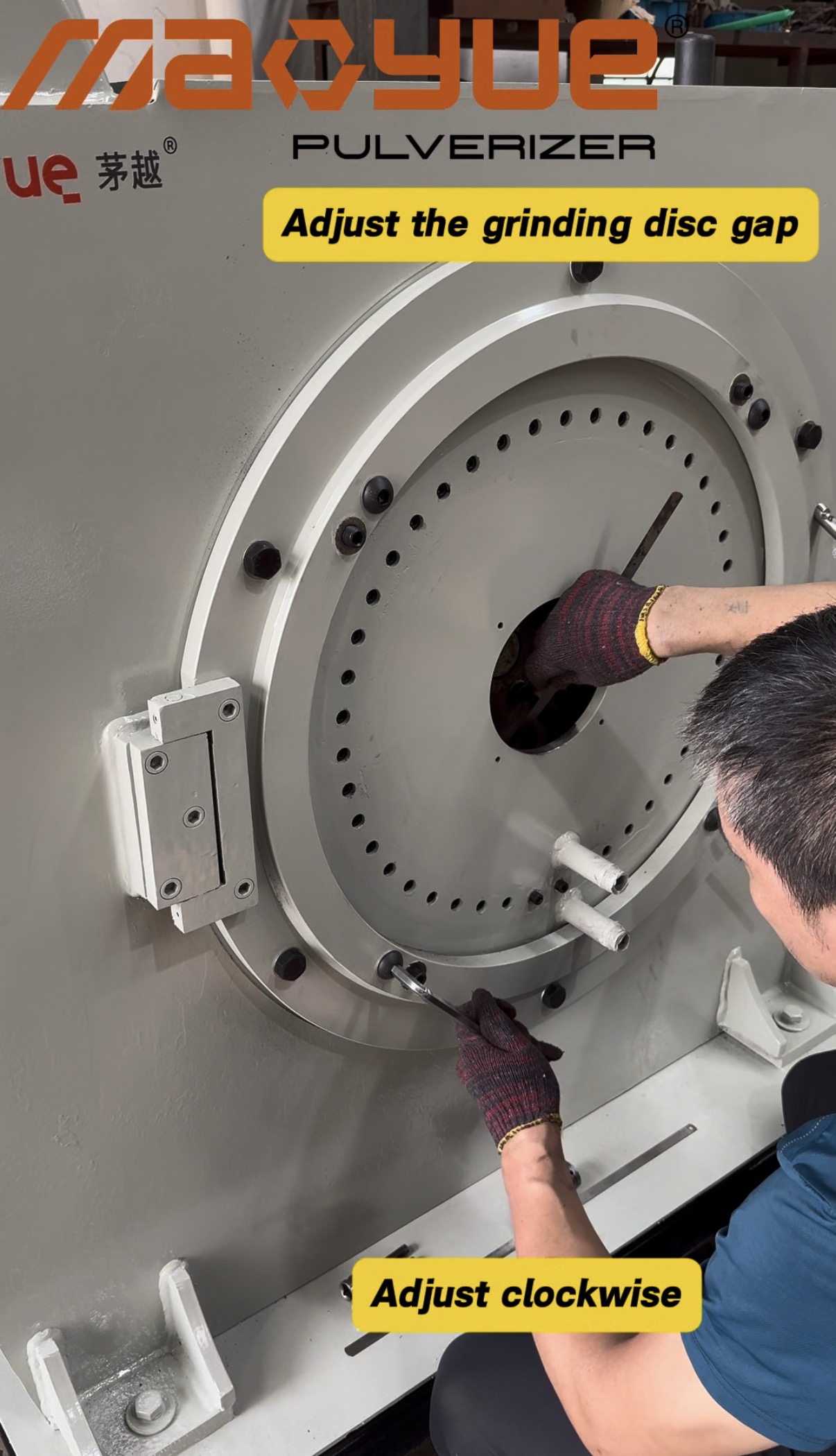
The grinding disc gap affects the mechanical interaction between the grinding surfaces and the material.
If the gap is too small for the material and operating conditions, the grinding action may become excessive, increasing heat generation. Conversely, if the gap is too large, the machine may struggle to achieve the target fineness or maintain the required output.
The appropriate grinding disc gap depends on the masterbatch formulation, target particle size, feeding conditions, and machine design. There is no single gap setting suitable for every masterbatch application.
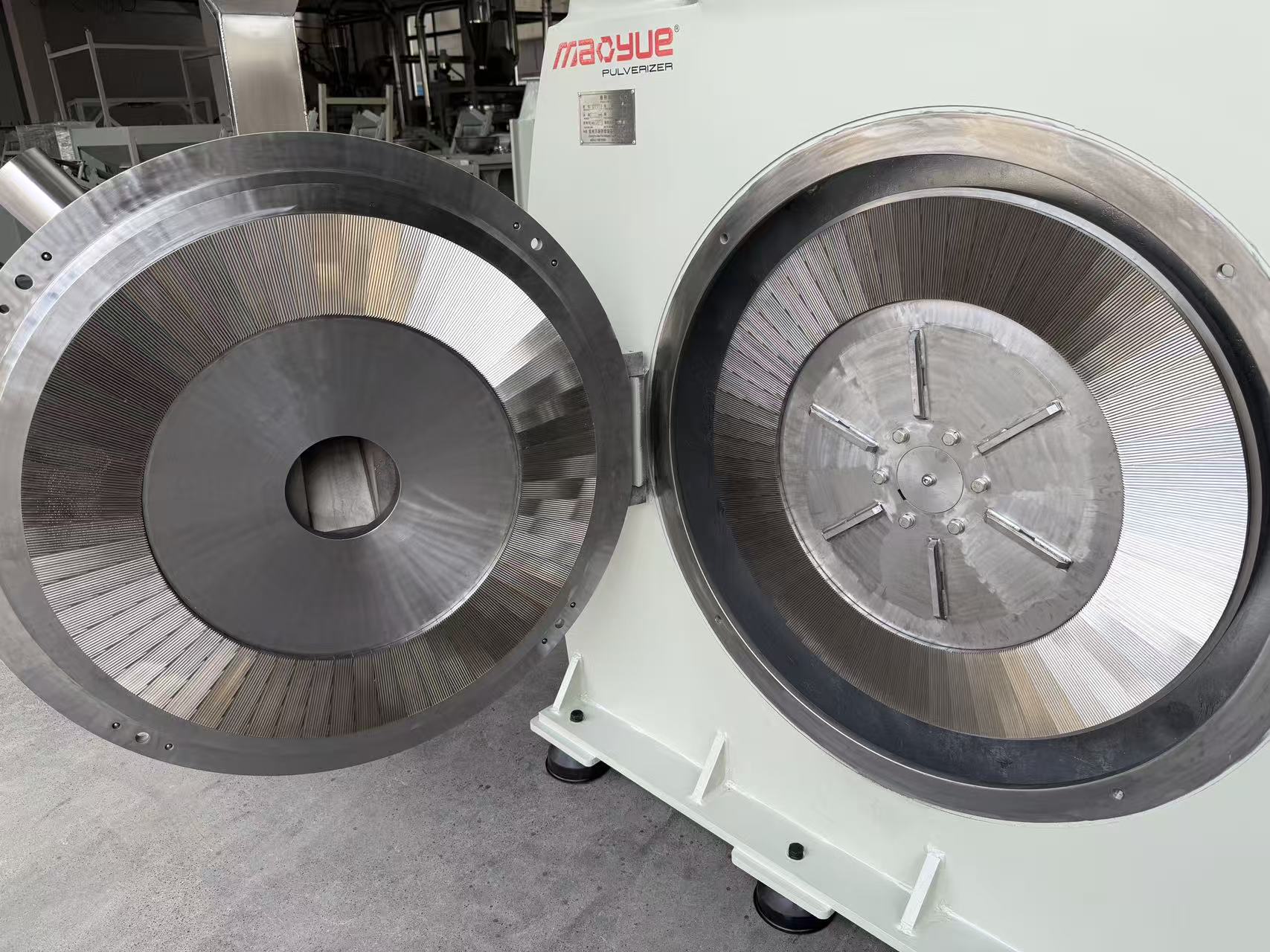
Grinding discs and other working components gradually wear during use. As their working surfaces and geometries change, the grinding process may also change.
Depending on the type and extent of wear, these changes may affect grinding efficiency, powder particle size consistency, material flow, and operating stability. If a temperature rise occurs alongside changes in output or powder fineness, it may indicate a change in the condition of the core components. However, other operating factors must also be considered before drawing a conclusion.
Different masterbatch formulations may behave quite differently during pulverizing.
The polymer carrier, pigment concentration, additives, and other ingredients can affect material softening behavior, brittleness, friction characteristics, and response to temperature changes.
Some formulations may become tacky as the temperature rises. Even without an obvious mechanical fault, the material may adhere to the grinding disc surfaces or form agglomerates.
Therefore, good grinding performance with one formulation under specific conditions does not guarantee the same results when the formulation changes.
The same temperature rise can have different causes. Before adjusting machine parameters or adding cooling equipment, compare the temperature trend with other changes observed during production.
The following table can serve as an initial troubleshooting reference.
Observed Production Symptom |
Factors to Evaluate First |
|---|---|
Temperature gradually rises during continuous operation |
Heat accumulation, operating load, and heat dissipation capacity |
Temperature changes significantly after increasing the feed rate |
Feed rate and load stability |
Temperature changes alongside powder fineness |
Grinding disc gap, core component condition, and other operating conditions |
Powder adheres to the grinding discs or forms agglomerates |
Material temperature sensitivity, actual temperature rise, and grinding conditions |
Different formulations show significantly different temperature behavior |
Polymer carrier, formulation composition, and material characteristics |
Temperature and output change after the core components have been used for some time |
Possible component wear or changes in other operating conditions |
The symptoms in this table provide only preliminary indications and cannot independently confirm that a particular component or system is faulty. It is recommended to record the material formulation, feed rate, operating time, temperature trend, target particle size, actual output, and cooling conditions. Comparing these records under relatively consistent operating conditions can help narrow down the possible causes.
Temperature control during masterbatch pulverizing depends not only on the cooling system but also on the material formulation, feeding conditions, grinding disc settings, core component condition, and continuous operating load.
Changzhou Mao Yue Intelligent Equipment Co., Ltd. evaluates these factors through actual material testing, grinding condition matching, in-house manufacturing and inspection of grinding discs and blades, cooling configuration, and production performance verification. Our goal is to identify suitable grinding conditions for each masterbatch application rather than selecting equipment based solely on rated specifications.

Different masterbatch formulations may behave differently during pulverizing. Factors such as the polymer carrier, pigment concentration, and additives can affect material softening behavior, adhesion tendency, and suitability for grinding. Therefore, the actual grinding performance cannot be accurately determined from the material name or general material characteristics alone.
Mao Yue tests customers' actual masterbatch materials and observes their behavior during pulverizing. Particular attention is paid to their response to temperature changes, their tendency to adhere or agglomerate, and their ability to achieve the required powder fineness.
Based on the observed material behavior, we can identify which factors require further evaluation, such as material characteristics, feeding conditions, grinding disc gap, or cooling configuration. This provides a basis for matching the grinding conditions to the application and avoids developing a solution solely on the basis of material categories or rated machine specifications.

Masterbatch grinding conditions should be evaluated according to the material formulation, target particle size, feeding conditions, and production requirements.
The grinding disc gap and feed rate affect the mechanical action applied to the material and the operating load of the machine. If the operating conditions do not match a particular formulation, temperature behavior, powder fineness, or production stability may be affected.
Mao Yue evaluates these factors together rather than adjusting a single parameter in isolation. The objective is to meet powder specifications and output requirements while avoiding unnecessarily aggressive grinding action and preventable heat accumulation.

Mao Yue manufactures its own grinding discs and blades, while motors and electrical components are sourced externally. During the manufacturing and inspection processes for our core components, we can control their geometry, manufacturing consistency, and working surface quality.
These factors provide a more reliable basis for evaluating grinding performance. During long-term operation, the working surfaces and geometries of grinding discs and blades may change due to wear. If temperature changes occur alongside variations in output or powder fineness, inspecting the condition of these components can help determine whether wear may be a contributing factor.
Mao Yue does not assume that core components are worn simply because the temperature rises. Instead, we consider component inspection results, operating conditions, and actual production performance together. This helps customers make more informed decisions about component maintenance or adjustments to grinding conditions.
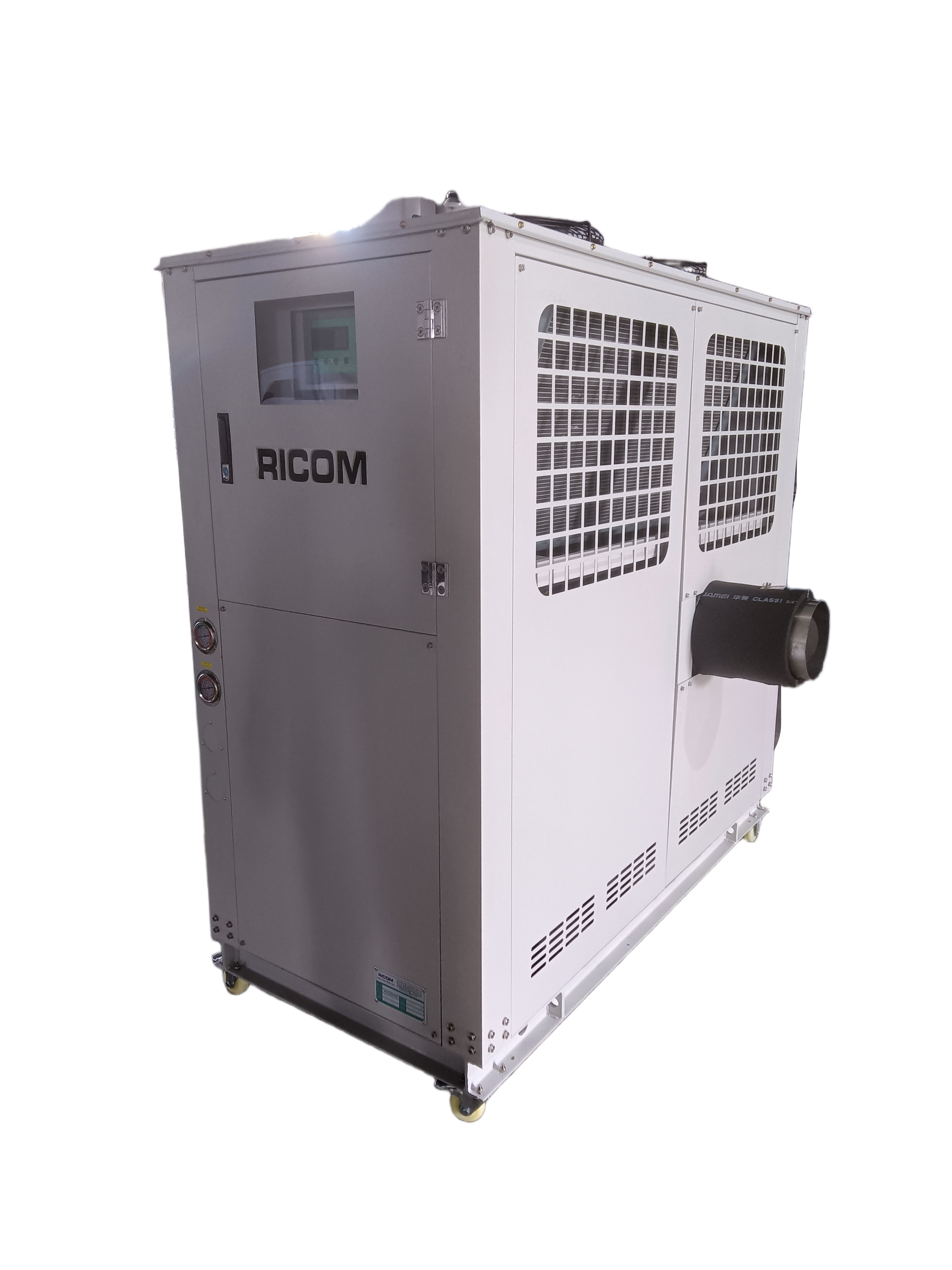
Depending on the machine design and application requirements, Mao Yue plastic pulverizers can be configured with air cooling or a combined air-and-water cooling system.
The appropriate cooling configuration depends on the material's temperature sensitivity, target output, grinding conditions, and expected operating time. Cooling capacity must therefore be evaluated together with feeding conditions and grinding parameters.
If excessive temperature is primarily caused by mismatched operating conditions or by material that readily softens and becomes tacky, simply increasing cooling capacity may not address the underlying problem. Evaluating the cooling solution together with the grinding conditions allows a more targeted solution to be developed for the specific application.
After identifying the material characteristics and establishing the initial grinding conditions, it is also necessary to evaluate whether the equipment configuration and operating parameters are suitable for the customer's actual production requirements. The results of a short trial run may not fully reflect machine performance under the intended continuous operating conditions.
For each application, Mao Yue can evaluate the temperature trend, powder fineness, actual output, and operating stability under defined operating parameters and feasible test conditions. If the temperature continues to rise, material adhesion occurs, or output fluctuates during production, the test records can be used to further assess the grinding parameters, cooling conditions, and core component condition.
By comparing the actual test results with the customer's target powder specifications, output requirements, and operating time, it becomes easier to determine whether the proposed grinding solution is suitable and whether further adjustments to the equipment configuration or operating conditions are necessary.
This application-based verification helps customers understand the suitability and limitations of a proposed solution before selecting equipment, rather than relying solely on rated output or a single technical parameter.
If excessive temperature repeatedly occurs during masterbatch pulverizing, selecting a pulverizer based only on motor power or rated output may not address the underlying cause.
Before requesting a quotation, it is helpful to clarify the following application requirements:
What polymer carrier and masterbatch formulation need to be processed?
What target particle size or mesh range is required?
What hourly output is needed?
How many hours per day will the machine operate?
Is the material prone to softening, adhesion, or agglomeration during pulverizing?
Is a cooling system currently installed? If so, what type of cooling is used?
Can the supplier test the actual material before recommending equipment?
Providing this information helps the manufacturer evaluate the application more accurately instead of selecting equipment based solely on rated specifications.
If your masterbatch pulverizing process experiences continuous temperature increases, material adhesion, or powder agglomeration, contact Mao Yue.
Please provide the masterbatch type, target particle size, required output, and current production issues. Based on your specific application, Mao Yue can evaluate actual material testing, grinding conditions, and cooling configuration to help determine a suitable pulverizing solution.


