English


Views: 0 Author: Site Editor Publish Time: 2026-11-17 Origin: Site
Choosing between a plastic crusher and a plastic pulverizer depends on the requirements of the final product, not simply the equipment price or motor power. Although both machines reduce plastic particle size, they use different processing methods and serve different production purposes.
A plastic crusher uses mechanical cutting to reduce plastic waste into flakes or smaller pieces. It is commonly used in plastic recycling, washing, and pre-processing before pelletizing. A plastic pulverizer, on the other hand, uses mechanical grinding to process suitable plastic materials into fine powder, mainly for rotational molding and certain polymer powder processing applications.
So, which machine does your production line actually need? The answer depends on the material type, feed size, target output size, required capacity, and downstream application.
This article compares plastic crushers and plastic pulverizers, explains their typical applications, and provides practical equipment selection guidance to help buyers avoid unnecessary investment.
Choosing between a plastic crusher and a pulverizer should be based on the final product requirements, raw material condition, and downstream processing needs. Understanding the feed size, target output specifications, and intended application helps determine whether a crusher, a pulverizer, or an integrated processing system is required.
A plastic crusher is a machine that uses rotating and stationary blades to cut plastic waste into smaller pieces.
A typical industrial plastic crusher consists of a rotor fitted with moving blades, stationary blades inside the cutting chamber, and a screen underneath. The screen controls the size of the discharged material, while oversized pieces remain in the cutting chamber for further processing.
The processed material is commonly referred to as plastic flakes or crushed plastic, depending on the application and industry terminology.
Plastic crushers are widely used in plastic recycling facilities, injection molding plants, extrusion workshops, and other manufacturing operations that need to process production scrap and plastic waste.

Plastic waste enters the cutting chamber through the feed hopper. As the rotor rotates, the moving blades work together with the stationary blades to shear the material into smaller pieces.
Material that meets the screen requirements passes through the screen and is discharged. Larger pieces remain inside the cutting chamber until they are reduced to a suitable size.
The processing performance of a plastic crusher is mainly affected by the following factors:
Rotor and blade configuration.
Geometry of the moving and stationary blades.
Blade clearance and sharpness.
Screen opening size.
Material thickness and feed consistency.
A smaller screen opening does not necessarily mean better processing performance. Smaller openings may increase the number of times material circulates inside the cutting chamber, potentially reducing throughput.
The names of these machines are not used consistently across different countries and manufacturers. Buyers should distinguish between them based on their actual processing principles rather than relying solely on equipment names.
Equipment |
Processing Method |
Typical Application |
|---|---|---|
Plastic Shredder |
Typically uses low-speed, high-torque cutting |
Primary size reduction of large and irregular plastic waste |
Plastic Crusher |
Uses rotating and stationary blades for cutting |
Reducing plastic waste into smaller flakes |
Plastic Granulator |
In many markets, refers to a blade-based size reduction machine |
Plastic waste size reduction and recycling pre-processing |
Plastic Pelletizer |
Uses melting, extrusion, and cutting processes |
Converting molten plastic into pellets |
Plastic Pulverizer |
Uses mechanical grinding |
Processing plastic materials into fine powder |
Plastic Crusher and Plastic Granulator often have overlapping functions in many markets. A Plastic Pelletizer, however, performs a different process and should not be confused with a plastic crusher.
A plastic pulverizer uses mechanical grinding to process suitable plastic materials into fine powder rather than producing flakes through conventional blade cutting.
A disc-type plastic pulverizer works through the interaction between a rotating grinding disc and a stationary grinding disc. The disc tooth geometry, grinding gap, rotational speed, and feeding conditions all influence the gradual size reduction of the material.
For PVC processing, a specially designed rotor-stator grinding structure can be used to match the material characteristics and specific processing requirements.
Unlike a conventional plastic crusher, a plastic pulverizer is required when the downstream production process needs plastic powder with specific particle size specifications.

In a disc-type pulverizer, pre-sized plastic material enters the grinding chamber and is processed between the rotating and stationary grinding discs.
The grinding surfaces continuously act on the material, gradually reducing its particle size. The resulting powder then enters the collection system for conveying and collection.
For PVC pulverizing, the rotor and stator work together under controlled operating conditions to grind the material.
The grinding performance is mainly affected by:
Geometry of the grinding discs or rotor-stator assembly.
Working gap between the grinding components.
Rotational speed and feeding rate.
Cooling efficiency and material temperature.
Condition and wear of the grinding components.
The actual powder specifications must be verified through representative sampling and sieve analysis. Equipment settings alone cannot guarantee a specific particle size distribution.
The suitable grinding system depends on the mechanical and thermal properties of the polymer.
Commonly Processed Materials:
PE: LDPE, LLDPE, HDPE, and PE100.
PP: Polypropylene.
PVC: Rigid PVC and certain flexible PVC formulations.
Materials Requiring Specific Process Evaluation:
PA: Material moisture content and thermal processing characteristics need to be considered.
TPU: Its high elasticity and temperature sensitivity may require low-temperature processing in certain applications, including liquid nitrogen-assisted grinding.
EVA, ABS, PC, and PET: Their suitability for pulverizing depends on the material grade, physical properties, feed condition, and target powder specifications.
A grinding configuration suitable for PE cannot automatically be applied to all engineering plastics. Material testing should be conducted before determining the grinding structure, cooling requirements, and expected production capacity.
The most fundamental difference between these two machines is their final output. A plastic crusher produces flakes or smaller plastic pieces, while a plastic pulverizer produces fine plastic powder.
Comparison |
Plastic Crusher |
Plastic Pulverizer |
|---|---|---|
Processing Method |
Mechanical cutting |
Mechanical grinding |
Main Components |
Moving and stationary blades |
Grinding discs or rotor-stator assembly |
Typical Feed Material |
Plastic waste and production scrap |
Pre-processed flakes or granules |
Final Output |
Flakes or small pieces |
Fine powder |
Particle Size Control |
Screen and cutting conditions |
Grinding structure, gap, and operating conditions |
Main Applications |
Plastic recycling and size reduction |
Rotational molding and polymer powder processing |
Wear Parts |
Blades and screens |
Grinding discs and grinding components |
Maintenance Focus |
Blade sharpness and clearance |
Grinding wear, working gap, and cooling |
A plastic crusher is generally the right choice when the production objective is to reduce plastic waste into manageable pieces rather than produce fine powder.
Injection molding and extrusion plants generate sprues, rejected products, trimming waste, and other production scrap.
A suitable plastic crusher reduces the size of these materials, making them easier to collect, store, transport, and recycle.
For large or irregularly shaped plastic waste, a shredding process may be required before crushing.
Plastic recycling lines commonly use crushers to reduce waste into smaller pieces. Depending on the material and recycling process, the crushed flakes may then enter sorting, washing, drying, and pelletizing stages.
The size of the crushed flakes should match the processing capacity and requirements of the downstream equipment.
Some manufacturers only need to reduce the size of production scrap to simplify collection or recycling.
If the subsequent process does not require fine powder, a plastic crusher may be sufficient, eliminating the need for additional investment in a pulverizing system.
A plastic pulverizer is required when the production process needs fine plastic powder rather than ordinary flakes or recycled granules.
In addition to powder particle size, buyers should also consider particle size distribution, processing temperature, powder flowability, and actual qualified powder output.

Rotational molding manufacturers require polyethylene powder with suitable particle size distribution and flow characteristics.
During heating and mold rotation, the powder needs to spread across the mold surface and melt properly. Excessive coarse particles may affect melting and distribution uniformity, while an excessively high proportion of fines may increase dust generation and create additional material handling and conveying challenges.
A PE disc-type pulverizer can process suitable LDPE, LLDPE, and HDPE materials into powder for rotational molding applications.
The equipment configuration should be determined according to the resin grade, target particle size, required capacity, and actual material testing results.

Some modified plastic production processes require polymer powders for specific formulation, blending, or raw material preparation purposes.
Depending on the application, PE, PP, PA, and other suitable polymers may require different grinding conditions.
Before selecting equipment, manufacturers should evaluate material characteristics, target particle size, and downstream blending requirements.
Not all color masterbatch production processes require pulverizing. Conventional color masterbatch manufacturing generally involves batching, compounding, extrusion, and pelletizing.
However, certain color masterbatch-related processes require fine polymer powder, such as the pre-processing of specific carrier materials or powder-based formulations.
In these applications, the pulverizer must be matched to the polymer carrier, formulation, and target powder specifications.
PVC processing plants generate production scrap from window and door profiles, pipes, boards, wall panels, and SPC flooring.
When compatible and properly pre-processed scrap needs to be recycled in powder form, a suitable PVC pulverizer can be used.
Temperature control is particularly important because excessive heat may accelerate PVC thermal degradation and dehydrochlorination.
Contaminants and incompatible materials must be sorted out before processing. Pulverizing only reduces particle size; it cannot remove contaminants or resolve formulation incompatibility.

Yes. When the original plastic waste is too large to enter the pulverizer directly, but the final product must be fine powder, a combined crushing and pulverizing system may be required.
A typical processing flow is:
Plastic Waste → Sorting and Pre-treatment → Crushing → Size Adjustment → Pulverizing → Powder Collection → Quality Inspection
For example, large PE production scrap can first be crushed into pieces suitable for feeding into a PE pulverizer. PVC profile scrap may also require cutting or crushing to ensure stable feeding during subsequent grinding.
However, not every pulverizing line needs a separate crusher. If the raw material already meets the feed size and feeding requirements of the pulverizer, it can enter the grinding process directly.
Whether a combined system is necessary should be determined by the raw material size, feeding method, target powder specifications, and overall production line capacity.
Equipment selection should start with the material and final product requirements rather than the machine model or motor rated power.
Identify the polymer type, material grade, feed size, shape, moisture content, and potential contaminants.
For pulverizing applications, it is also necessary to determine whether the material can enter the grinding chamber directly or requires crushing or other pre-processing.
Determine whether the downstream process requires flakes, granules, or fine powder.
For powder production, the target particle size distribution or sieve range should be clearly specified rather than simply requesting finer powder.
Equipment should be evaluated using representative raw materials rather than relying solely on motor power or advertised production capacity.
Important factors include:
Actual material processing capacity.
Energy consumption per kilogram of qualified product.
Wear part replacement requirements.
Labor and maintenance costs.
Auxiliary equipment and powder collection system requirements.
For pulverizing applications, it is essential to distinguish between total feed throughput and qualified powder output.
For a plastic crusher, the actual size and condition of the crushed flakes should be checked to confirm whether they meet downstream processing requirements.
For a plastic pulverizer, representative sampling and sieve analysis should be used to determine how much of the collected powder meets the target specifications.
An effective production test should record:
Total feed weight.
Total collected material weight.
Qualified product weight.
Rejected material and processing losses.
Actual operating time.
These measurements provide buyers with a more reliable basis for evaluating equipment performance than nominal capacity alone.
Once the production requirement for fine powder has been established, buyers should further evaluate the grinding structure, cooling system, core component specifications, and future maintenance arrangements.

For a disc-type pulverizer, buyers should check the grinding disc diameter, tooth geometry, material, hardness, machining precision, and working gap adjustment method.
For a PVC pulverizer, the rotor-stator structure should be evaluated according to its suitability for the actual processing material.
When purchasing equipment, buyers should request clear specifications for the installed grinding components rather than comparing machines based only on their appearance or grinding disc diameter.

The grinding process generates heat. If heat dissipation is insufficient, certain thermoplastic materials may soften, stick to the grinding surfaces, or form agglomerates.
The cooling configuration should match the thermal characteristics of the material and the operating conditions. Buyers should examine the cooling layout, airflow, water cooling arrangement, and applicable temperature monitoring and control functions.
Grinding components gradually wear during operation. Their material, heat treatment, hardness, and machining precision all affect wear behavior and maintenance requirements.
Before purchasing, buyers should confirm:
Material and dimensional specifications of the grinding components.
Whether the components can be reground or repaired.
Compatibility and availability of replacement parts.
Methods for checking and adjusting the working gap.
Recommended maintenance arrangements.
A clear maintenance and spare parts plan helps buyers evaluate long-term operating costs before placing an order.
Choosing a pulverizer involves more than finding a machine with sufficient motor power. Buyers also need to confirm grinding component specifications, actual processing performance, and future maintenance requirements.
Mao Yue specializes in PE disc-type plastic pulverizers, PVC pulverizing equipment, and related grinding components. Through in-house manufacturing capabilities and material testing experience, we help customers evaluate these key factors before purchasing equipment.
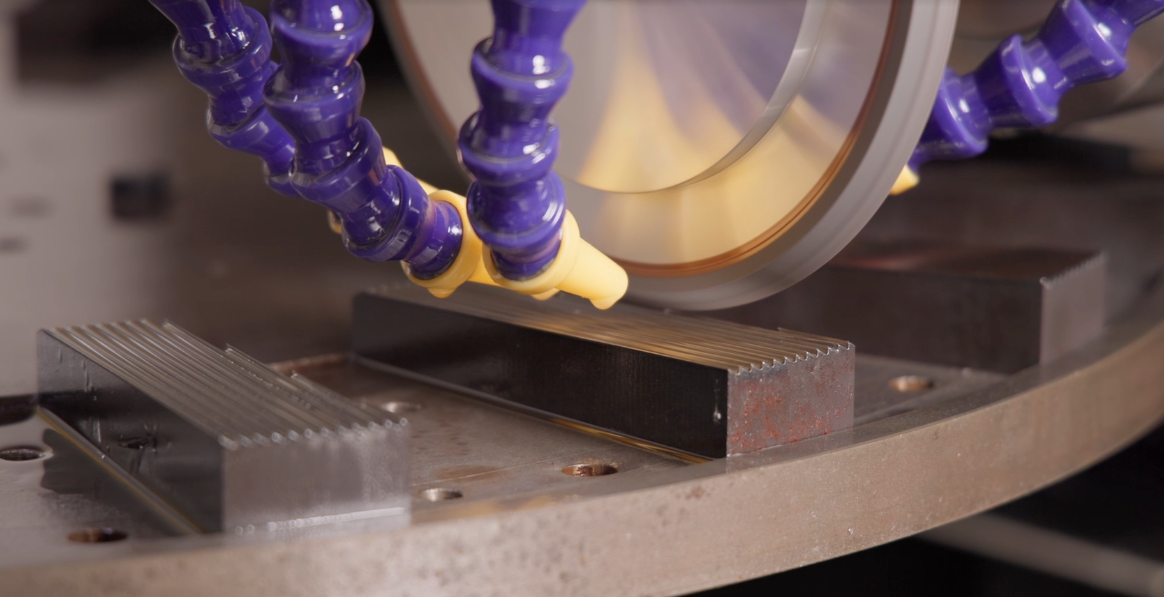
Grinding components directly influence particle size reduction, powder consistency, and equipment maintenance requirements.
Mao Yue manufactures key grinding components in-house, including PE grinding discs and PVC rotor-stator grinding components. Customers can discuss component dimensions, tooth geometry, material specifications, and manufacturing requirements directly with the equipment manufacturer.
Certain grinding components are manufactured using DC53 tool steel, depending on their design and operating conditions. Specific material grades, heat treatment processes, and hardness requirements are determined according to the component structure and application.

Our in-house manufacturing capabilities allow buyers to obtain clearer information about:
Material and dimensional specifications of grinding components.
Tooth geometry and manufacturing requirements.
Compatibility between components and equipment.
Material and hardness inspection documentation, where applicable.
In-house manufacturing makes the specifications, materials, and compatibility of critical grinding components more transparent. Buyers can clarify wear part requirements during the equipment purchasing stage and evaluate future replacement, regrinding, and spare parts costs in advance.
Advertised machine capacity does not mean that all polymers will achieve the same processing results.
Mao Yue evaluates pulverizer configurations according to the customer's material type, feed condition, target powder specifications, and required capacity.
Where applicable, actual material testing can be conducted to evaluate:
Whether the target particle size distribution can be achieved.
Whether the processing temperature is suitable.
Whether the expected processing capacity is realistic.
How much of the collected material meets the target powder specifications.
These results provide practical references for selecting grinding components, cooling solutions, and equipment configurations.
Instead of relying solely on theoretical specifications, customers can use actual material testing results to determine whether the proposed equipment is suitable for their production requirements.

Maintenance costs depend not only on component service life but also on spare parts availability, repair options, and the time required to restore production.
Since Mao Yue manufactures key grinding components in-house, customers can discuss compatible replacement parts, suitable regrinding options, and spare parts planning directly with the manufacturer.
This allows customers to plan maintenance in advance rather than waiting until unexpected wear affects production.
For buyers, clarifying replacement options and spare parts requirements in advance helps plan maintenance schedules, reduce unexpected downtime, and better estimate future maintenance costs.
In most cases, no. A pulverizer grinds material that meets its feeding requirements into fine powder, while a crusher mainly reduces larger plastic waste into smaller pieces.
If the raw material already meets the pulverizer's feeding requirements, a separate crusher may not be necessary. If the waste is too large, crushing or shredding may be required first.
Conventional blade-type plastic crushers use cutting to produce plastic flakes or smaller pieces. When the final product requires fine powder with specific particle size specifications, a standard crusher generally cannot replace a dedicated plastic pulverizer.
No. Equipment configuration depends on the feed material condition and final product requirements.
If the production line only needs plastic flakes for washing, a crusher may be sufficient. If fine powder is required, a suitable pulverizer is needed. Both machines are necessary only when the raw material requires separate crushing and grinding stages.
The most important information includes polymer type, material grade, feed size, target powder specifications, required capacity, and any special processing conditions.
These details help the manufacturer evaluate the grinding structure, cooling requirements, and auxiliary equipment configuration.
Choosing the right equipment starts with understanding your material characteristics and final product requirements.
Share your polymer type, feed size, target output size, and required capacity with Mao Yue. Our team can help evaluate the most suitable equipment configuration, whether it involves front-end crushing equipment, a Mao Yue plastic pulverizer, or an integrated crushing and pulverizing solution.
For suitable materials, we can also conduct actual material testing to evaluate particle size distribution, processing capacity, operating temperature, and qualified powder output, providing practical information for equipment selection.
Contact Mao Yue to discuss your material and processing requirements and find the right plastic size reduction solution.

