Specializing in the production of Plastic Pulverizer Machines.

Views: 0 Author: Site Editor Publish Time: 2026-10-27 Origin: Site
ABS can look rigid at the hopper, then turn troublesome inside a hot mill. Friction raises surface temperatures quickly. Powder begins smearing, output falls, and the screen starts blinding.
Should you improve ambient cooling or switch to cryogenic grinding? This guide compares both methods. You will learn how to control heat, prevent screen clogging, and choose a practical ABS pulverizing process.
ABS is an amorphous thermoplastic built from acrylonitrile, butadiene, and styrene phases. That structure gives it toughness and useful impact resistance. It also makes grinding behavior less predictable than a single published temperature suggests. Each grade may contain different rubber levels, pigments, flame retardants, fillers, or recycled resin.
Published glass-transition values describe laboratory behavior under defined test conditions. They do not set a safe pulverizer outlet temperature. One ABS: Acrylonitrile-Butadiene-Styrene Copolymer reports a grade-dependent transition near 118°C. However, short-lived contact zones at a grinding disc can become much hotter than the measured bulk powder.
Heat changes how particles break. Cool ABS tends to fracture cleanly under impact and shear. Warmer surfaces deform, smear, and attach to nearby particles. Fine material then coats the screen openings instead of passing through them.
Several problems can reinforce each other:
Excessive feed rate: The chamber becomes crowded, residence time increases, and recirculating material absorbs more energy. Motor load rises while usable output may decline.
Poor airflow: Warm powder remains near the grinding zone. Fines are not removed quickly, so they receive unnecessary repeat impacts.
Moist or dirty feed: Moisture and oily residues promote adhesion. Paper, rubber, labels, or incompatible plastics may behave differently and block screen openings.
Wrong disc condition: A dull, damaged, or unsuitable grinding surface converts more energy into heat. An incorrect gap may also increase rubbing.
Overly fine target: A restrictive screen holds particles inside longer. That raises classifier load, heat exposure, and screen-blinding risk.
Watch the process trend, not one temperature reading. A stable run should have consistent motor current, airflow, screen pressure, throughput, and powder temperature. Rising amperage plus falling output often signals developing deposits.
Particle shape provides another clue. Clean fracture creates sharper, separate particles. Rounded edges, ribbons, or fused clusters often indicate unwanted deformation and repeated heating.
Room-temperature ABS pulverizing usually offers the simpler production route. It avoids liquid nitrogen storage, insulated piping, and cryogenic safety systems. For clean, rigid ABS feed and a moderate powder specification, a well-configured ambient process may deliver acceptable throughput and target-size yield.
“Ambient” does not mean uncooled. Industrial systems commonly use moving air, water-cooled components, or chilled water. The goal is to remove heat faster than friction creates it. Stable feeding also prevents the mill from receiving sudden thermal and mechanical loads.
Start with the following operating sequence:
1. Prepare consistent feed. Sort ABS by grade where possible. Remove metal, labels, elastomers, and foreign polymers. Keep flake size even and confirm moisture before feeding.
2. Establish a conservative feed rate. Begin below the expected capacity. Increase slowly while tracking motor current, outlet temperature, and target-size yield.
3. Balance disc gap and screen size. Avoid using a very tight setting to force fineness. It may increase rubbing without improving usable output.
4. Improve heat removal. Check airflow paths, duct restrictions, fan performance, cooling-water temperature, and heat-exchanger cleanliness.
5. Remove finished fines promptly. Efficient classification reduces repeat grinding. It also lowers powder residence time inside the hot zone.
6. Inspect wear frequently. Uneven disc wear changes the gap and energy distribution. Deposits should be removed before they restrict airflow.
Maoyue’s plastic pulverizer range lists ABS among its processable materials. The company publishes 20–200 mesh capability, 400–800 mm grinding discs, and optional chillers, loaders, magnetic meshes, metal separators, and dust collectors. Actual ABS output still depends on grade, feed preparation, and the required particle-size distribution.
Ambient-control variable | Healthy indication | Warning sign | Corrective action |
Feed rate | Stable motor current | Current spikes or surging | Reduce feed and stabilize the loader |
Airflow | Fines leave promptly | Dust settles inside ducts | Inspect fan, filters, and restrictions |
Cooling water | Stable inlet temperature | Outlet temperature climbs continuously | Clean the circuit or add chilling capacity |
Screen condition | Even powder discharge | Output drops while load rises | Stop safely and inspect for blinding |
Disc gap and wear | Repeatable particle distribution | More oversize or surface smearing | Reset gap and service worn discs |
Ambient grinding reaches its limit when acceptable cooling cannot prevent deposits at the required throughput. It may also struggle when the buyer needs very fine powder, a narrow particle-size distribution, or high yield in one pass. At that point, reducing feed further may protect the machine but make production uneconomical.
Cryogenic grinding cools ABS before, or during, size reduction. Liquid nitrogen is the most common industrial medium. The lower temperature makes the polymer more brittle, encouraging fracture instead of deformation. Powder can separate more cleanly from the grinding surfaces and screen.
This method can help when ambient ABS grinding repeatedly causes:
Soft, smeared deposits on discs or chamber walls
Rapid screen blinding despite adequate airflow
Excessive oversize return during fine grinding
Color change or unacceptable added heat history
Low yield inside a narrow target particle range
Unstable throughput from a difficult ABS formulation
Cryogenic processing still needs disciplined control. More nitrogen does not automatically create better powder. Feed temperature, nitrogen flow, residence time, mill speed, classifier settings, and grinding intensity must work together. Published ABS research also shows that cryomilling settings can influence recycled material morphology and flow behavior.
The process carries additional costs and responsibilities. Nitrogen must be purchased, stored, delivered, and metered. Equipment must tolerate thermal cycling. Moisture can freeze on cold surfaces and create new clumping problems. Operators need suitable protective procedures because cold contact can injure skin.
Boiling nitrogen expands rapidly and displaces oxygen. A safe installation needs engineered ventilation, oxygen monitoring, controlled access, insulated components, and trained personnel. These items belong in the project budget, not as later additions.
The economic comparison should use cost per usable kilogram. Include nitrogen, electrical power, labor, maintenance, downtime, rejected powder, and target-size yield. Air Products’ particle-size reduction guidance likewise frames cryogenic grinding around desired particle size, yield, and the behavior of heat-sensitive materials.
Run length also matters. Nitrogen demand during startup may differ from steady production. Measure both periods, then use the expected shift pattern when estimating annual cost.
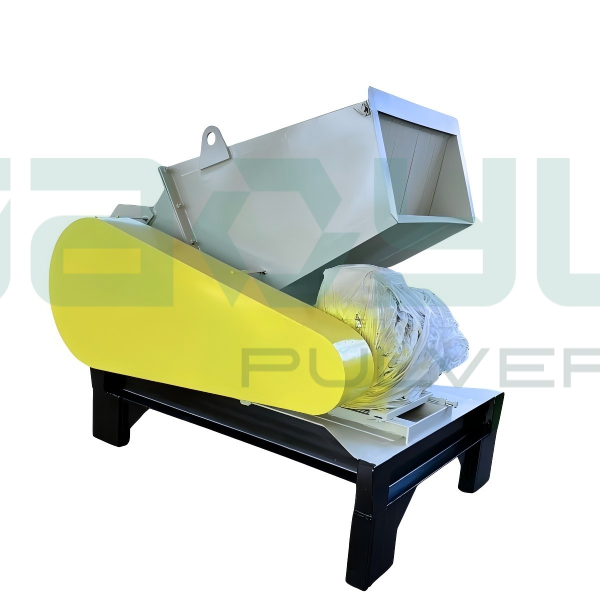
Neither method wins every ABS pulverizing project. Ambient grinding favors simpler operation and lower utility complexity. Cryogenic grinding earns its place when cooling changes product yield or process stability enough to cover its added cost.
Decision factor | Room-temperature pulverizing | Cryogenic grinding |
Best fit | Rigid, clean ABS; moderate fineness | Tough grades; very fine or narrow powder targets |
Heat control | Airflow, water cooling, chilled water | Liquid nitrogen plus controlled mill operation |
Fracture behavior | Acceptable when heat stays controlled | More brittle fracture at low temperature |
Screen-clogging risk | Higher when surfaces soften or moisture rises | Often lower from heat, but frost can create blockage |
System complexity | Lower | Higher |
Operating cost | Usually lower | Nitrogen adds a variable cost |
Safety needs | Standard dust, guarding, and lockout controls | Adds cryogenic exposure and oxygen-deficiency controls |
Recommended proof | Ambient production trial | Side-by-side yield and cost trial |
A hybrid approach sometimes works better than either extreme. Improve feed sorting, airflow, chilled-water capacity, and classification first. Then use targeted pre-cooling only if the powder specification remains unreachable. This limits cryogen consumption while preserving brittle fracture where it matters.
Use measurable acceptance criteria:
Kilograms per hour of usable powder
Percentage inside the target particle range
Mill kilowatt-hours per usable kilogram
Nitrogen kilograms per usable kilogram
Screen-cleaning frequency and downtime
Powder temperature and color stability
Oversize return and dust losses
Do not compare nameplate throughput alone. A faster machine producing more off-spec powder may have a higher real production cost.
The downstream process should influence the choice. Compounding may tolerate a wider distribution when mixing remains uniform. Powder coating or additive applications may require tighter control. Ask whether particle shape, bulk density, or flowability creates more value than finer mesh alone.
Screen clogging rarely has one cause. Changing several settings together hides the real problem. Use a controlled sequence and record each adjustment.
Confirm the material is actually ABS. Separate rubber, TPU, labels, films, metal, and incompatible resins. Inspect for oil or washing residue. Dry hygroscopic feed according to the resin supplier’s guidance, then protect it from humid air.
Feed geometry matters too. Large or irregular pieces create load spikes. Pre-crushing ABS into consistent flakes gives the feeder and pulverizer a steadier job. A magnetic grid or metal separator protects the grinding surfaces from damage.
Where the material sticks provides clues. A smooth film near the disc edge suggests frictional softening. Wet-looking clumps may indicate moisture or oil. Deposits concentrated near the outlet may point toward weak airflow or a blocked dust-collection path.
Stop and isolate the equipment before inspection. Never clear a screen or chamber while moving parts can restart. Record deposit location, color, texture, and operating data for comparison.
Lower feed rate temporarily. Restore airflow and cooling-water performance. Verify disc gap against the machine procedure, then inspect wear. Consider a coarser first pass if the target screen causes long residence time.
If current becomes stable and screen pressure falls, increase capacity in small steps. If clogging returns at the same production point, cooling capacity or classification may be limiting the line.
Run the same ABS batch under controlled ambient and low-temperature conditions. Keep target particle size and sampling methods constant. A material test can reveal whether improved airflow, chilled water, disc settings, or cryogenic cooling provides the best result before scale-up.
The winning condition should remain stable over a meaningful run. A short clean start may hide deposits that develop later.
Send representative material, not only clean virgin pellets. Include the expected recycled content, color, additives, contamination level, and moisture condition. The test should reproduce the hardest routine feed, not an unusually easy sample.
Define success before the trial:
Required particle-size distribution and test method
Minimum target-size yield
Acceptable bulk density and flowability
Maximum discoloration or contamination
Required hourly production
Allowed screen-cleaning interval
Utility and cryogen cost assumptions
Dust-control and workplace requirements
Collect samples after the system reaches steady operation. Measure more than average particle size. Check the full distribution, oversize fraction, fines, morphology, bulk density, and downstream behavior. Powder intended for compounding may need different properties than powder for coating or additive manufacturing.
Ask the supplier to record machine configuration, disc condition, gap, rotational speed, airflow, water temperatures, feed rate, motor load, screen size, and powder temperature. Those values create a usable scale-up record.
Finally, calculate total cost per accepted kilogram. Include rejected material and cleaning downtime. Cryogenic grinding may look expensive per hour but win through higher yield. Ambient grinding may remain preferable when disciplined cooling already meets the specification.
Repeat the preferred condition at least once. Repetition shows whether the result came from a stable process or a favorable sample. If recycled ABS varies by supplier, test the expected high-impact and highly filled grades separately.
Maoyue can use representative feed trials to help connect powder results to a proposed machine configuration. Buyers should still place agreed acceptance criteria in the technical specification, including throughput, particle distribution, utilities, and allowed cleaning frequency.
Successful ABS pulverizing depends on controlled fracture, not maximum mill speed. Clean feed, stable loading, correct disc settings, strong airflow, and effective cooling should come first.
Cryogenic grinding becomes valuable when ambient controls cannot prevent softening or meet a fine powder target economically. Compare both methods through representative trials. For application-specific equipment guidance, contact Maoyue with your ABS grade, throughput, and particle-size requirements.
A: Yes. Clean, rigid ABS can often be pulverized at room temperature using controlled feeding, airflow, water cooling, correct disc settings, and efficient classification. Feasibility depends on the ABS grade and required powder size. Very fine targets or impact-modified grades may require chilled water, pre-cooling, or cryogenic grinding.
A: Frictional heat can soften particle surfaces, causing them to smear across screen openings. Excess feed, weak airflow, moisture, contamination, worn discs, and an overly fine screen can worsen blockage. Diagnose the deposit pattern, motor load, pressure trend, and powder temperature before changing several settings.
A: Not always. Start by optimizing feed preparation, airflow, chilled-water cooling, disc gap, and classification. Liquid nitrogen is justified when those controls cannot achieve stable throughput, target-size yield, or acceptable powder quality. A side-by-side material trial provides the strongest answer.
A: Record throughput, motor load, energy use, inlet and outlet temperatures, screen pressure, cleaning frequency, and target-size yield. For cryogenic trials, record nitrogen consumption too. Test particle-size distribution, bulk density, color, contamination, and downstream performance using the same ABS batch.
A: Reduce the feed rate, restore airflow, confirm cooling-water performance, and inspect the screen after safe isolation. Check moisture, foreign polymers, disc wear, and grinding gap. If the screen blocks again at the same load, the cooling or classification system may be undersized.


