Specializing in the production of Plastic Pulverizer Machines.

Views: 0 Author: Site Editor Publish Time: 2026-10-24 Origin: Site
Recycled ABS can look clean while hiding metal, dust, coatings, or another polymer. Fine grinding does not remove those problems. It makes them smaller.
An ABS Pulverizer Machine performs best after the feed has been sorted, cleaned, dried, and sized. Poor preparation can lower powder value and shorten component life.
This guide explains how purity affects grinding, powder consistency, equipment reliability, and downstream reuse. It also offers a practical route from mixed ABS scrap to controlled fine powder.
Virgin ABS usually arrives as consistent pellets carrying a known grade and formulation. Recycled ABS has a history. It may come from appliance housings, electronic equipment, automotive trim, toys, rejected molded parts, or 3D-printing scrap. Each source introduces different colors, additives, coatings, labels, fasteners, fillers, and aging conditions.
Post-industrial scrap is often the simplest feed. A processor may know its resin grade, color, and production origin. Post-consumer ABS is more demanding. It can be mixed alongside PS, HIPS, PP, PC/ABS, PVC, rubber, glass, wood, copper, aluminum, and steel. Painted or plated surfaces add another variable. Some electrical scrap may also contain flame-retardant grades requiring controlled identification and handling.
This variability changes the meaning of “clean ABS.” Visual inspection alone cannot confirm polymer identity or additive content. Black plastic presents a particular sorting challenge because some conventional optical systems struggle to identify it. Separation methods must match the waste stream, desired end use, and local compliance requirements.
Feed source | Typical risk | Useful control before fine grinding |
Factory sprues and rejects | Mixed grades or colors | Source segregation and batch records |
Appliance housings | PS, metals, dust, coatings | Polymer sorting, metal removal, washing |
Electronic housings | Black polymers, flame retardants | Qualified identification and density separation |
Automotive trim | PC/ABS blends, clips, paint | Grade sorting, dismantling, metal detection |
Printed ABS scrap | Ink, labels, adhesives | Surface cleaning and acceptance limits |
An ABS grinding machine cannot restore purity lost upstream. Once a screw, glass chip, or incompatible polymer reaches fine grinding, it becomes distributed through much more powder. The practical goal is therefore not simply smaller material. It is a stable feed lot whose composition, moisture, size, and contamination levels fit the intended powder specification.
Purity affects both the finished powder and the machine producing it. Polymer cross-contamination can change melt flow, impact strength, color, surface finish, odor, and processing temperature. Even a small incompatible fraction may matter when the powder feeds compounding, molding, coating, or additive-manufacturing applications.
Hard contamination creates a different risk. Steel pieces may chip or rapidly wear grinding surfaces. Aluminum, copper, glass, sand, and mineral debris can increase abrasion. Soft contaminants such as rubber, labels, foam, or adhesive may smear under heat. They can block screens, disturb airflow, and create coarse particles or specks in the finished ABS fine powder.
Purity also influences thermal behavior. ABS generates heat under repeated cutting and friction. A mixed stream does not soften uniformly because each polymer and additive responds differently. Sticky fragments may remain inside the chamber while clean ABS continues moving. The result can be unstable throughput, rising motor load, unwanted discoloration, and more frequent cleaning.
Sorting before pulverizing protects four business outcomes:
Powder consistency: A controlled ABS fraction supports a narrower particle-size distribution and fewer visible defects. It also makes screening results easier to repeat between batches.
Equipment reliability: Removing metal and hard debris limits shocks, abnormal wear, and unplanned stops. Clean, uniform flakes also feed more predictably.
Downstream performance: Known polymer composition helps users set extrusion or molding conditions. It reduces surprises in melt filtration, blending, and final-part testing.
Material value: Buyers usually pay for a documented, repeatable recyclate rather than unidentified mixed powder. Better contamination control can open more demanding applications.
The recycled ABS industry EcoProfile describes sorting, shredding, non-plastic removal, grinding, and extrusion as connected mechanical-recycling stages. This sequence matters. Fine grinding should refine prepared ABS flakes, not serve as a correction step for mixed waste.
A reliable line begins by defining the incoming waste stream. Keep known post-industrial ABS separate from mixed post-consumer material. Record supplier, product origin, declared grade, color, previous use, and suspected additives. Quarantine uncertain lots until identification confirms whether they fit the target recipe.
Next, dismantle large components and remove batteries, wires, screws, inserts, labels, foam, and obvious non-plastic pieces. Primary shredding then liberates joined materials and creates a sortable size. Uniform flakes improve sensor exposure, washing, drying, and controlled feeding. Oversized chunks should not pass directly into the fine mill.
Process step | Main purpose | Check before release |
Source sorting | Separate grades and applications | Traceable lots and clear labels |
Dismantling | Remove attached foreign parts | No batteries, cables, or large metal |
Pre-shredding | Liberate materials | Stable, machine-suitable flake size |
Polymer separation | Isolate the ABS fraction | Verified identity and blend policy |
Metal removal | Capture ferrous and non-ferrous pieces | Magnet and detector checks |
Washing | Remove dirt, oils, and loose labels | Defined cleanliness standard |
Drying | Control moisture and sticking | Measured moisture within specification |
Final inspection | Stop remaining hazards | Representative sample accepted |
Polymer separation may combine manual sorting, density methods, optical identification, and electrostatic separation. The right sequence depends on color and composition. Promoting plastic recycling – Potentials in PS and ABS notes that complex appliance and electronic streams may require both dry and wet processing. It also explains why black plastics need special attention.
Install magnets before sensitive grinding equipment, then consider metal detection for added protection. Eddy-current separation may be appropriate for non-ferrous metals. Washing must be followed by effective drying. Wet flakes can disturb flow, promote deposits, and make particle-size control harder.
Finish with a written feed-release specification. It can include polymer identity, permitted blend, color range, maximum moisture, flake-size range, metal-free status, and allowable foreign matter. That document turns recycled ABS sorting from a general promise into an operating control.
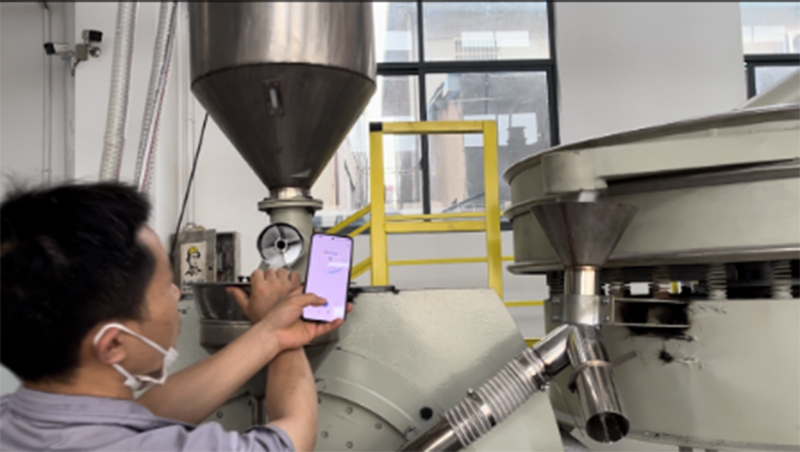
After purification, the ABS Pulverizer Machine becomes a controlled size-reduction stage. Prepared flakes enter through a metered feeder rather than arriving in irregular surges. Grinding discs apply repeated shear and impact. Airflow carries reduced particles away, while classification or screening separates acceptable powder from oversized material.
Stable feeding matters because overfeeding increases chamber load and heat. Underfeeding wastes capacity and may create an uneven operating condition. A feeder should deliver a steady rate matched to motor load, target mesh, flake geometry, and material temperature. Operators should change one setting at a time and record the result.
Maoyue describes a typical system using pre-crushing, iron removal, continuous feeding, grinding, air conveying, cyclone collection, screening, and dust collection. Its plastic pulverizer range lists ABS among suitable materials and offers supporting options such as loaders, magnetic separation, chillers, and dust collectors. Actual configuration should follow sample testing, not a generic material label.
Feed size and geometry: Uniform flakes enter the grinding zone more predictably. Long strips or oversized pieces can bridge, overload the feeder, or produce unstable residence time.
Disc condition and clearance: Worn surfaces or an unsuitable gap can lower output and widen particle distribution. Inspection intervals should reflect throughput and contaminant history.
Temperature: Frictional heat can soften ABS, increase sticking, and affect color. Air or water cooling must keep the process inside a validated operating window.
Airflow and screening: Balanced conveying removes powder promptly and supports classification. A damaged or blinded screen changes the apparent product specification.
Do not judge performance by kilograms per hour alone. Track usable yield at the required mesh, motor current, chamber temperature, screen residue, dust loss, downtime, and powder appearance. A higher gross output can be misleading when more material requires reprocessing or fails quality checks.
Start with the powder’s end use. A compounder may prioritize controlled particle distribution and known polymer composition. A molding operation may focus on melt behavior, color, and filtration pressure. A buyer using powder as a blend component may accept broader variation. The end-use requirement should determine the feed-purity target and grinding test.
Send representative samples rather than a handful of clean pieces. The trial batch should include normal color variation, expected flake sizes, permitted labels or coatings, and realistic moisture. Keep hazardous or prohibited materials out. If the stream changes by supplier or season, test more than one lot.
During trials, record the full chain:
1. Confirm ABS identity and any accepted ABS blends.
2. Measure incoming moisture and flake-size distribution.
3. Verify magnetic and metal-detection controls.
4. Set feeder rate, disc gap, airflow, and cooling conditions.
5. Measure output, required-mesh yield, oversize, and fines.
6. Examine powder color, odor, bulk behavior, and visible specks.
7. Run downstream melt, filtration, or part tests when relevant.
Changzhou Maoyue Intelligent Equipment integrates equipment R&D, manufacturing, sales, and service. Its stated product scope includes pulverizers, grinding components, crushers, and complete crushing-and-grinding lines. For recycled ABS, that broader process view is useful because the fine mill must fit the upstream sorting and downstream powder requirement.
Ask any supplier to define test conditions and exclusions in writing. Mesh alone does not describe a powder. Include sampling method, particle-size distribution, allowable contamination, moisture, capacity basis, cooling-water conditions, power supply, and cleaning procedure. Also discuss changeovers when one line handles several colors or polymers.
The best buying decision connects feed quality to guaranteed test results. Share photos, safety information, annual volume, target mesh, working hours, and downstream application. Maoyue can then evaluate a sample through its testing and equipment process, while your team verifies whether the resulting powder meets its own production standard.
An ABS Pulverizer Machine can turn prepared recycled ABS flakes into useful fine powder. It cannot correct an impure waste stream.
Sorting, metal removal, washing, drying, and controlled feeding protect powder quality and machine reliability. Define acceptance limits before production, then validate them through representative trials.
When purity and grinding operate as one system, recycled ABS becomes more consistent, valuable, and easier to reuse.
A: Yes, after suitable preparation. Post-consumer ABS should be identified, sorted, dismantled, pre-shredded, cleaned, dried, and cleared of metal. Trial grinding is recommended because grades, additives, coatings, and contamination vary by source.
A: Metal can damage grinding discs, create sparks or impact events, raise wear, and contaminate powder. Magnets capture ferrous material. Other controls, including metal detection or eddy-current separation, may be needed for non-ferrous pieces.
A: There is no universal percentage for every application. Set the requirement from the downstream product, safety rules, and customer specification. Verify polymer identity, restricted additives, moisture, metal absence, and allowable foreign matter through representative sampling.
A: No. Its primary job is size reduction. Polymer separation should occur upstream through suitable manual, density, optical, or electrostatic methods. Pulverizing a mixed stream spreads incompatible polymers through the finished powder.
A: Common causes include variable flake size, unstable feeding, worn discs, incorrect clearance, excessive heat, poor airflow, screen problems, moisture, and mixed polymers. Check feed quality before changing machine settings.


