Specializing in the production of Plastic Pulverizer Machines.

Views: 0 Author: Site Editor Publish Time: 2026-08-12 Origin: Site
Are motor overloads and rising labor costs stalling your recycling line?
Inconsistent hand-feeding often ruins plastic powder quality.
An automatic loader solves these common bottlenecks.
It turns high-performance plastic pulverizer machines into seamless, dust-free systems.
This simple upgrade easily boosts your daily production yield.
When is it time to upgrade your factory?
In this post, you will learn when to transition to automated feeding.
A high-speed plastic pulverizer machine is the heart of any plastic recycling setup. It typically operates at a spinning speed of over 3,000 RPM. This intense speed is necessary to shear tough plastic scraps into fine, usable powder. However, the machine strictly relies on a steady, uniform flow of raw materials. If the input rate fluctuates even slightly, the entire grinding process quickly destabilizes.
Our friends at Changzhou Maoyue Intelligent Equipment Co., Ltd. understand this delicate balance perfectly. As an industry pioneer with over a decade of R&D experience, they design high-precision disc grinding structures. These advanced systems are specifically engineered to interface with smart auxiliary feeding systems. This integration keeps the machine running smoothly and significantly extends the overall lifespan of your equipment.
The grinding chamber is a highly sensitive environment where precision is everything. The gap between the grinding discs is incredibly narrow, often adjusted to fractions of a millimeter. This tight space creates immense friction, which naturally generates heat during operation. If the material enters too fast, the temperature spikes instantly and melts the plastic.
When plastic melts inside the chamber, it sticks to the discs and causes severe blockages. Conversely, if the chamber runs empty, the discs rub against each other without any cushioning material. This starvation causes rapid wear and ruins the expensive cutting teeth. The table below illustrates how feeding consistency directly impacts these critical internal chamber conditions.
Chamber Condition | Cause of the Issue | Immediate Impact on Machine | Long-term Consequence |
Overfeeding | Too much material entered too fast | Rapid temperature spike and melted plastic | Severe disc blockages and motor shutdown |
Underfeeding | Material flow stopped or starved | Direct disc-to-disc friction without cushion | Rapid wear of cutting teeth and high maintenance |
Consistent Feeding | Balanced, automated material flow | Stable temperature and optimal motor load | Extended machine lifespan and uniform powder |
Relying on manual labor to feed a plastic pulverizer machine always introduces human error. Operators get tired, distracted, or simply cannot maintain a perfectly steady rhythm for hours. When an operator dumps a large pile of scrap into the hopper at once, the motor suffers immediate strain. You will see the control panel amperage needle spike dangerously into the red zone.
These frequent power spikes put massive stress on the motor bearings and electrical components. Over time, this erratic feeding pattern leads to frequent, costly downtime and expensive part replacements. Manual feeding also leaves the hopper open, which allows fine plastic dust to escape into your workshop. Transitioning to an automated system is the easiest way to protect your machinery and your workers.
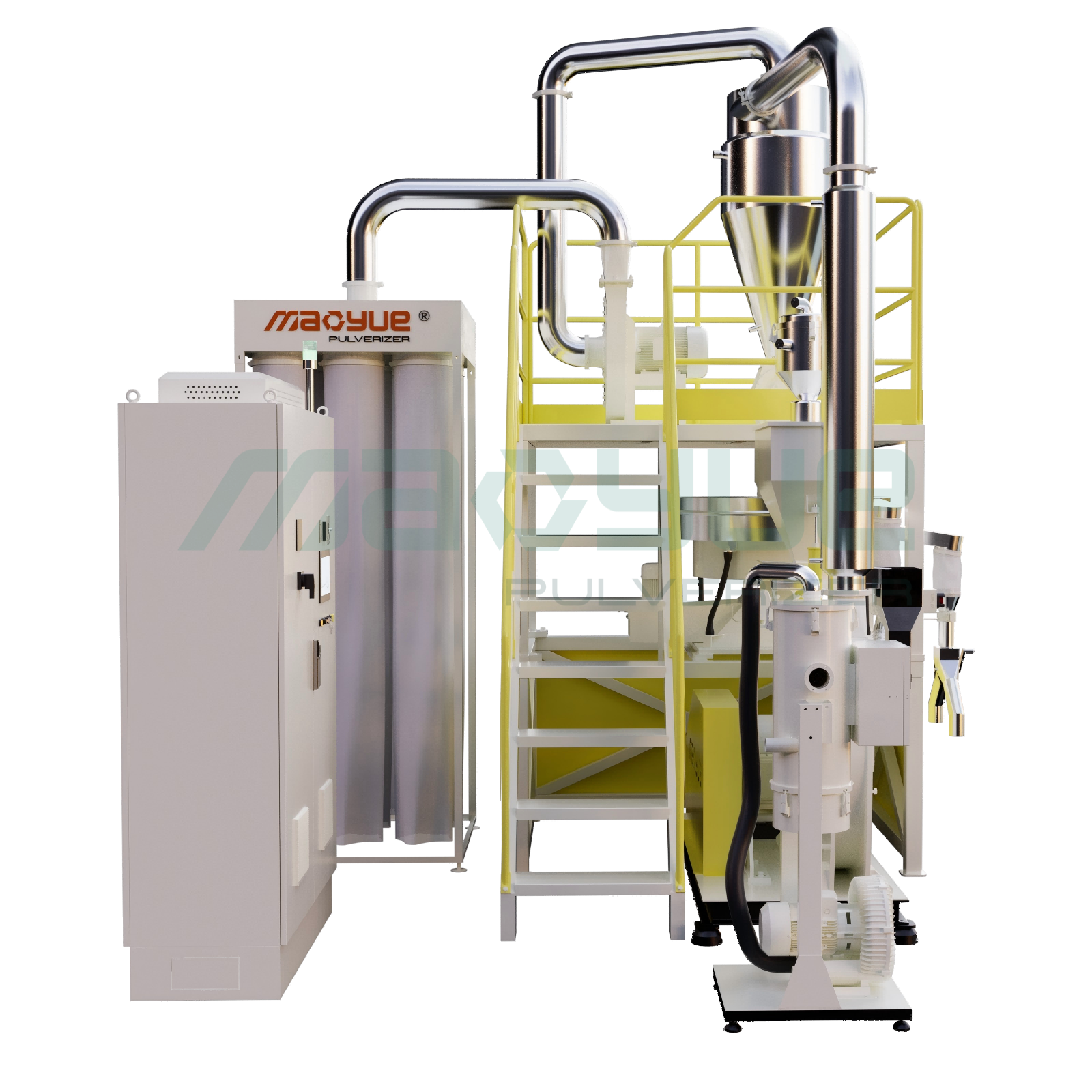
Selecting the right feeding system is crucial for your recycling setup. Different plastic materials behave in unique ways inside a hopper. If you pair the wrong feeder with your material, you will still face annoying blockages. Let us look at the three main feeding technologies designed for plastic pulverizer machines so you can make the best choice.
Vacuum suction feeding uses powerful pneumatic pressure to pull materials through fully sealed pipes. This method is incredibly clean because it keeps all the plastic particles contained. It completely eliminates the risk of airborne dust in your facility. It is the perfect choice for handling small, free-flowing plastic scraps and pellets.
Pneumatic Suction Action: The system uses air pressure to transport materials smoothly without mechanical parts touching the plastic.
Dust Containment: The fully enclosed pipes prevent micro-particles from escaping into your workshop air.
Ideal Applications: This setup works best for PE masterbatch processing, small plastic granules, and fine regrinds.
Lightweight materials like plastic films and shredded foam are notoriously difficult to feed. They tend to float and pile up at the inlet of standard gravity hoppers. Vertical automatic feeding solves this by using forced mechanical delivery. An internal screw actively pushes these fluffy materials down into the grinding chamber.
Forced Downward Delivery: The system mechanically compresses and guides the fluffy scraps directly into the spinning discs.
Anti-Clogging Design: It prevents light materials from bridging or nesting at the hopper throat.
Ideal Applications: This method is highly recommended for thin PE/PP film fragments, agricultural film scraps, and low bulk density materials.
Heavy, rigid plastics require a steady and controlled flow to prevent motor overloads. Vibratory automatic feeding uses precise electromagnetic vibrations to slide heavy regrinds forward. This method is incredibly durable and handles highly abrasive materials with ease. It also allows you to easily integrate metal separation tools directly into the feeding line.
For example, Maoyue’s MF-800 PVC Plastic Grinder utilizes this vibratory automatic feeding method. They pair it with an optional iron removal device to catch metal contaminants. This smart combination automatically purifies rigid PVC pipe and profile scraps before they reach the grinding chamber. It protects the high-hardness grinding discs from catastrophic metal damage and saves you from expensive repairs.
The table below summarizes how these three feeding methods compare across different production requirements.
Feeding Method | Primary Mechanical Action | Best Material Compatibility | Key Operational Benefit |
Vacuum Suction | Pneumatic air pressure | Fine granules and PE masterbatch | Excellent dust control with fully sealed pipes |
Vertical Automatic | Forced mechanical screw | Fluffy PE/PP films and light shreds | Prevents material bridging and inlet clogging |
Vibratory Automatic | Electromagnetic vibration | Heavy rigid PVC regrinds and profiles | Easily integrates with iron removal magnets |
Upgrading your factory equipment is always a major financial decision. You need to justify the budget to your team or your boss. To make this easy, we should look at the hard facts. Let us compare manual feeding directly against the three main automated systems used for plastic pulverizer machines.
The table below breaks down the key technical metrics you need to consider. It shows how each method handles different materials, safety hazards, and dust control.
Feature / Metric | Manual Feeding | Vacuum Auto-Loader | Forced/Vertical Feeder | Vibratory Feeder |
Compatible Material | Heavy regrind / rigid blocks | Free-flowing granules & fine particles | Fluffy flakes, films & light shreds | Rigid PVC scraps, pipes & profiles |
Feed Consistency | Low (relies on operator) | High (sensor-driven vacuum cycles) | Very High (continuous mechanical push) | High (even electromagnetic vibration) |
Labor & Safety Hazards | High (constant monitoring, climbing) | Minimal (refill main silo only) | Minimal (fully integrated into scrap line) | Minimal (automated flow) |
Dust Control | Poor (open gravity hoppers) | Excellent (fully sealed pipes) | Good (enclosed hopper base) | Good (enclosed feeding path) |
Special Functions | None | Dust-free pneumatic conveying | Anti-clogging vertical feed | Integrated magnetic iron removal |
Manual feeding might seem like a cheap option at first glance. However, it actually introduces hidden costs that drain your profits daily. Workers must constantly monitor the hopper and carry heavy bags up high platforms. This physical strain leads to fatigue, slower feed rates, and frequent operator mistakes.
High Operational Risks: Operators must scale high ladders while carrying heavy loads. This practice increases workplace accidents and insurance costs.
Inconsistent Production Rates: Human operators cannot maintain a perfect feeding rhythm. Your hourly output will fluctuate wildly throughout an eight-hour shift.
Poor Material Yield: Spillage is very common during manual dumping. You lose valuable raw material on the floor, which increases waste.
Automated systems do much more than just replace manual labor. They act as a protective shield for your expensive plastic pulverizer machines. By delivering a perfectly metered flow of material, they keep the motor load stable. This stability prevents the sudden amperage spikes that burn out motors and ruin bearings.
Preventing Motor Burnout: The automated controller monitors the mill load. It instantly pauses feeding if the grinding chamber gets too full.
Extending Disc Lifespan: Consistent feeding prevents the grinding discs from running dry. This protection reduces friction wear and cuts your replacement parts budget in half.
Creating a Clean Workshop: Enclosed feeding systems keep all the fine plastic dust inside the pipes. This containment protects your workers' lungs and keeps your factory floor spotless.
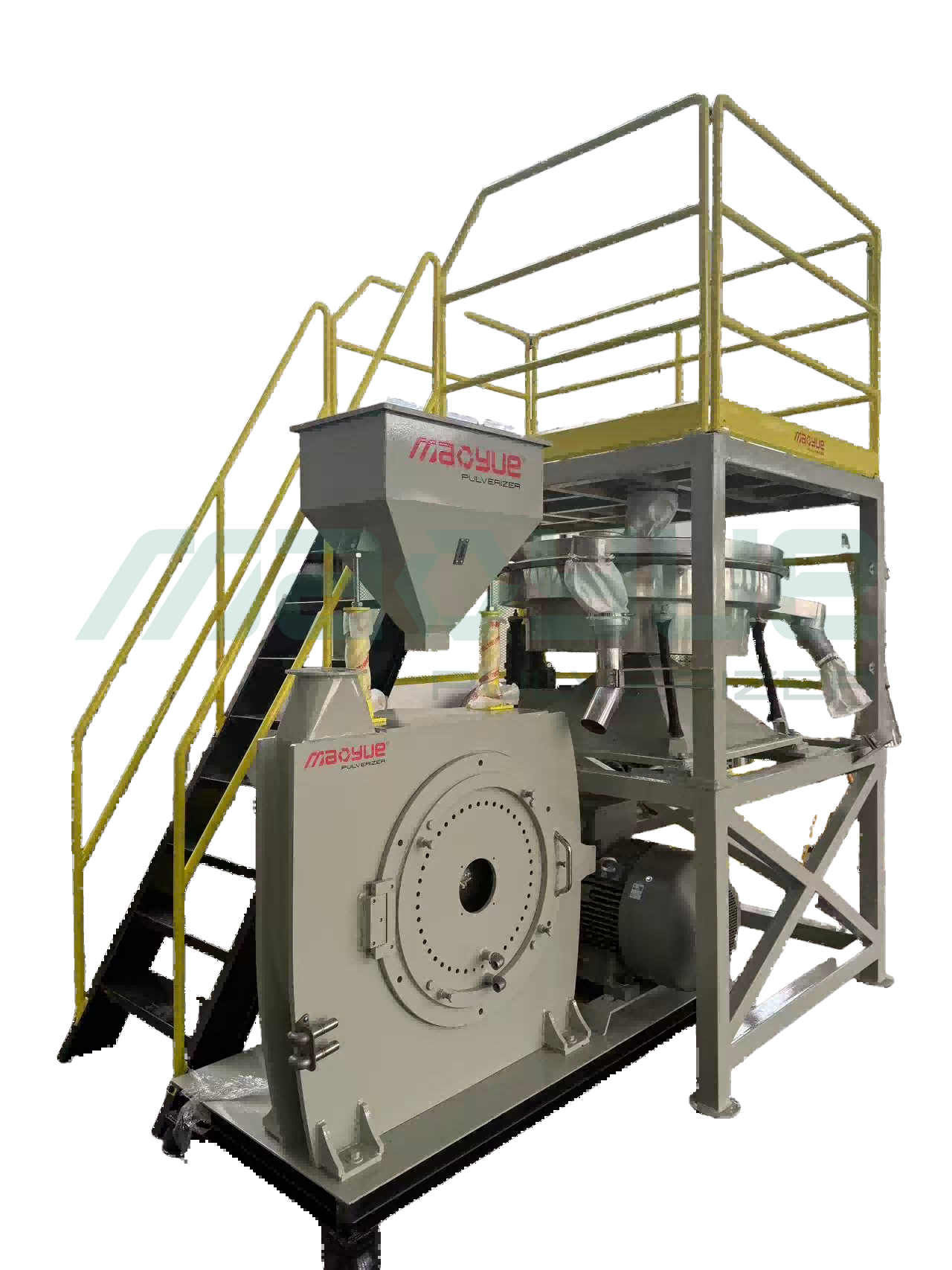
We always want to be honest with you about equipment investments. You do not always need to buy the most expensive automated setup. Sometimes, a simple manual feeding method is actually the smartest choice for your business. Let us look at three specific scenarios where you can easily skip the upgrade on your plastic pulverizer machines.
If you only run your machinery for a few hours a week, automation is not necessary. Small workshops, laboratories, and testing facilities usually handle very low volumes of material. In these cases, the cost of installing an automatic loader outweighs the actual labor savings. Manual feeding gives you the flexibility to switch between different plastic types quickly without cleaning out long feeding pipes.
Laboratory Testing: Research labs only grind small samples of plastic to test material properties. Manual feeding allows precise control over these tiny test batches.
Short Working Hours: If your mill runs less than two hours a day, an operator can easily manage the feeding process.
Frequent Material Changes: Cleaning out automated pipes between different plastic colors or types takes too much time.
Some plastic materials behave beautifully in a standard gravity hopper. Heavy, rigid plastic blocks and uniform regrinds do not stick together or float in the air. They slide down smoothly into the grinding chamber without any mechanical assistance. If your raw material flows naturally, you do not need to spend extra money on forced feeding systems.
Natural Gravity Flow: Heavy materials slide down easily under their own weight. They do not get stuck or form bridges inside the hopper.
No Risk of Floating: Rigid blocks do not float like lightweight films. They drop straight down into the spinning grinding discs.
Simple Maintenance: A basic gravity hopper has no moving parts. This simplicity means you have zero electrical or mechanical parts to maintain.
The table below summarizes when you should keep your setup simple and stick with manual feeding.
Operational Scenario | Material Behavior | Daily Production Run | Best Feeding Choice |
Lab Testing & Samples | Highly varied, small quantities | Less than 2 hours | Manual Gravity Hopper |
Heavy Rigid Regrinds | Free-flowing, heavy blocks | Intermittent runs | Manual Gravity Hopper |
Tight Budget Startups | Uniform pellets or regrinds | Single shift (low volume) | Manual Gravity Hopper |
Starting a new recycling business requires careful management of your initial capital. You must prioritize your spending on the core machinery first. Buying a high-quality plastic pulverizer machine is far more important than adding auxiliary automation. You can start with manual feeding to keep your initial costs low. As your business grows and your cash flow improves, you can easily add an automatic loader later.
An automatic feeder is the brain of your plastic pulverizer machines.
It regulates the heavy grinding muscle.
Ask yourself three quick questions to decide on an upgrade:
Is your throughput over 200 kg/h? Is your material fluffy or easy to clog? Are you facing high labor or dust safety costs?
If you answered yes, it is time to automate.


