Specializing in the production of Plastic Pulverizer Machines.

Views: 0 Author: Site Editor Publish Time: 2026-09-24 Origin: Site
Rigid HDPE scrap can occupy valuable space while hiding reusable material.
An HDPE Pulverizer Machine turns that waste into fine, uniform powder.
Pipe cuttings, sheet offcuts, profiles, bottles, and fittings can enter a controlled recycling process.
After pre-shredding, the material is prepared for extrusion, rotomolding, masterbatch, compounding, or injection molding.
Reliable results require stable feeding, durable grinding discs, effective cooling, precise screening, and clean dust collection.
In this article, you will learn how particle-size control and machine design improve powder quality and recycling value.
Rigid HDPE pipe and sheet scrap cannot enter a pulverizer in random sizes. It needs a controlled process before it becomes reusable powder. A reliable HDPE Pulverizer Machine connects cleaning, feeding, grinding, cooling, screening, and collection into one steady production line.
Processing Stage | Main Purpose | Common Risk to Control |
Cleaning and shredding | Prepare clean, even HDPE flakes | Metal, dirt, moisture, oversized scrap |
Controlled feeding | Keep material flow stable | Blockage, overload, uneven output |
Disc grinding and cooling | Reduce flakes into powder | Heat, melting, clumping, tool wear |
Screening and collection | Control final particle size | Coarse particles, dust loss, mixed powder |
HDPE waste often arrives in uneven forms. It may include thick pipe sections, sheet offcuts, fittings, labels, dirt, or metal pieces. These materials should be sorted before grinding because foreign objects can damage discs and reduce powder quality. Moisture also needs attention. Wet material can stick inside pipes, screens, or collectors. It may also cause unstable feeding, so the scrap should be cleaned and dried before the next stage. Large pieces normally pass through a shredder or granulator first. The goal is not fine powder at this point. We only need manageable HDPE flakes, small enough to enter the milling chamber without sudden impact or blockage.
Remove metal early. Magnetic separators can capture screws, wire, and steel fragments before they reach the grinding discs. This protects the equipment and prevents metal contamination in recycled HDPE powder.
Control the flake size. Similar-sized flakes move more evenly through the feeder. They also reduce sudden motor load and help the machine maintain a stable output rate.
Feeding controls almost every stage after it. When too much material enters at once, the chamber can overheat. When the feed becomes irregular, powder fineness and production capacity may also change. Vertical anti-clogging feeding suits thick pipe fragments and irregular sheet pieces. Gravity supports the flow, while the feeder helps prevent bridging near the inlet. This method works well when the HDPE pieces remain bulky after pre-shredding. Vacuum suction feeding is better for smaller, lighter flakes. It can move material continuously from storage or preprocessing equipment. We often use it when the production line needs cleaner transport and less manual handling. Operators should adjust feeding speed according to motor load and chamber temperature. It is better to maintain a steady flow than chase maximum output. Stable feeding usually produces more usable powder and fewer coarse returns.
Inside the chamber, rotating discs work against stationary discs. Their edges create cutting and shearing forces first. Friction then reduces the remaining HDPE particles into smaller, more uniform powder. The disc gap affects both fineness and output. A narrow gap can produce finer powder, but it also creates more heat. A wider setting may increase capacity, although the finished material can contain more coarse particles. HDPE softens when friction heat rises too far. It may smear across the discs, form lumps, or block the screen. Sharp grinding surfaces and controlled feeding help limit this problem. Air cooling removes heat during normal operation. Water cooling can support longer production runs or higher-capacity machines. Real-time temperature monitoring lets operators react before the material starts melting or thermally degrading.
The ground material leaves the chamber and reaches a vibrating sieve. The screen separates qualified HDPE powder from oversized particles. Screen mesh should match the needs of extrusion, rotomolding, masterbatch, or compounding. Coarse particles should not enter the finished powder directly. They return to the grinding chamber for another pass. This recirculation improves particle consistency and reduces raw material loss. A cyclone separator then collects the approved powder from the airflow. Fine dust can move toward a pulse dust collector, while usable powder enters a storage bin or packaging system. A sealed negative-pressure system also keeps the workshop cleaner and limits powder leakage. Operators should inspect screens, pipes, and collection filters regularly. A blocked screen can reduce output and increase internal heat. A full filter can weaken airflow, disturb powder transport, and leave more dust around the machine.
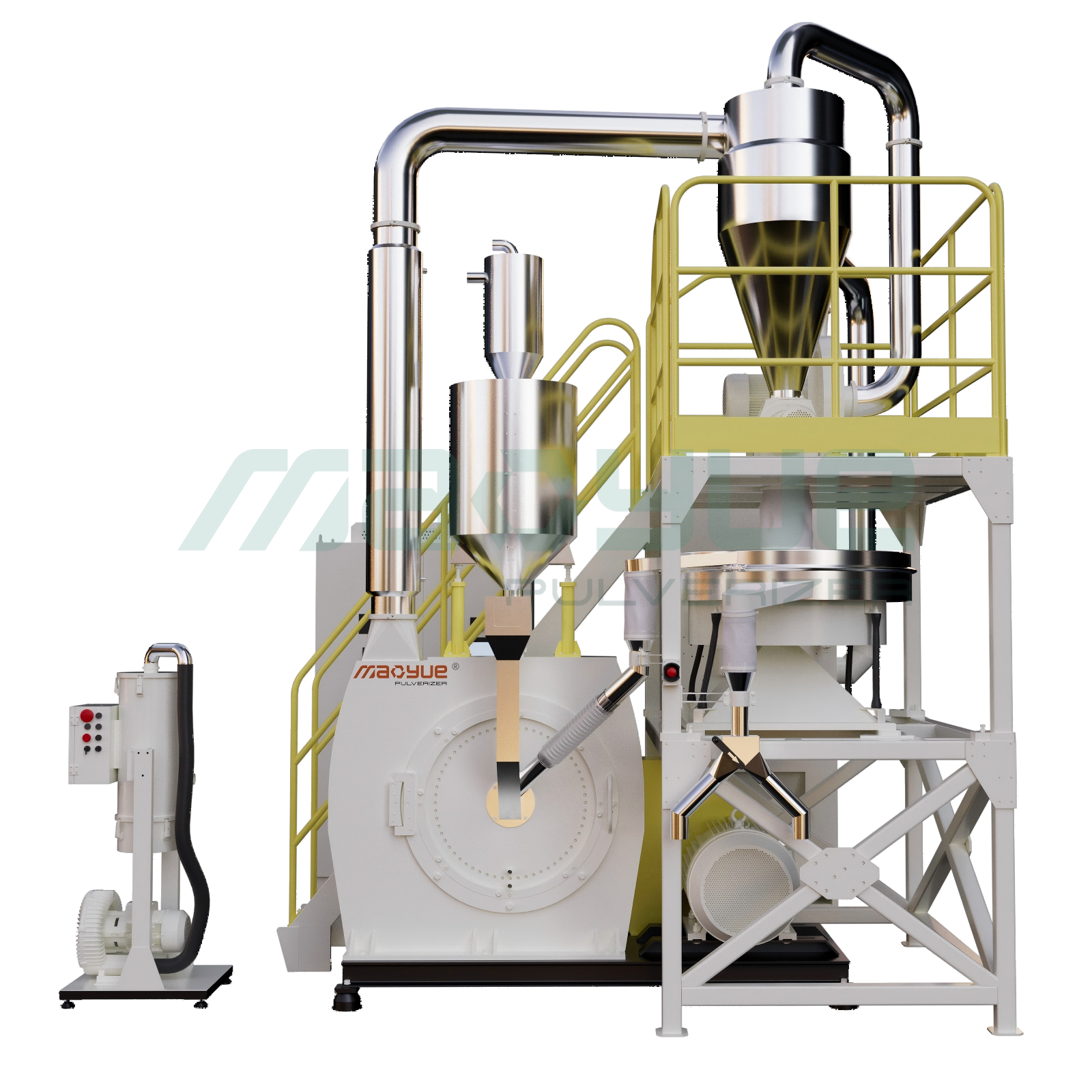
Choosing an HDPE Pulverizer Machine involves more than checking motor power and hourly output. Rigid pipe scrap and thick sheet offcuts place heavy loads on grinding parts. Buyers should examine wear resistance, fineness control, cooling, dust handling, and maintenance access together.
Feature | What Buyers Should Check | Why It Matters |
Grinding components | Steel grade, machining accuracy, balance, replaceable blocks | Affects tool life, vibration, and powder consistency |
Disc gap control | Adjustment range, repeatability, operating access | Controls mesh size, capacity, and power use |
Cooling system | Airflow, water circuit, temperature monitoring | Prevents softening, clumping, and thermal damage |
Dust collection | Chamber sealing, negative pressure, pulse filtration | Reduces leakage, material loss, and workshop dust |
Maintenance design | Chamber access, modular parts, cleaning space | Shortens service time and production stops |
Grinding discs face constant impact from rigid HDPE flakes. D2 or DC53 alloy steel offers strong hardness and wear resistance. It helps the cutting edges remain stable during long production runs. CNC machining also deserves close attention. Accurate surfaces keep static and rotating discs properly aligned. Precise balancing reduces vibration, bearing stress, noise, and uneven powder output. Replaceable split grinding blocks can lower long-term service costs. Operators replace worn sections instead of changing the complete disc assembly. This approach also simplifies repairs after processing contaminated or unusually thick scrap. The disc gap controls how the material moves through the grinding zone. A smaller gap usually creates finer powder, although heat and power demand may rise. A wider gap can increase output but may produce more coarse particles.
Ask how the gap is adjusted. A clear adjustment system helps operators repeat successful settings. It also reduces trial runs after maintenance or material changes.
Check stability during operation. Poor locking systems may allow the gap to shift. Powder size can then vary during the same production batch.
Standard air cooling often works for moderate output and regular production shifts. It removes friction heat from the chamber and powder stream. Clean airflow also supports stable material movement through the system. Closed-loop water cooling becomes more useful during continuous operation. It also suits larger discs, higher motor power, or finer powder targets. Water jackets can remove heat faster than airflow alone. Temperature monitoring should remain visible to the operator. Rising temperature often signals dull tools, excessive feeding, or an overly narrow disc gap. Early adjustments can prevent softening, smearing, and screen blockage.
Air cooling suits flexible production. It uses a simpler layout and requires less supporting equipment. Maintenance also remains easier for smaller recycling lines.
Combined cooling suits heavy workloads. Air manages the powder stream while water removes chamber heat. This setup supports longer runs and more consistent particle size.
Fine HDPE powder can escape through feeding points, pipe joints, or collection areas. A fully enclosed chamber limits those escape paths. It also protects nearby equipment from powder buildup. Negative-pressure airflow keeps dust moving toward the collection system. A cyclone separates most usable powder from the air. Pulse filtration then captures finer particles before exhaust air leaves the system. This setup offers more than a cleaner floor. It recovers saleable material, reduces housekeeping time, and limits filter contamination elsewhere. Stable airflow also helps screening and powder transport remain consistent. Buyers should inspect chamber seals, duct sizing, and filter access. Small leaks can weaken suction across the complete line. Poor filter access often leads to delayed cleaning and lower dust collection efficiency.
Maintenance access strongly affects real production capacity. A machine may offer high hourly output, yet frequent service delays reduce monthly performance. Quick chamber access makes a practical difference. Maoyue uses modular structures around the frame, grinding chamber, and blade assembly. Operators can reach wear parts without removing unrelated components. This reduces labor during inspection, cleaning, or replacement. Different HDPE waste streams may also require more frequent cleaning. Pipe scrap can carry dirt or labels, while sheet offcuts may contain pigments or additives. Easy disassembly lowers cross-contamination during material changes.
Check blade replacement steps. Fewer tools and clear access reduce service errors. They also help technicians restore the correct disc position.
Review spare-part availability. Grinding discs, cutting blocks, seals, and screens should remain easy to source. Long delivery times can stop an otherwise reliable recycling line.
Inspect cleaning space. Operators need room around screens, ducts, and collectors. Tight layouts make powder buildup harder to remove safely.
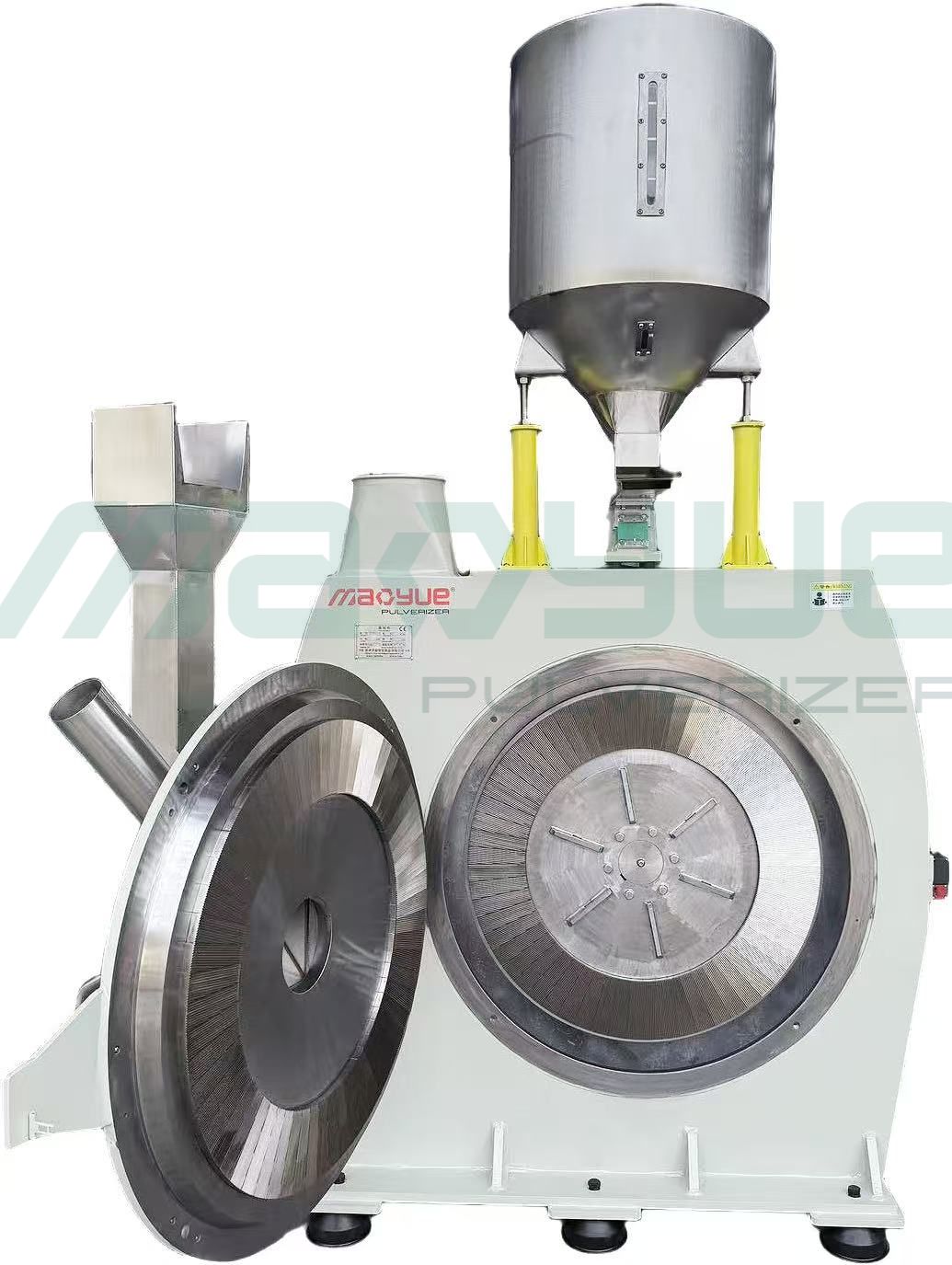
The finest powder is not always the best choice. Each process needs a different balance between flow, melting speed, output, and energy use. A suitable HDPE Pulverizer Machine should therefore match powder fineness to the final product.
Downstream Process | Important Powder Properties | Main Processing Goal |
Pipe and sheet re-extrusion | Stable particle size, low contamination, controlled heat history | Consistent melting and extrusion pressure |
Rotomolding | Uniform flow, narrow size distribution, good bulk density | Even mold coverage and wall thickness |
Masterbatch and compounding | Fine particles, clean powder, easy additive dispersion | Better mixing of pigments and modifiers |
Injection molding and re-granulation | Stable feeding, low moisture, predictable melt behavior | Reliable molding or pellet production |
Most rigid HDPE recycling projects use powder between about 20 and 80 mesh. This range suits many extrusion, compounding, and molding processes. Some Maoyue configurations can adjust output from 20 to 120 mesh. Finer powder melts faster and mixes more evenly. However, it may reduce hourly output and increase grinding heat. It can also raise energy use, tool wear, and dust collection demand. Coarser powder often supports higher production rates. It works well when the next process includes strong melting and mixing. Buyers should test several mesh settings before fixing production specifications.
Start from the final machine. Check its feeder, screw design, temperature zones, and mixing ability. These factors decide how easily it handles recycled powder. They also influence the acceptable particle-size range.
Avoid selecting mesh by appearance. Very fine powder may look more valuable. Yet it can create dust, poor flow, or higher processing costs. Practical performance matters more than visual fineness.
Re-extrusion needs stable powder rather than extreme fineness. Uneven particles melt at different speeds inside the extruder. This can create pressure changes, surface defects, or unstable output. Clean powder is equally important. Metal, dirt, paper, and mixed polymers can damage product performance. Controlled grinding temperatures also help protect the HDPE from thermal damage. Recycled powder can often be blended alongside virgin HDPE pellets. The correct ratio depends on product strength, appearance, and regulatory needs. A trial batch helps confirm melt flow and mechanical performance. For injection molding, direct blending may work for simple, non-critical parts. The powder must feed smoothly and melt without leaving visible defects. Consistent bulk density helps the dosing system remain accurate. Re-granulation is safer when powder quality varies between batches. Compounding first can improve additive distribution and melt consistency. Pellets also flow more predictably through automated feeding equipment.
Rotomolding depends heavily on powder flow and particle consistency. The material must spread across the heated mold surface evenly. Poor flow can leave thin areas, pinholes, or incomplete corners. A narrow particle-size distribution supports steady melting. Too many coarse particles may melt late during the cycle. Excessive fines can reduce flow and increase dust inside the workshop.
Wall thickness depends on even movement. Powder should travel freely as the mold rotates. Uneven movement creates weak spots and irregular product weight. It can also increase rejection rates.
Surface quality reflects powder control. Stable particles produce smoother internal and external finishes. Contamination may cause dark marks or rough areas. Overheated powder can also affect color and strength.
Bulk density affects each charge. A stable density makes batch weighing more accurate. It helps operators repeat the same mold loading. Product dimensions then remain easier to control.
Masterbatch and compounding usually benefit from finer, uniform powder. Smaller particles contact pigments, fillers, and modifiers more evenly. They can improve dispersion before the mixture reaches full melting. However, clean material remains more important than fineness alone. A fine powder containing moisture or contamination still creates processing problems. Buyers should review the full quality profile before approving each batch. Check particle-size distribution using sieve testing. The result should show qualified powder and oversized particle content. Large variations often point to worn discs, unstable feeding, or damaged screens. Measure bulk density and flowability for feeding stability. Inspect moisture, color consistency, and visible contamination. Also watch for yellowing, odor, or fused particles, since they may signal thermal damage.
Record every production batch. Include mesh results, temperature, capacity, and raw material source. These records help trace changes in powder behavior. They also make machine adjustments faster.
Compare powder inside the real process. Laboratory data provides useful guidance. Production trials reveal feeding, melting, and final product performance. Both checks are needed before regular reuse.
A properly configured HDPE Pulverizer Machine converts rigid pipe and sheet scrap into consistent, reusable powder.
Stable feeding, durable grinding parts, effective cooling, precise screening, and dust control protect powder quality and operating efficiency.
Maoyue Pulverizer supplies HDPE pulverizing machines, grinding discs, cutting tools, auxiliary equipment, and customized recycling solutions.
These systems help processors reduce waste, control costs, and recover more value from rigid HDPE scrap.
A: A disc-type mill grinding pre-shredded HDPE scrap into reusable powder.
A: No. Large pieces usually require cutting, crushing, or shredding first.
A: Controlled, uniform flakes provide steadier feeding and more consistent output.
A: Common output is 20–80 mesh, adjustable up to 20–120 mesh.
A: Use stable feeding, sharp discs, correct clearance, cooling, and temperature monitoring.


