Specializing in the production of Plastic Pulverizer Machines.

Views: 0 Author: Site Editor Publish Time: 2026-07-30 Origin: Site
Ever wonder why some recyclers get powder that works—while others get clogged, uneven output?
A Plastic Pulverizer is often the missing “third stage” that turns regrind into fine, usable plastic powder.In a complete recycling line, your equipment must do more than shrink size.
It must deliver the right particle size, with stable quality for reprocessing.In this post, you’ll learn where the Plastic Pulverizer sits, typical powder targets, and why temperature control matters.
You’ll also see how classification, screening, and dust collection connect to downstream manufacturing.
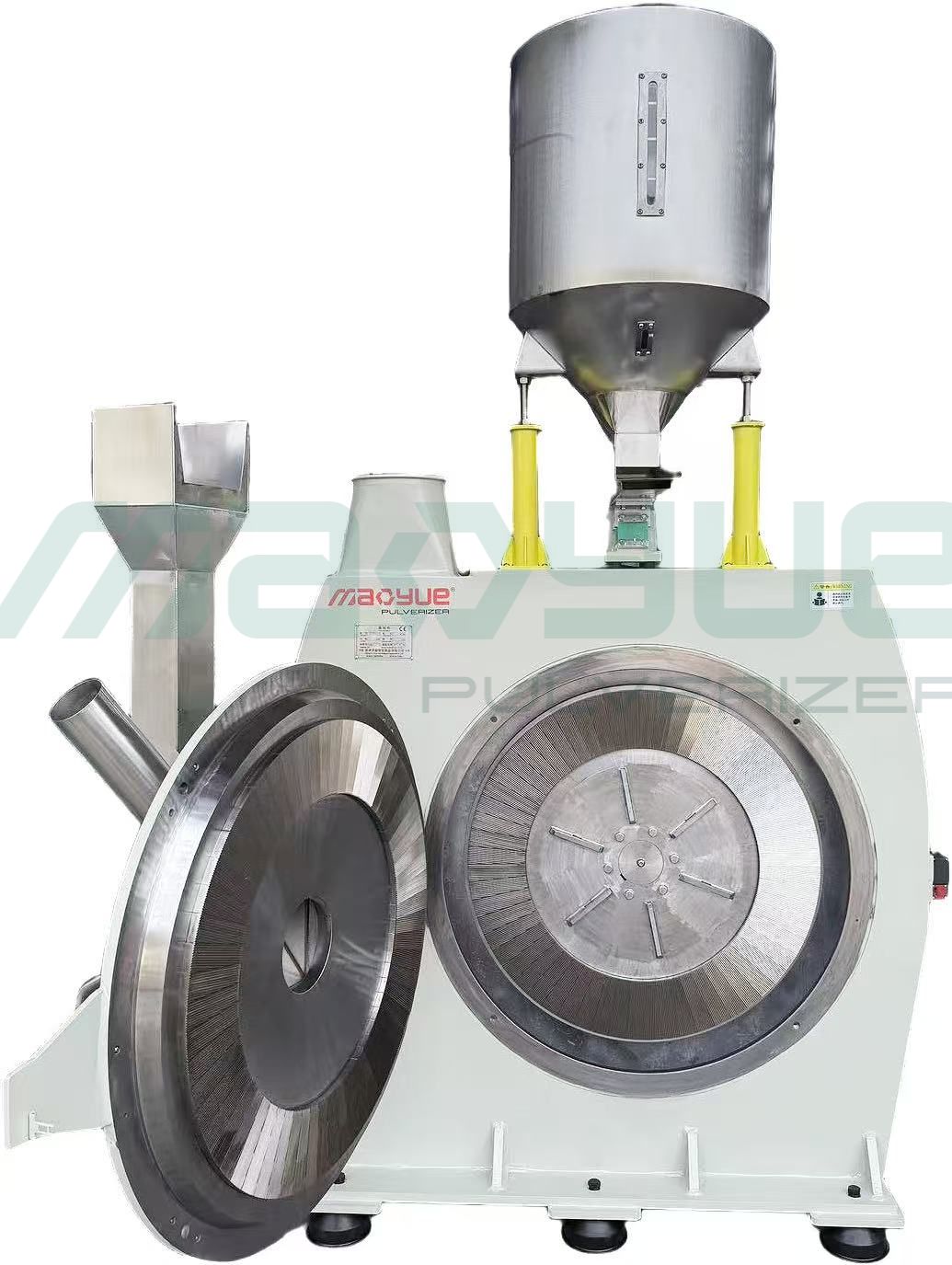
A Plastic Pulverizer doesn’t just “make things smaller.” It changes how your recycled material behaves once it reaches downstream equipment. When the output is the right powder, the line runs smoother and products stay more consistent.
What pulverizing does is simple to say, harder to execute well. Your input is crushed plastic fragments. The Plastic Pulverizer turns them into fine, consistent plastic powder.
It targets uniformity, not only “fineness.” Even particle size helps downstream steps blend, melt, and flow predictably.
It reduces the risk of “weird batches.” If the particle size distribution drifts, mixes can vary, and dosing becomes less accurate.
It improves handling. Fine powder moves differently than flakes or granules, so hoppers and mixers respond more reliably.
Here’s the practical difference many recyclers feel on the shop floor:
Input format | Common behavior in reprocessing | What the line often struggles with |
Crushed fragments | Uneven heating and mixing | Spots of poor melt flow, inconsistent output |
Granules | Better flow, but not powder-ready needs | Limited use cases where powder is required |
Fine powder (from a Plastic Pulverizer) | Even heat distribution and stable dosing | Less variation when particle size is controlled |
Most lines work best when they follow a stage-down workflow. Skipping steps sounds tempting when throughput targets are tight. It usually creates bigger problems later.
The common pathway looks like this:
Stage 1: shredder
This handles bulky scrap and reduces it to coarse material. It’s about volume and toughness.
Stage 2: granulator
This finishes to an intermediate size, often granules or small flakes. It makes the next grinding stage stable.
Stage 3: Plastic Pulverizer
This creates the fine powder your downstream process expects. It focuses on controlled grinding and classification.
When plants try to jump directly from big pieces to ultra-fine powder, the consequences show up fast:
Catastrophic clogging as softening happens and oversized pieces block flow paths
Extreme wear on cutting and precision grinding surfaces from wrong feed conditions
Inconsistent output when the classifier can’t separate on-spec powder from oversize reliably
That’s why the “third stage” matters. They aren’t doing the same job three times. Each stage sets the next stage up for success.
When customers say they need a Plastic Pulverizer, they usually mean one outcome: stable powder that behaves like a repeatable product ingredient. They care less about the machine label and more about the output that reaches their process.
They expect the powder to be:
Free-flowing so feeding systems work without bridging or sticking
Consistent from batch to batch so recipes don’t drift and downtime stays low
Suitable for powder dosing, mixing, or direct feed so production stays smooth
A quick “expectation checklist” helps spot mismatches before installation:
Does the output support the required powder range (often in the fine microns-to-mesh region)?
Does the line produce stable particle distribution, not just average fineness?
Does temperature control prevent sintering or agglomeration during grinding?
Does classification remove oversized particles so downstream sees uniform powder?
This is where a good Plastic Pulverizer earns its place. It turns recycled fragments into a material form that downstream systems can actually trust.
When people talk about a recycling “line,” they usually picture one machine after another. What matters more is the handoff between steps. The Plastic Pulverizer sits right where that handoff becomes powder-ready.
Think of the process as a size-down ladder. Each step feeds the next one. If one step is sloppy, the next step spends time correcting it.
1. Sorting & pre-treatment
They set the stage: remove contamination so the grinding parts survive.
2. Shredding / coarse crushing
They reduce bulky scrap into feedable pieces.
3. Granulation to an intermediate size
They standardize size before fine grinding.
4. Plastic Pulverizer grinding + classification
This is the fine step where powder consistency is the goal.
5. Screening / vibrating sieve
It separates on-spec powder from oversize.
6. Dust collection / air separation
It captures fines and keeps material moving reliably.
7. Downstream reprocessing
The powder goes into molding, extrusion, coatings, or compounding.Here’s how customers often visualize it on one page:
Stage | What it handles | Output format trend | Why it matters to the Plastic Pulverizer |
Sorting & pre-treatment | Dirty scrap + contaminants | Cleaner feed | Less metal/dirt risk, steadier grinding behavior |
Shredding | Bulky parts | Coarse fragments | Stable feed size prevents random overload |
Granulation | Coarse → intermediate | Granules / flakes | Predictable feed helps classification work |
Plastic Pulverizer | Intermediate → fine powder | Microns / mesh-range powder | Disc grinding + classifier need consistent input |
Screening & collection | Fine vs oversize | On-spec powder | Recirculation reduces variability downstream |
A practical note: the Plastic Pulverizer is often described as the “core intermediate processing equipment” because it connects pre-crushing and final reuse. It’s not the earliest grinder. It’s the fine-grinding bridge that makes powder usable.
The biggest surprises usually come before grinding even starts. If dirt and metal sneak in, you can expect downtime and abrasive wear.
What must be true upstream looks like this:
Sorting and cleaning to remove dirt, labels, debris
It reduces contamination in the grinding chamber and improves powder quality. Cleaner feed also helps the classifier separate more consistently.
Metal risk management
Add a metal detector / iron removal device concept in the line design. Metal contamination can damage precision grinding parts fast. It also creates downstream inconsistency because the material gets disrupted mid-process.This is where recyclers learn a hard lesson: a well-tuned Plastic Pulverizer can’t “fix” dirty input. It can only grind it more precisely, which is great—until the feed contains hard surprises.
Feeding is not an afterthought. It controls whether grinding stays stable, whether temperature rises, and whether classification behaves.
Customers usually plan feeding around two high-level ideas:
Anti-clogging steady feed
They keep material flow consistent so the grinding zone doesn’t surge and stall. Stable feed helps the powder avoid unstable output swings.
Vacuum feeding for efficiency and stability
They use it to move material smoothly into the pulverizing area. It reduces bridging risk compared to uneven gravity feed.
That feeding stability links directly to temperature control. When feeding fluctuates, the grinding zone sees uneven heat. Uneven heat can push polymers toward softening behavior, which makes the output harder to classify.
So the line design treats feeding as part of quality control, not just logistics. In a smooth system, the Plastic Pulverizer grinds, classifies, and hands off powder that the next steps can trust.
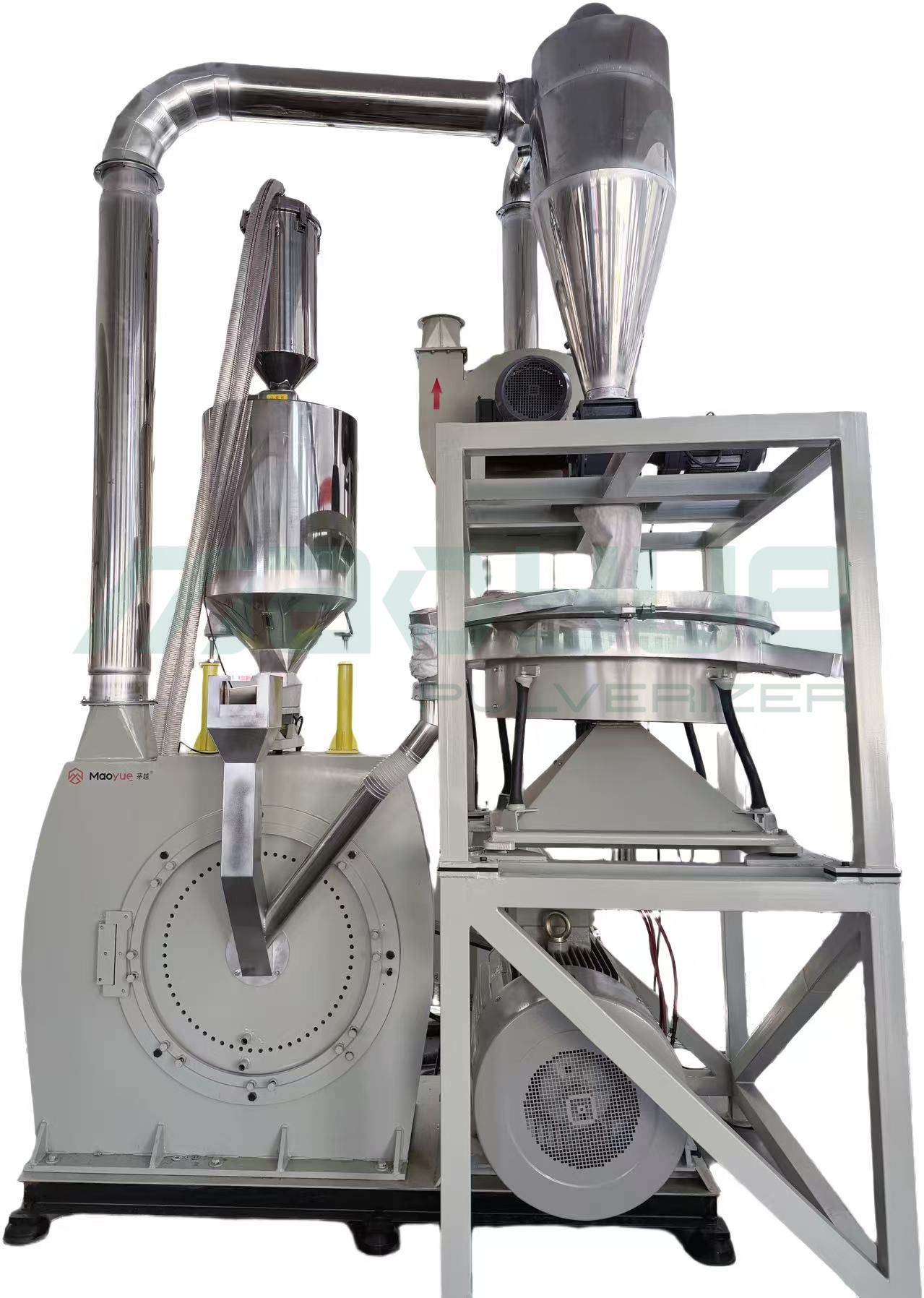
Fine powder quality looks simple from the outside. Inside a Plastic Pulverizer, it’s all about how material flows, how heat behaves, and how the system separates good powder from oversize. Get those pieces right, and downstream production runs smoother.
Most readers just want the “what,” then they ask the “why it works.” So picture a disc-on-disc grinder as two grinding surfaces creating a controlled, repeatable milling zone.
Granulated or flake material feeds into the grinding area between discs
One disc stays stationary, one disc rotates at controlled speed
The grinding gap helps determine final particle size and how much recirculation happens
After grinding, airflow and classification do the sorting job. On-spec powder exits. Oversized particles stay in the system and recirculate back into the grinding zone until they meet the target.
Here’s a simple map of the inside logic:
Component | Customer-visible role | What it impacts most |
Stationary disc | Creates the reference grinding surface | Grinding stability, size control |
Rotating disc | Provides energy for milling | Throughput, consistent fineness |
Grinding gap + airflow/classifier | Separates on-spec from oversize | Particle size distribution |
This is the part operators often learn the hard way. Fine plastic powder doesn’t forgive overheating. When the grinding zone gets too hot, the polymer behavior changes during milling.
What can go wrong looks like this:
Sintering: powder particles can fuse together when heat climbs
Agglomeration: fines clump, then behave like bigger chunks
Clumps: output becomes uneven, classification struggles to separate it
Operationally, that turns into real symptoms you can spot on the floor:
Clogging risk increases because clumps block flow paths and upset feeding stability
Unstable output follows when particle size keeps shifting during each batch
Poor downstream mixing appears next because inconsistent powder doesn’t dose the same way in mixers, extruders, or molds
If temperature stays controlled, the Plastic Pulverizer can focus on size reduction, not “accidental material transformation.”
Cooling isn’t an accessory. It’s part of the pulverizing performance. The goal is keeping the grinding chamber temperature stable so output stays consistent and classification keeps doing its job.
Plants typically design cooling around two ideas:
Cooling geometry + integrated cooling solutions to pull heat away from the grinding zone
Keeping the chamber temperature steady, often referenced around a narrow band like ±3–5℃ for stability
In practice, that means the cooling approach is matched to your material and output targets. If they chase fineness aggressively without cooling, they may get the powder “finer” today and the line “messier” tomorrow.
With a well-integrated cooling plan, the Plastic Pulverizer delivers fine, consistent powder that behaves predictably when it reaches screening, dust collection, and downstream reprocessing.
A: Often 35–500 µm (about 15–100 mesh), controlled by disc gap and classifier settings.
A: Usually no—skipping steps raises clogging risk and increases wear and unstable output.
A: Overheating can cause sintering or agglomeration, leading to clumps, clogging, and poor mixing downstream.
A: It separates on-spec powder and recirculates oversize, improving consistent particle size distribution.
A: Yes—dust collection systems capture fine powder and enable safe, stable material handling.


