Specializing in the production of Plastic Pulverizer Machines.

Views: 0 Author: Site Editor Publish Time: 2026-07-03 Origin: Site
Are you struggling with inconsistent plastic powder quality?
A high-performance Plastic Pulverizer Machine is the secret to success. It turns raw regrind into valuable, flowable material.
Choosing the right equipment is a critical bridge for your recycling line. Without it, you face costly bottlenecks and wasted resources.
In this post, you will learn how to select the perfect model. We cover capacity, mesh size, power, and cooling systems. Let’s build your ideal production setup today.
Selecting the right capacity for your Plastic Pulverizer Machine is the most critical step in your production planning. If you undersize the unit, you create a permanent bottleneck that starves your downstream equipment. If you oversize it, you waste significant capital and burn extra electricity during low-load operation. You should start by auditing your daily output targets and adding a 10–20% capacity buffer. This buffer accounts for minor fluctuations in feed density or temporary maintenance pauses, ensuring your line stays productive without constant manual intervention.
To get your numbers right, you must look at the entire flow of your facility. You cannot treat the pulverizer as an isolated unit. It needs to sync perfectly with your upstream shredders and downstream storage silos. When the feed rate is uneven, the grinding chamber suffers from inconsistent load, which leads to overheating and poor powder quality. A balanced system maintains a steady material level in the hopper, typically keeping it around 60–70% full to prevent air intake issues.
Production Scale | Capacity Range (kg/h) | Recommended Application |
Small Scale | 100 – 250 | Lab testing, edge trim, small workshops |
Medium Scale | 300 – 600 | Standard pipe, sheet, profile recycling |
Large Scale | 700 – 1500 | Rotomolding, high-volume compounding plants |
When evaluating specific equipment, look for manufacturers that offer modular scaling. For instance, the MYMF series from Changzhou Maoyue Intelligent Equipment Co., Ltd. provides a wide range of options, from 120 kg/h up to 1500 kg/h. This flexibility allows operators to match their specific production demands precisely without overpaying for unnecessary power. Their machines are designed to integrate into existing lines, which helps you avoid the headache of complex layout changes or custom conveyor modifications.
● Analyze your raw material volume: You need to track the average hourly output of your shredder or granulator first. If your granulator produces 500 kg/h, buying a 300 kg/h pulverizer will force you to stop the line constantly. Always aim for a capacity slightly above your peak shredding rate to maintain a smooth, continuous flow.
● Account for material density: Different polymers behave differently in the grinding chamber. Rigid PVC is much denser than LDPE film, so it occupies less volume per kilogram. You should verify that the manufacturer’s capacity rating matches your specific material type, as a machine rated for 500 kg/h of PE might struggle to hit that same target with denser PVC flakes.
● Plan for future growth: It is often cheaper to buy a slightly larger Plastic Pulverizer Machine now than to replace the entire system in two years. If your business is expanding, choose a model that allows for easy upgrades or handles a broader range of throughputs. This foresight saves you from expensive equipment swaps later when your recycling volume inevitably climbs.
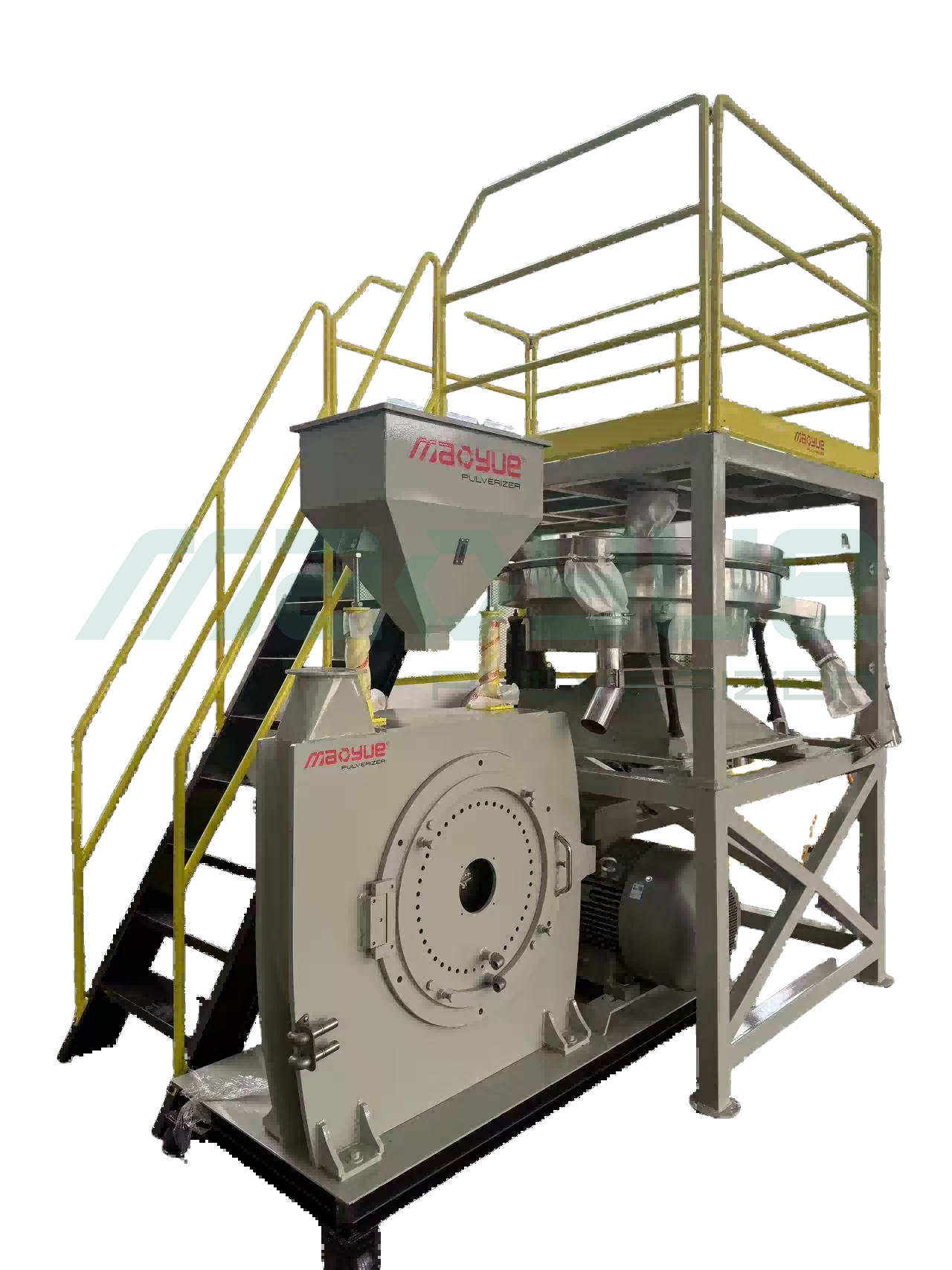
Getting the right particle size is non-negotiable for your end product. When you operate a Plastic Pulverizer Machine, you are essentially controlling the surface area of your material. The industry measures this fineness in "mesh," which refers to the number of openings per inch in a screen. A lower mesh number means larger particles, while a higher number indicates a much finer powder. Most industrial applications fall within the 20 to 200 mesh range, but you need to pinpoint your specific requirement before you even look at a catalog.
Choosing the wrong mesh size will ruin your downstream mixing or molding process. If your powder is too coarse, you might see unmelted particles in your final product. If it is too fine, you risk excessive dust and potential material degradation from the heat generated during the extra grinding time. You have to balance your quality needs against the energy costs of the machine.
Application Type | Target Mesh Range | Typical Particle Size (μm) |
Rotational Molding | 30 – 60 | 250 – 600 |
Color Masterbatch | 40 – 80 | 180 – 420 |
PVC Pipe/Profiles | 60 – 120 | 125 – 250 |
● Rotomolding requirements: These processes rely on the powder flowing evenly into a heated mold. If you target 30–60 mesh, you ensure the plastic melts uniformly without trapping air bubbles. This range provides the perfect balance for creating strong, smooth-walled tanks or containers.
● Masterbatch and Compounding: When you mix color pigments or additives, you need a finer grind to ensure everything blends perfectly. A 40–80 mesh size helps the additives disperse evenly throughout the resin. This prevents color streaks or weak spots in your finished plastic parts.
● PVC Pipe and High-End Compounding: These applications often require a tighter, finer powder to ensure structural integrity. Targeting 60–120 mesh allows for a dense, high-quality compound. It is vital for manufacturers who need to re-extrude scrap into high-value profiles or cable insulation materials.
You achieve this precision by adjusting the gap between the grinding discs inside your Plastic Pulverizer Machine. Modern units allow for micron-level adjustments, which give you full control over the output. You should check these settings regularly, as even a tiny deviation can lead to inconsistent particle distribution. If you notice your powder looks uneven, it is usually a sign that your disc gap has drifted or the discs themselves are showing signs of wear.
Consistency is the ultimate goal for any serious recycler. You want every batch to behave the same way in your extruder or molding machine. By mastering the relationship between your disc gap and the target mesh, you turn your grinding process into a reliable science. Always keep a set of test sieves on hand to verify your output quality daily. This simple habit saves you from massive headaches and ensures your customers get the exact material grade they pay for every single time.
Power consumption is often the biggest hidden cost when running a Plastic Pulverizer Machine. You must balance the main motor power against the specific hardness of your material to avoid wasting energy. Rigid materials like PC or engineering plastics require significantly more torque than softer LDPE films. If you choose a motor that is too weak, it will constantly struggle under load, leading to premature motor failure and inconsistent grinding results. Always match your motor rating to your toughest feedstock to keep the machine running smoothly.
Smart energy management is your best friend when you want to keep electricity bills low. We highly recommend looking for units equipped with Variable Frequency Drives (VFDs). A VFD allows the motor to adjust its speed based on the actual load inside the grinding chamber. Instead of running at full power all the time, the machine ramps up only when needed. This simple technology prevents energy spikes and reduces wear on your electrical components, making it a standard feature for modern, efficient recycling lines.
Equipment Component | Typical Power Range (kW) | Role in System |
Main Grinding Motor | 37 – 160 | Drives the primary disc rotation |
Dust Collection Fan | 5 – 15 | Removes fine particles and cools |
Vibration/Feeding Motor | 2 – 10 | Ensures steady material flow |
● Calculating your total system load: Do not just look at the main motor power when planning your electrical setup. You must account for all auxiliary equipment, including the fan, the vibration motor, and the discharge system. These components typically add 15–25 kW to your total power demand. If you ignore this, you might find your current electrical infrastructure is insufficient for the full system.
● The impact of material hardness: Harder plastics generate more resistance during the grinding process. This resistance forces the motor to draw more current to maintain the required RPM. If you process a mix of materials, you should size your motor for the hardest polymer in your stream. This ensures you never trip your breakers during a heavy production cycle.
● Monitoring power trends: Keep an eye on your ammeter during daily operations. A sudden increase in power draw often indicates that your grinding discs are becoming dull or that the gap is too tight. By tracking these trends, you catch maintenance issues before they turn into expensive downtime. It is a proactive way to keep your Plastic Pulverizer Machine running at peak efficiency for years.
When you invest in a high-quality system, you are paying for efficient energy conversion. Well-designed machines minimize friction losses within the housing, which means more of your electricity goes into grinding plastic instead of heating up the air. We suggest asking suppliers for specific energy data, such as kWh per kilogram of processed material. This metric gives you a clear picture of how much it will actually cost to run the machine at your target output. It is the most honest way to compare different models before you make your final decision.
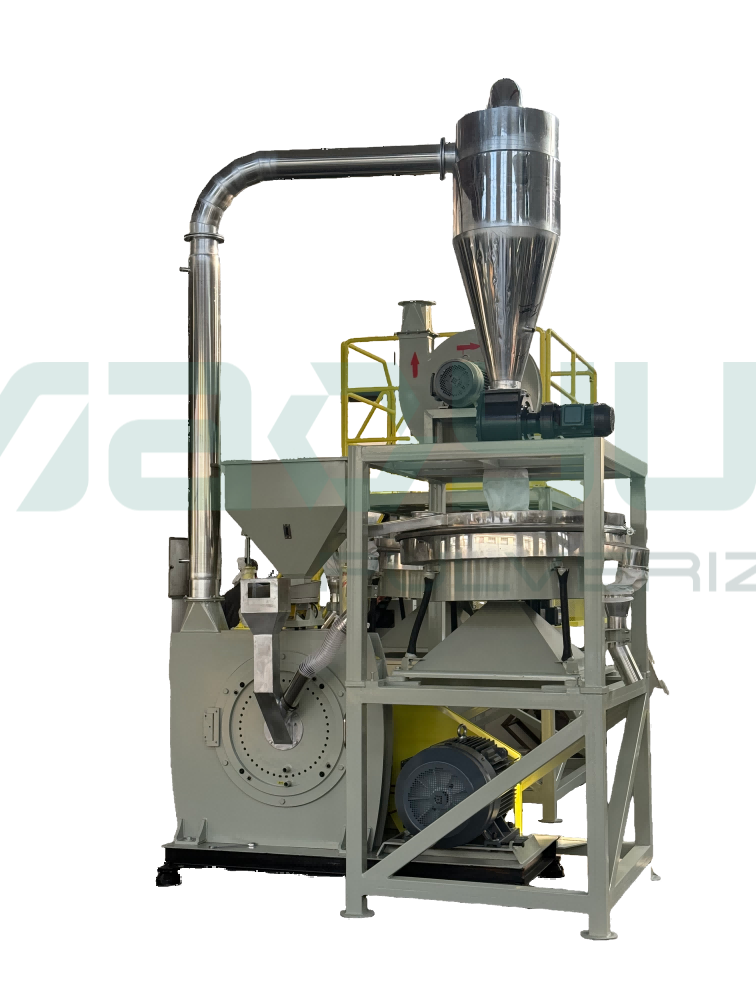
Heat is the silent enemy of any Plastic Pulverizer Machine. When you grind plastic at high speeds, friction generates intense heat inside the chamber. If you cannot extract this heat effectively, your material will reach its melting point and turn into a sticky mess. This leads to "melt adhesion," where the plastic cakes onto the grinding discs and clogs the entire system. You need to keep the chamber temperature stable within a narrow range of ±3–5℃ to ensure your powder remains free-flowing and high-quality.
We always suggest looking for a dual-cooling approach to manage these thermal risks. Water cooling works best for the grinding chamber, where it acts as a constant heat sink to pull energy away from the source. Meanwhile, air cooling handles the motor and the outer housing, preventing the machine from overheating during long, heavy-duty production runs. This combination keeps the internal environment cool enough to prevent thermal degradation, which is especially important for sensitive polymers like PVC.
Cooling Method | Primary Function | Benefit to Production |
Water Jacket | Chamber heat extraction | Prevents material melting and caking |
Forced Air | Motor/Housing cooling | Reduces noise and energy consumption |
Intelligent Control | Temperature monitoring | Keeps melt index stable during grinding |
● Protecting your material properties: The physical integrity of your plastic depends on its melt index. If the grinding process gets too hot, the molecular structure changes, and you lose the quality of your resin. Advanced systems, such as those engineered by Changzhou Maoyue, utilize intelligent temperature control to keep melt index fluctuations below 0.4g/10min. This level of precision ensures the physical properties of your plastic remain intact, allowing you to re-introduce the powder into your production line without any loss in performance.
● Avoiding production downtime: When a machine overheats, you have to stop everything to clean the discs. This manual cleaning process is messy, dangerous, and eats into your daily output. By investing in a robust cooling system, you eliminate these unplanned stops. It keeps the machine running continuously, which is the only way to hit your daily volume targets without burning out your staff or the equipment.
● Extending component life: Excessive heat does not just ruin the plastic; it destroys your bearings and seals. Keeping the housing cool ensures that the lubricants stay effective and the mechanical parts do not expand or warp due to thermal stress. You will find that machines with superior cooling systems require far fewer repairs over their lifespan. It is a simple investment that pays for itself by reducing your long-term maintenance costs and keeping your production line moving forward.
Choosing the right Plastic Pulverizer Machine is a vital investment.
The best equipment balances technical precision with long-term operational durability.
Do not settle for generic options.
Focus on your specific material needs and target mesh requirements.
Prepare your feedstock profile today.
Then, request a customized trial report from your shortlisted suppliers.
Taking these steps ensures you get the most value for your production line.
A: Disc-types provide stable fineness for PVC and PE. Turbo-types offer higher throughput for softer materials.
A: Feed size should be 5–10 mm. Smaller, uniform feed prevents jams and ensures consistent output quality.
A: High ambient heat reduces cooling effectiveness. Use water-jacketed systems to maintain stable chamber temperatures.
A: No. Contaminants damage blades. Always pre-sort and use metal detection for safety.


