Specializing in the production of Plastic Pulverizer Machines.

Views: 0 Author: Site Editor Publish Time: 2026-07-24 Origin: Site
What if your PVC scraps could turn into sale-ready fine powder? With the right Plastic Pulverizer Machine, you can grind, cool, screen, and collect in one clean workflow.
This post helps solve the real buying problem: stable output without overheating or dusty mess.
In this guide, you’ll learn how a PVC pipe regrind pulverizer works and what specs matter most, from mesh targets to cooling and capacity.
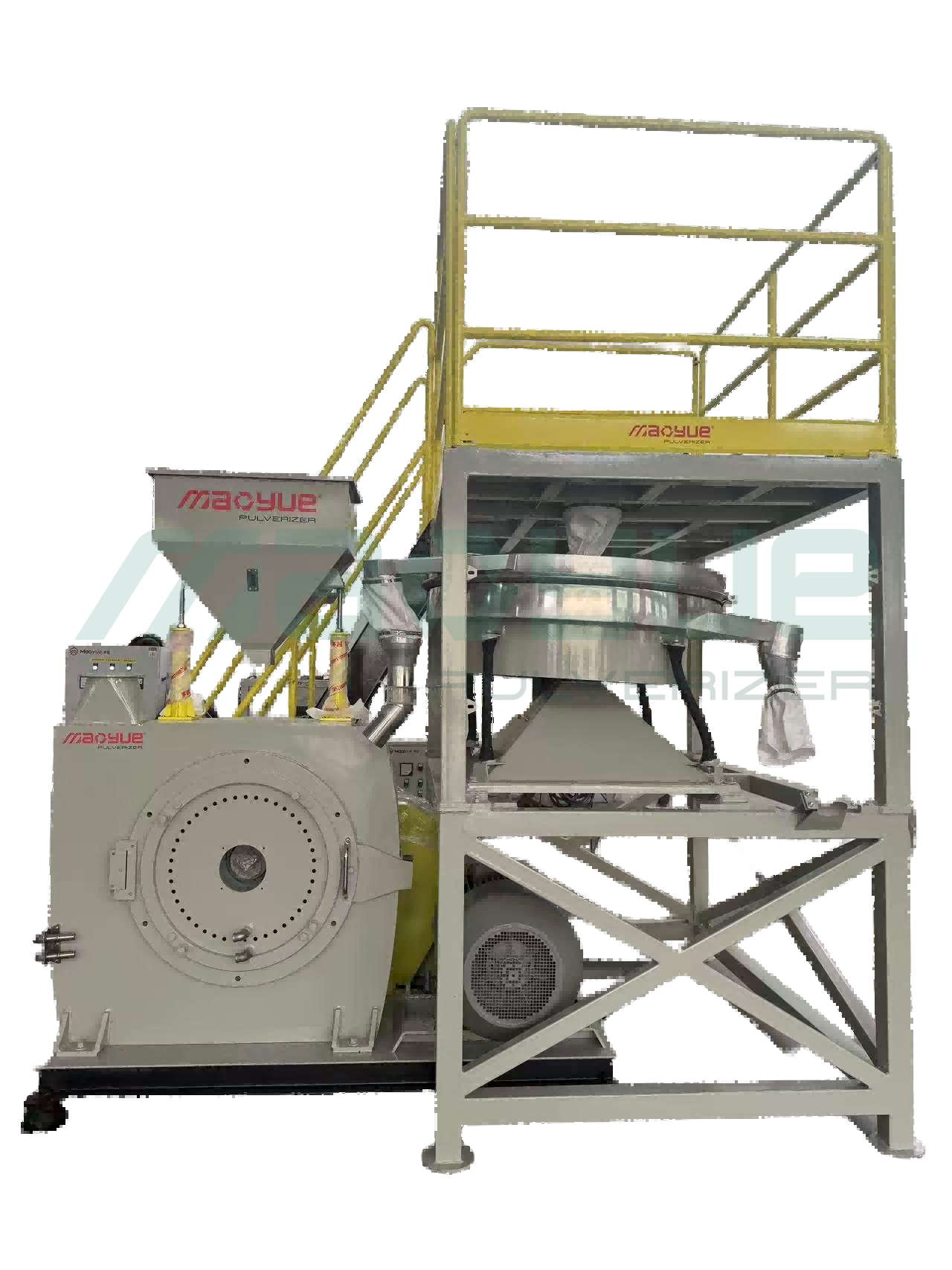
When customers say they need a Plastic Pulverizer Machine, they usually mean two things: the right mesh, and stable output day after day. For PVC pipe regrind, particle size isn’t just “nice to have”—it decides how smoothly the recycled material runs in the next step.
A good system turns PVC pipe regrind into fine powder by grinding, classifying with a vibrating screen, and sending oversized parts back into the mill. That loop is what makes output control feel predictable instead of random.
Most buyers target 20–50 mesh for PVC pipe/profile reuse. That range is common because it balances flowability and processing stability for downstream extrusion or molding.
Here’s how that mesh range usually maps to real production expectations:
20–50 mesh supports stable feeding into compounding and extrusion lines
It helps reduce “lump” behavior that can disturb dosing
It generally keeps the recycled powder consistent from batch to batch
To keep it practical, think of mesh like a “language” the next machine understands. Too coarse and they compensate harder. Too fine and they sometimes change feeding behavior.
Target finished powder size | Where it fits best | What buyers care about most |
20–50 mesh | PVC pipe and PVC profile regrind reuse | Consistent feed, stable extrusion behavior |
20–80 mesh (finer setting) | Higher spec applications where finer flow is needed | Lower variability, smoother downstream blending |
Below 20 mesh (coarser) | When output speed matters more than tight specs | Lower resistance to regrinding time |
Mesh is not “one setting forever.” A Plastic Pulverizer Machine with proper classification can be tuned so the finished powder shifts toward finer targets, like up to 20–80 mesh.
In practice, adjustability comes from two sides working together:
Screen and classification setup guide what passes as “qualified” powder
Return-to-mill loop regrinds oversize particles automatically, instead of wasting time
You also see this effect when cooling stays stable. If PVC overheats, performance drops and output consistency becomes harder to control. The dual cooling approach—water and air, depending on the model—helps keep grinding conditions steady while you push for finer mesh.
Here’s what that means operationally:
If you tighten your mesh goal, the system returns more oversized material for regrind
Output can remain stable when airflow transport and classification stay balanced
Powder quality stays consistent when temperature control prevents PVC thermal degradation
Uniform particle size improves reuse because it makes every feed batch behave similarly. Recycled PVC powder that varies in size forces the next process to compensate, so extrusion gets less smooth and more sensitive to small changes.
When particle size is consistent, a few practical benefits show up quickly:
They get better feed consistency for reprocessing, not just “a smaller number on a label”
They can stabilize extrusion/manufacturing outcomes, especially when dosing has strict tolerances
It helps downstream lines reduce “stop-and-adjust” situations caused by uneven powder flow
It’s also where the workflow design matters. Grinding alone doesn’t guarantee uniformity. Classification is what separates qualified powder from oversized particles, and the automatic return loop is what keeps them from lingering.
If your goal is reliable “scrap to fine powder” performance, the Plastic Pulverizer Machine must control both particle size and process stability. When they do, PVC pipe regrind becomes a dependable raw material instead of a constant production headache.
If PVC pipe regrind still has metal mixed in, it doesn’t just lower powder purity. It also quietly attacks the inside of a Plastic Pulverizer Machine—often before anyone notices the real cause. And when wear increases, output consistency and maintenance costs tend to follow.
This section is about ROI you can actually feel: fewer interruptions, less scrap powder, and longer life for the core grinding parts. Once you understand where contamination comes from, the rest of the workflow makes more sense.
PVC pipe regrind usually starts as used material. During collection, sorting, cutting, and transport, metal sundries can sneak in and they don’t always look obvious at first glance.
Common sources include:
Small iron pieces from pipe joints, brackets, or cutting residue
Fasteners or fragments mixed during handling
Tools and conveyor wear that contaminate regrind batches
Even a small amount of metal changes grinding behavior. It can create unwanted “hot spots,” increase uneven resistance, and push more particles into the wrong classification route.
In a well-designed PVC pipeline, metal removal should happen early, not after the powder is already produced. That’s where the metal separation loader / iron removal function matters inside the Plastic Pulverizer Machine workflow.
Mechanically, the goal is simple: remove metal sundries before they reach the grinding chamber and cutting surfaces. Practically, this reduces both contamination in finished powder and stress on wear parts.
What buyers typically notice after implementing metal separation:
Lower risk of metal fragments traveling into the grinding chamber
Cleaner powder collected after sifting and airflow classification
Less “mystery wear” on grinding discs, rotor knives, and stator knives
Here’s a quick view of the impact path:
If metal impurities remain… | What happens in the workflow | What it costs you |
Yes | More abrasive contact inside the chamber | Faster wear on core parts |
Yes | More contamination in finished powder | Reduced purity and batch consistency |
Yes | More disturbances during grinding | Higher downtime for inspection |
The point isn’t fear—it’s control. When iron removal is built in, the rest of the line behaves more predictably.
Cleaner recycled powder purity helps downstream processing behave better. When your powder contains fewer metal contaminants, dosing becomes steadier and you avoid quality disputes caused by inconsistent batches.
In real production terms, “cleaner” usually shows up as:
More consistent appearance and performance of the recycled PVC fine powder
Less contamination-related rework in compounding or extrusion steps
Lower risk of downstream defects traced back to mixed metal particles
On the maintenance side, reduced equipment wear is where ROI becomes visible. With fewer metal fragments contacting cutting edges, the Plastic Pulverizer Machine keeps its grinding action stable for longer service intervals.
Common operational benefits include:
Longer life for grinding discs and cutting tools
Fewer shutdowns to check wear and alignment
More stable mesh consistency because the grinding process stays even
When you’re running PVC pipe regrind at scale, those small reductions in interruptions add up fast, and they protect both product quality and the machine’s long-term performance.
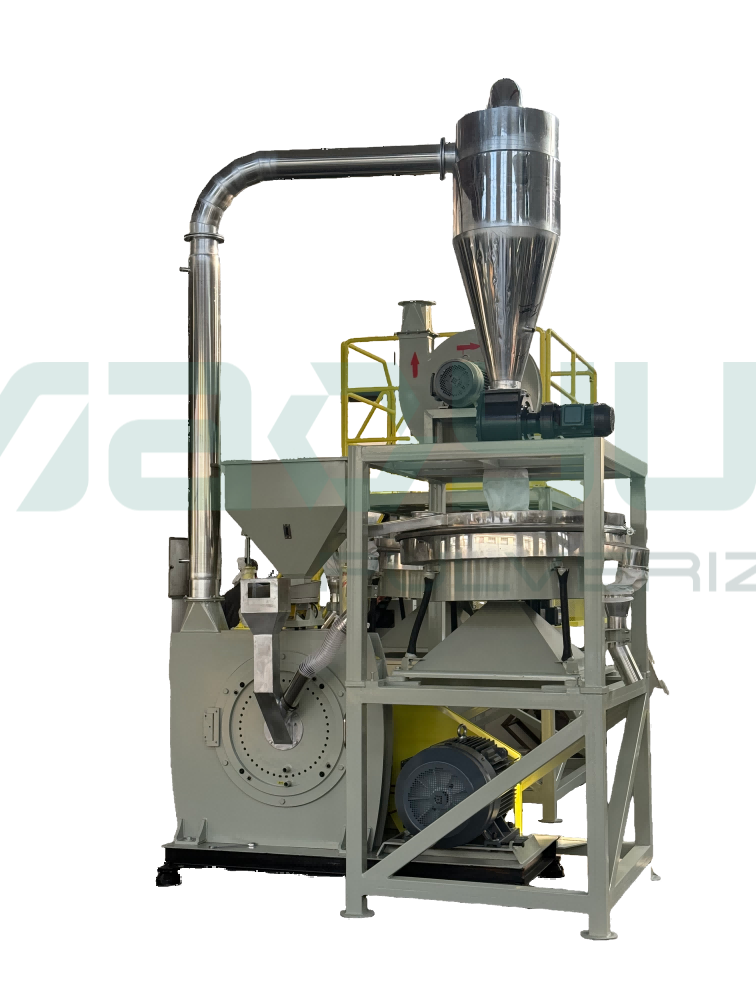
When buyers look at a Plastic Pulverizer Machine, they usually start with one question: “Will it hit my kg/h and my mesh, every shift?” The hard part is that performance isn’t only horsepower. It’s grinding disc size, cooling behavior, dust control, and how consistently the screen/classification loop works.
So this section lays out MF-500 vs MF-850 in a practical, purchasing-friendly way, then turns that into a simple selection checklist you can use with your team.
If your goal is steady throughput for small-to-medium PVC operations, MF-500 is the type of Plastic Pulverizer Machine people pick because it balances output and control without over-sizing the line. In many factories, it becomes the “main recycler” that keeps pipe regrind flowing into production.
Here are the exact parameters you’d plan around:
Grinding disc diameter: 470 mm
Matched power: 37 kW / 45 kW
Production capacity: 100–200 kg/h
Finished powder size: 20–50 mesh
Cooling mode: Dual cooling with water and air
Core application: small/medium recycling of PVC pipe scraps, PVC profiles, floor materials, and wall panels
Brand note (smooth placement): With Changzhou Maoyue’s focus on PVC grinding tool matching and stable processing, MF-500 is built for predictable recycled powder quality rather than “approximate” output.
When the regrind volume ramps up, smaller capacity units can start acting like bottlenecks. That’s where MF-850 fits. It’s designed for high-volume recycling lines that need a Plastic Pulverizer Machine capable of sustained output under heavier feed conditions.
Key parameters:
Grinding disc diameter: 660 mm
Matched power: 90 kW
Production capacity: 300–800 kg/h
Finished powder size: 20–50 mesh
Cooling mode: Water and air combined cooling
Core application: large-volume plastic recycling factories
The cooling approach matters here. Bigger throughput increases heat load, so maintaining stable temperature supports consistent powder quality and protects PVC from thermal issues during grinding.
Picking between MF-500 and MF-850 becomes easier once you map your line requirements to five decision points. You don’t need fancy spreadsheets—just be honest about your inputs and downstream needs.
Use this checklist:
Material type: PVC pipe regrind vs PVC scraps (contamination level and feeding behavior change)
Required capacity (kg/h): plan for peak demand, not just average output
Target mesh size: common goal is 20–50 mesh, but your extrusion dosing tolerance matters
Need for dust control and closed-loop setup: negative pressure + bag filtration reduces mess and helps consistent operations
Space constraints and cooling requirements: larger models need enough airflow ducting and cooling water handling
To make comparison faster, here’s one table that groups only the same type of specs:
Parameter | MF-500 | MF-850 |
Grinding disc diameter | 470 mm | 660 mm |
Matched power | 37 kW / 45 kW | 90 kW |
Production capacity | 100–200 kg/h | 300–800 kg/h |
Finished powder size | 20–50 mesh | 20–50 mesh |
Cooling mode | Water + air (dual) | Water + air (combined) |
Once those five points line up, the rest is tuning: stable feeding, correct classification, and keeping the cooling working the way your process demands.
A:Choose MF-500 (100–200 kg/h, 470 mm disc) for small/medium, or MF-850 (300–800 kg/h, 660 mm disc) for large-volume recycling.
A:Common finished size is 20–50 mesh; output can be tuned toward finer targets (up to ~20–80 mesh conceptually).
A:Dual water-air cooling (MF-500) or water-air combined cooling (MF-850) keeps stable temperature, reducing overheating and thermal degradation risk.
A:Yes, a built-in metal separation/iron removal step removes metal sundries early to protect parts and improve purity.
A:Yes. Oversized material is classified by the vibrating screen and returns to the mill automatically.
A:Closed-cycle negative-pressure airflow plus a bag filter captures dust and prevents leakage for cleaner production.


