Specializing in the production of Plastic Pulverizer Machines.

Views: 0 Author: Site Editor Publish Time: 2026-07-21 Origin: Site
Your compound fails when powder preparation is sloppy.
How do you get smooth mixing, clean color, and steady feeding?This is where Plastic Pulverizer Machines help.
They turn scrap, regrind, and pellets into ready-to-blend powder.In this post, you’ll learn how Plastic Pulverizer Machines improve dispersion, support stable dosing, reduce defects, and lower total cost.
When your compounding recipe is right but the output looks “off,” powder prep is usually the culprit.
Plastic Pulverizer Machines turn coarse scrap or regrind into controlled powder. That powder decides how additives meet resin inside your mixer and twin-screw extruder.
This is not just about “finer.” It’s about the right particle behavior so blending stays repeatable, run after run. You’ll feel it in color stability, fewer defects, and steadier machine conditions.
Most buyers want one simple thing: fewer surprises during mixing.
A Plastic Pulverizer Machines workflow targets uniform particle size distribution, so each batch behaves similarly when they load it into the feeder.
When particle size concentration is tighter, base resin and additives spread more evenly.
That supports more consistent blending between resin pellets and functional materials.
Less variation means fewer “hot spots” during extrusion and curing.
Here’s what that typically changes on the floor:
Compounding outcome you care about | What better particle distribution helps | Typical visible result |
Consistent color | Reduced additive agglomeration and uneven contact | Less color spotting across parts |
Fewer hot spots | More uniform melting and flow in the barrel | More stable extrusion torque |
Stable mechanical properties | Better dispersion of fillers/additives | Lower variation between lots |
They don’t need fancy math to see it. If powder distribution drifts, mixing drifts too.
Fine powder does more than fill space. It gives additives and pigments more surface to “work on.”
When Plastic Pulverizer Machines reduce particle size, they raise specific surface area. That helps additives wet, spread, and coat onto resin surfaces faster.
It’s especially noticeable for masterbatch and color systems. Pigments like even exposure, and additives like consistent contact. If particles are too coarse, pigments can clump, and dispersion becomes uneven.
In practical terms, readers often report these effects:
Faster wetting and better coating during mixing
More uniform pigment distribution across the compound
Improved masterbatch performance and repeatable color matching
So when someone tells you “our dispersion improved,” powder prep is often the quiet reason.
Even great dispersion fails if dosing becomes unstable.
When Plastic Pulverizer Machines deliver consistent fineness, they improve how powder flows through feeders and dosing systems. Fine, uniform powder tends to behave predictably—less bridging, fewer flow interruptions.
That matters because compounding extrusion is sensitive to feed consistency. If the feeder gets erratic, the screw sees inconsistent material feed rate. Then torque, melting pattern, and final properties can shift.
What stable flow usually means in the compounding line:
Feeder output stays steadier, so process variation drops
Batch-to-batch behavior becomes closer, even when scrap input changes
Downstream mixing gets the same “starting conditions” every time
Powder prep is the handshake between your pulverizer and the rest of the line, and it works best when the handshake stays the same.
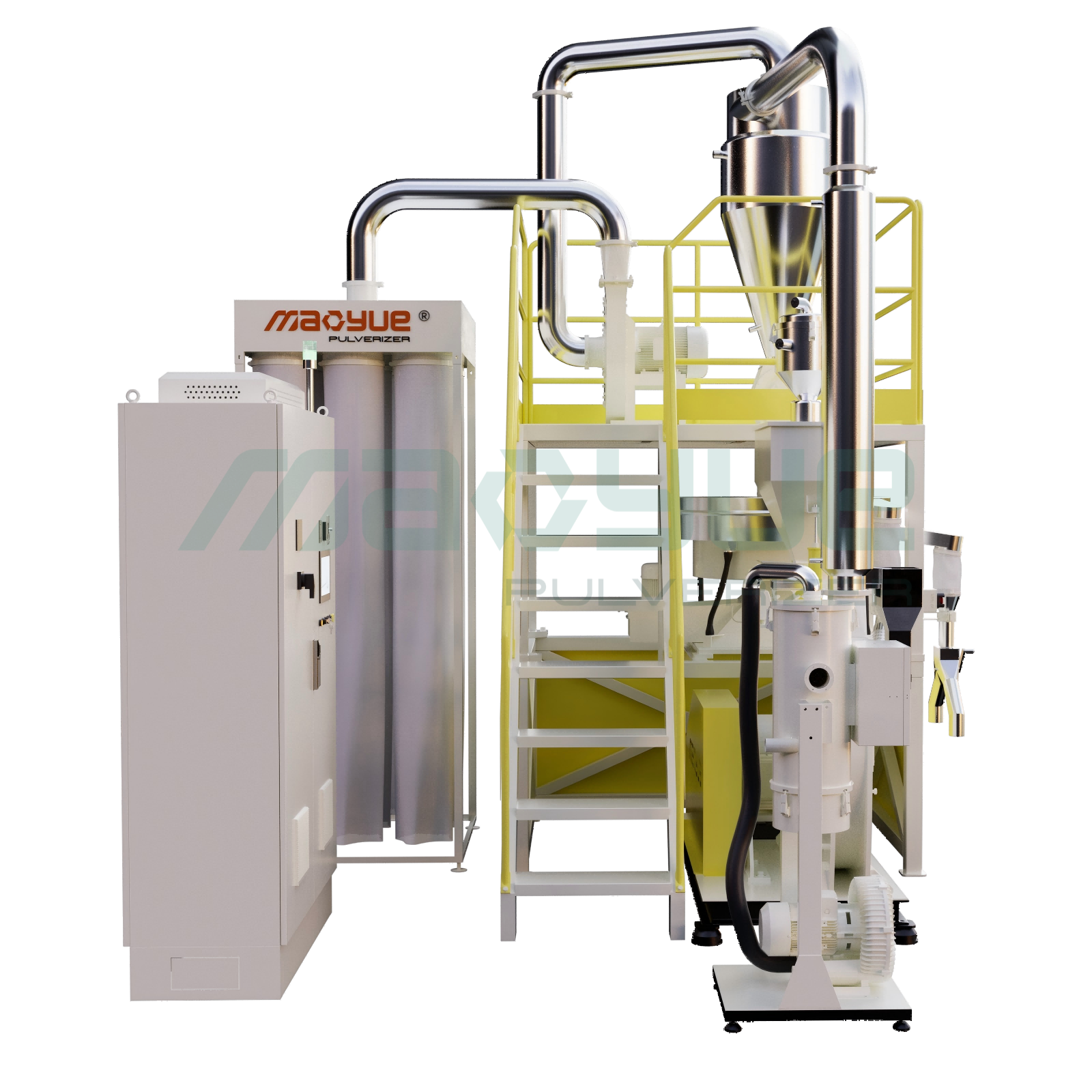
If you’re buying Plastic Pulverizer Machines, you’re not buying steel and motors. You’re buying powder behavior that your compounding line can trust.
Most buyers care about four things: the right mesh, clean quality, stable temperature, and predictable cost per ton.When these items match, downstream mixing and extrusion stop “guessing.”
Then your color looks steadier and your rejects drop.
Buyers usually start with a mesh target, but the real question is repeatability.
A Plastic Pulverizer Machines should deliver adjustable fineness, not random variation that forces your process to compensate.
Here’s how common mesh needs map to real compounding expectations:
Target compounding purpose | Typical powder range | What you usually see in production |
General modification / base blending | ~20–80 mesh | Easier feeding and consistent mixing starts |
Higher demanding dispersion / fillers | ~20–50 mesh | Better additive distribution, fewer local defects |
Color masterbatch or fine functional recipes | 100+ mesh (sometimes up to 200 mesh) | More stable pigment dispersion and matching |
What helps most is the machine’s ability to tune particle fineness through clearance or gap adjustment.
Then they can switch formulas without rebuilding the entire process.
Overheating is a silent enemy.
When powders partially melt or agglomerate, particle shape changes and flow behavior becomes messy.For buyers, thermal defects often show up downstream as:
uneven melting and mixing in extrusion
increased hot spots during processing
worse mechanical consistency between batches
That’s why controlled temperature matters in Plastic Pulverizer Machines.
Dual air + water cooling helps keep the grinding chamber stable, especially for heat-sensitive plastics.If your powder stays cool and stable, it blends more predictably.
If it overheats, you end up correcting the compounding line instead of improving the recipe.
Contamination is expensive because it rarely stays “small.”
Metal debris can cause black spots, and fine foreign particles can trigger performance drift you’ll only notice after extrusion.A practical contamination-risk view looks like this:
metal abrasion from wear parts can introduce impurities
dust leakage increases raw material waste and mess
external contamination can create specks, gels, and color defects
To reduce these problems, Plastic Pulverizer Machines should use full-sealed dust removal and allow for optional metal separation.
Sealed dust collection limits loss and keeps the powder cleaner.
Optional magnetic/metal filtering helps protect compound appearance and consistency, especially for high-grade color systems.
Cost isn’t only electricity. Buyers look at total cost per ton.
That includes energy use, wear consumables, scrap/reject rate, and how often the equipment needs maintenance.Two machines can have similar purchase prices but wildly different operating costs if powder quality varies.
Stable powder means fewer downtime events and less rework. That’s where savings usually appear.A key operational advantage for relevant materials is ambient-temperature grinding.
If Plastic Pulverizer Machines can run without liquid nitrogen for PE/PP-type pulverization, it removes a major recurring expense.
Less consumable cost + less process disruption often equals a better long-term economics picture.
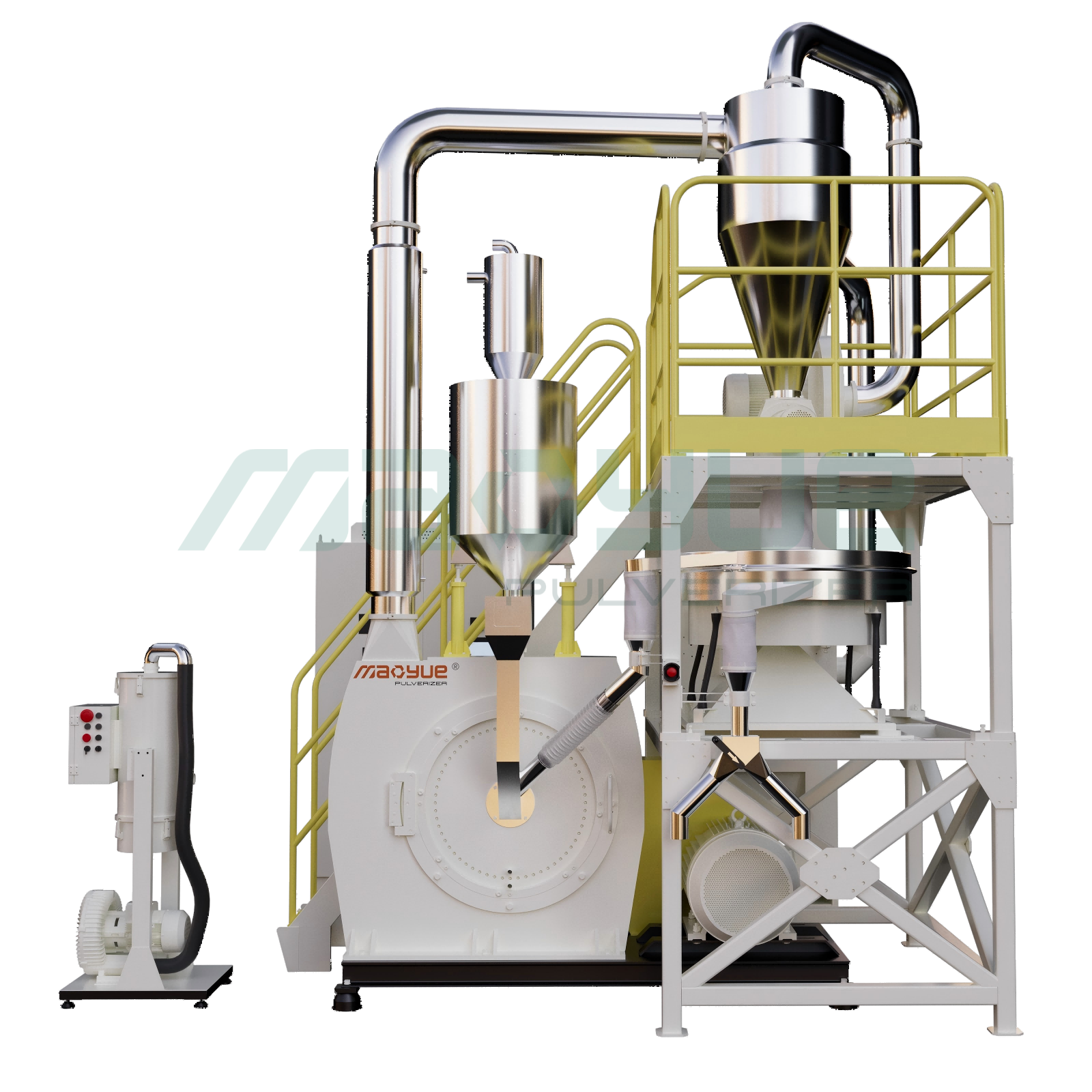
When buyers talk about Plastic Pulverizer Machines, they usually mean one thing: will the powder stay consistent enough for compounding?
Good machines don’t just grind. They protect purity, manage temperature, and control particle fineness so your mixing doesn’t drift.This is where the key features matter—because compounding defects often start long before extrusion.
Powder purity is a quiet deal-breaker, especially for color masterbatch and high-grade compounds.
If wear is high, tiny metal debris can mix into the powder, then show up later as black specks or speck-like defects.A well-built Plastic Pulverizer Machines uses wear-resistant grinding components, like alloy steel discs and matched cutting tools.
Lower abrasion helps reduce metal impurities, and that keeps pigment and additive performance more stable.
Grinding discs use high-hardness alloy materials to resist wear
Cutting tools keep a consistent surface so the powder stays cleaner
Less metal carryover helps prevent color defects and performance fluctuation
Here’s a simple way to connect machine design to end results:
Compounding use case | Buyer pain | Feature that helps |
Color masterbatch | black spots, color inconsistency | wear-resistant disc & cutting tool design |
High-grade functional compounds | performance drift across lots | lower metal impurities from reduced abrasion |
Plastic grinding can generate heat fast. If it runs too hot, you get melting inside the grinding cavity.
That causes agglomeration, wider particle size spread, and rough powder flow during feeding.
Plastic Pulverizer Machines that use dual air + water cooling help stabilize chamber temperature.
They control overheating, reduce caking risk, and keep powder properties more repeatable from batch to batch.
More consistent powder quality when formulas change
Less risk of irregular particle shapes from partial melting
Smoother feeding into compounding extrusion, with fewer process surprises
Not every compounding formula needs the same powder fineness.
Some recipes want a workable mid-range mesh, while others need ultra-fine powder for smoother dispersion.This is where precision clearance adjustment matters in Plastic Pulverizer Machines.
It’s basically changing the gap/clearance between fixed and moving grinding elements, so the machine can target different mesh outputs.When clearance is adjustable, they can match typical needs like:
20–80 mesh for many base blending and general compounding
20–50 mesh for higher-dispersion requirements
100+ mesh when recipes need fine pigment or functional additive distribution
Dust isn’t only messy. It steals yield and can contaminate the product.
Closed and sealed dust removal helps keep the system cleaner and reduces raw material waste.For higher assurance, some Plastic Pulverizer Machines include an optional metal separator.
Magnetic or metal filtering helps remove foreign particles before powder reaches your compounding line.
Less dust leakage means less material loss and less cleanup time
Optional metal separation improves feedstock safety for sensitive color and functional compounds
Cleaner powder reduces the chance of black specs and inconsistent compound appearance
Liquid nitrogen grinding can work, but it adds cost and operational complexity.
For many PE/PP-type materials, ambient-temperature grinding can avoid that expense.A Plastic Pulverizer Machines design that supports ambient-temperature pulverization helps reduce pre-processing cost.
It’s especially useful where your material heat sensitivity allows stable milling without requiring liquid nitrogen refrigeration.This approach often means fewer consumable line items, smoother operation, and more predictable budgeting for compounding production.
Plastic Pulverizer Machines turn coarse scrap or regrind into fine, uniform powder.
That helps your compounding mix start with consistent particle behavior.Cooling, wear control, and contamination prevention protect powder and compounding quality.
They reduce melting, agglomeration, and metal-related defects like black spots.Adjustable fineness plus classification or sieving improves dispersion.
It also lowers variation, so defects happen less often.Better yield, fewer rejects, and stable production reduce total cost.
That’s the real value of Plastic Pulverizer Machines in your line.If you have any needs, please feel free to contact us.
A: Choose mesh by formula and additive type; many PE/PP uses target ~20–80 mesh, higher-dispersion needs can go to 20–50 mesh, and color/functional systems may require 100+ mesh.
A: It can, if heat builds up. Look for dual air + water cooling and stable chamber temperature to prevent melting, caking, and thermal degradation.
A: Use wear-resistant discs/cutting tools to reduce abrasion, plus full-sealed dust removal and optional metal separation (magnetic/metal filter) to catch foreign particles.
A: Yes. They pulverize trim, waste pipes, films, and regrind into qualified recycled fine powder for re-blending with virgin resin.
A: Not usually. Ambient-temperature grinding can work for PE/PP-type materials, lowering pre-processing cost.
A: Use sieving/classification and return oversized particles for re-grinding, keeping a narrow distribution for stable compounding.


