Specializing in the production of Plastic Pulverizer Machines.

Views: 0 Author: Site Editor Publish Time: 2026-07-09 Origin: Site
Are you struggling with inconsistent plastic powder quality?
Choosing the wrong equipment often leads to costly production bottlenecks.
PVC and PE/PP behave very differently under mechanical stress.
Using the wrong pulverizer causes thermal degradation or clogging.
In this post, you will learn the critical differences between a PVC vs PE PP Pulverizer Machine.
We will explore how cooling, fineness, and output requirements dictate your best equipment choice.
Successful recycling starts with knowing your plastic. When you compare a PVC vs PE PP Pulverizer Machine, you quickly realize that these materials react to heat and force in completely opposite ways. If you treat them the same, you will likely end up with degraded material or a machine that stops working mid-shift.
PVC is inherently brittle and highly sensitive to heat. Because it breaks apart easily under mechanical impact, it needs a rotor-type system designed to shatter the material quickly. If the temperature climbs too high during this process, the PVC will suffer from thermal degradation, which ruins the quality of your final powder. You must prioritize precise temperature control within the grinding chamber to keep the material stable.
● PVC is rigid and snaps when hit hard.
● High-speed rotors provide the necessary impact force.
● Strict cooling prevents the plastic from burning or discoloring.
PE and PP are entirely different beasts because they are ductile and elastic. Instead of snapping when you hit them, they tend to stretch and absorb energy, which generates significant friction heat. If you use a standard impact mill, the plastic will soften into a sticky paste that clogs your blades and stops production. You need a machine that uses shearing force to slice the polymer chains cleanly.
● PE and PP are soft, stretchy, and very tough.
● Friction heat turns these plastics into a sticky mess.
● Specialized shearing blades cut the material before it can melt.
Your equipment must adapt to the specific structural integrity of the plastic you are processing. A machine built for hard PVC will struggle to handle the elasticity of PE, while a PE-focused mill might lack the impact force needed for rigid PVC. We have seen many operators waste time trying to force one machine to do both jobs without the right configuration.
Material Property | PVC Behavior | PE/PP Behavior |
Mechanical Response | Brittle and snaps | Elastic and stretches |
Heat Sensitivity | High (degrades easily) | High (melts into paste) |
Primary Force Needed | Impact (Rotor-type) | Shearing (Disc-type) |
Manufacturers like Changzhou Maoyue have spent decades refining these designs to match specific material needs. They understand that you cannot simply swap blades and expect the same results. By matching the internal grinding mechanism to the physical properties of the plastic, you ensure consistent particle size and keep your production lines running smoothly. Choosing the right PVC vs PE PP Pulverizer Machine setup is ultimately about respecting the chemistry of the material you are recycling.
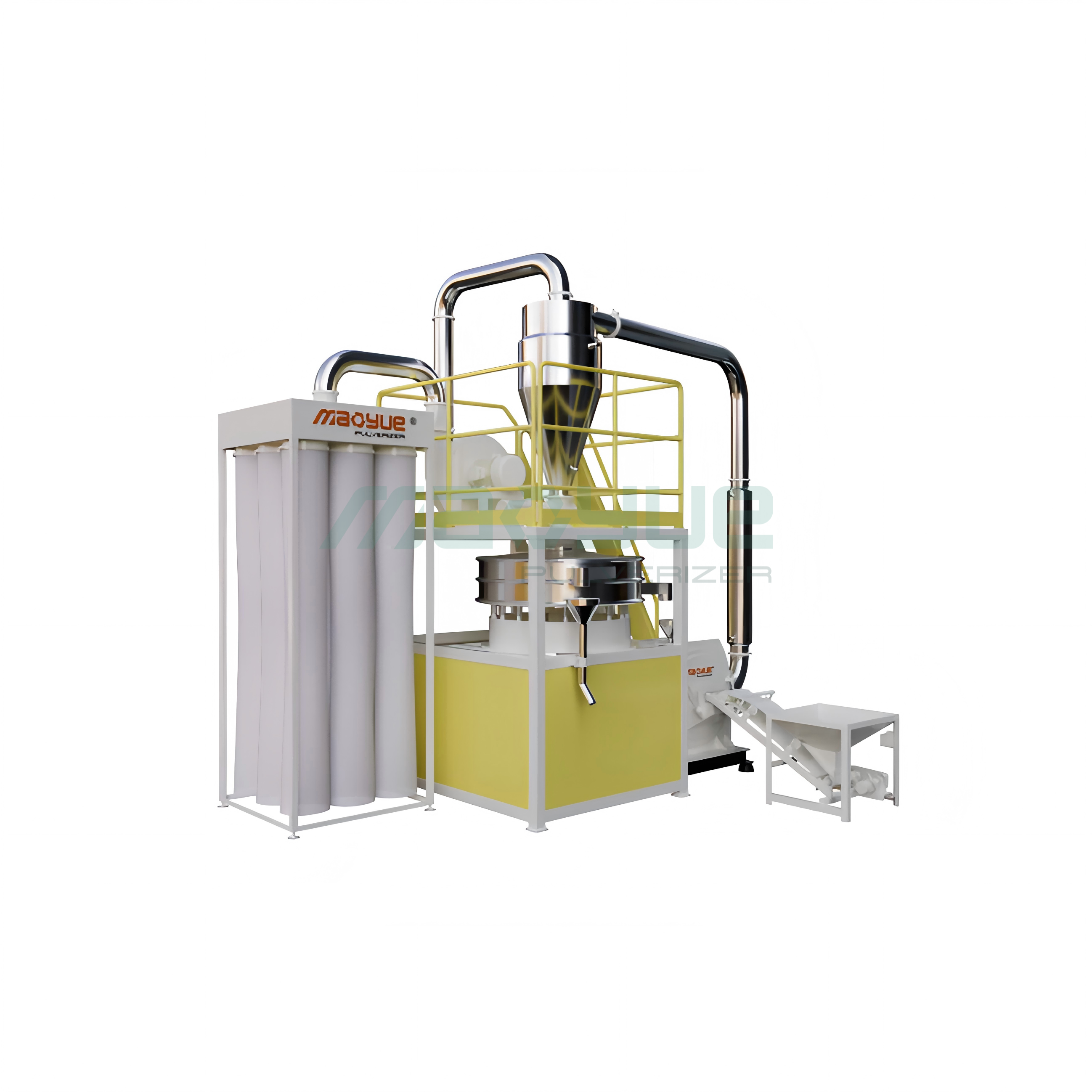
When you evaluate a PVC vs PE PP Pulverizer Machine, the internal engineering tells the real story. These machines look similar from the outside, but their cooling, fineness, and throughput capabilities are worlds apart. Understanding these technical gaps helps you avoid common production headaches like burnt material or clogged output chutes.
Heat is the enemy of any plastic recycling process. For PVC, the rotor spins at over 4000 rpm, creating intense heat that threatens to degrade the material. These systems use a heavy-duty dual water and air cooling jacket to keep the chamber temperature strictly regulated. Without this constant thermal management, your PVC powder would lose its structural integrity before it even leaves the machine.
● PVC mills rely on intense water jackets to neutralize high-speed rotor heat.
● PE/PP systems utilize optimized airflow designs to keep the grinding zone cool.
● Effective cooling prevents the soft PE/PP from turning into a sticky, unusable paste.
The fineness you need depends entirely on your end product. PVC is usually ground for rigid applications like pipes or SPC flooring, where a standard 20–50 mesh range works perfectly. These machines use fixed rotor-stator gaps to ensure the material fractures into consistent, coarser particles. It is a simpler, more robust process for rigid waste streams.
In contrast, PE/PP often requires much finer powder for specialized uses like masterbatch or rotomolding. You need micron-level gap adjustments to reach up to 120 mesh. This level of precision creates powder with high sphericity and excellent flowability, which is vital for high-quality molding.
Feature | PVC Grinding | PE/PP Grinding |
Standard Mesh | 20–50 mesh | 20–120 mesh |
Gap Setting | Fixed rotor-stator | Micron-level adjustable |
Particle Goal | Rigid reprocessing | High-flow masterbatch |
Output capacity varies significantly based on the material type and the feeding mechanism. A PVC machine prioritizes torque to smash hard plastic, while a PE/PP machine focuses on shearing efficiency. If you are running high-volume PE/PP lines, you need a system that prevents bottlenecks at the intake.
Manufacturers like Changzhou Maoyue have perfected this by integrating advanced vertical or vacuum suction feeding systems. These designs ensure a steady flow of material into the grinding discs, preventing the clogs that typically plague standard equipment. By optimizing how the plastic enters the mill, they significantly boost your hourly output without sacrificing the quality of the final powder. Whether you are processing 100 kg/h or nearly a ton per hour, the right feeding setup ensures your PVC vs PE PP Pulverizer Machine operates at peak efficiency all day long.
Choosing the right equipment is much easier when you see the data side by side. We often see operators struggle because they assume one mill handles every type of plastic. By looking at the core differences between a PVC vs PE PP Pulverizer Machine, you can quickly identify which system fits your specific waste stream and production goals.
The table below breaks down the technical requirements for these two distinct material categories. It highlights why you cannot treat hard, brittle plastics the same way you treat soft, elastic polymers.
Feature | PVC Pulverizer | PE/PP Pulverizer |
Material Type | Hard/Brittle (PVC, SPC) | Soft/Tough (PE, PP, EVA) |
Cooling Method | Heavy-duty water + air | Optimized high-volume airflow |
Fineness Range | 20–50 mesh (Coarser) | 20–120 mesh (Ultra-fine) |
Typical Capacity | 100–800 kg/h | 300–950 kg/h |
Primary Uses | Pipes, profiles, flooring | Rotomolding, masterbatch |
When you review these specs, think about your daily output requirements first. PVC processing is usually about precision and stability, which is why the capacity range is lower and more focused. You are dealing with rigid materials that require high torque to break down effectively without overheating the rotor.
● PVC grinding focuses on material stability and preventing thermal degradation.
● PE/PP grinding focuses on high-volume throughput and particle uniformity.
● The cooling requirements differ because soft plastics melt much faster than rigid ones.
If your facility handles a wide variety of materials, you might be tempted to look for a universal solution. However, we have found that dedicated equipment always yields better results. For instance, companies like Changzhou Maoyue provide specialized machines that account for these differences in their core design. They ensure the cooling jackets and blade geometries are perfectly matched to the material.
● Always verify your target mesh size before finalizing your equipment order.
● Consider the physical footprint of the machine in your factory layout.
● Ensure your power supply matches the high-torque needs of these pulverizers.
Ultimately, the best PVC vs PE PP Pulverizer Machine for your business depends on your end-product quality standards. Whether you are aiming for ultra-fine powder for rotomolding or standard-sized granules for pipe extrusion, the technical specifications provided above serve as your primary guide. Take a moment to compare these metrics against your current raw material inventory to ensure you make a smart, long-term investment.
The heart of any pulverizer lies in its grinding discs and rotor assembly. When you compare a PVC vs PE PP Pulverizer Machine, you are really looking at two different approaches to metal-on-plastic wear. If the blades are made from inferior steel, you will spend more time changing parts than actually producing powder.
Hardness is the single most important factor for your grinding discs. Because these machines process tons of abrasive plastic waste, the blades must withstand constant impact without chipping or dulling. We have seen many operators save money upfront on cheap blades, only to lose it all through frequent maintenance and downtime.
● High-quality steel maintains a sharp edge for much longer periods.
● Proper heat treatment ensures the metal resists extreme mechanical stress.
● Durable blades keep your particle size consistent across every shift.
To ensure maximum longevity, industry leaders like Changzhou Maoyue utilize premium materials such as DC53 or SKD11 steel. These specific alloys reach a hardness level of HRC 60–65, which is the gold standard for industrial grinding. By choosing these high-performance materials, equipment providers help you reduce maintenance downtime significantly, allowing your team to focus on production rather than constant repairs.
The way your machine cuts plastic depends on its internal geometry. PVC machines typically use high-speed rotor designs that rely on pure impact and centrifugal force to shatter brittle material. This design works perfectly for rigid waste, as it snaps the plastic into the desired mesh size quickly and efficiently.
PE/PP machines require a different strategy because they handle soft, elastic polymers. Instead of simple impact, they often use pin mills or segmented rotor blades designed to shear the plastic. This shearing action slices through the ductile chains, preventing the material from stretching or melting into a paste during the grinding process.
Design Feature | Rotor-Type (PVC) | Pin/Segmented (PE/PP) |
Grinding Action | Impact-based shattering | Shear-based slicing |
Blade Geometry | High-speed impact plates | Sharp, segmented teeth |
Primary Goal | Breaking brittle material | Preventing melt/clogging |
Choosing the right design ensures your PVC vs PE PP Pulverizer Machine performs exactly as intended. If you attempt to process soft PE film in a rigid PVC rotor mill, you will likely experience frequent clogging and poor powder quality. Matching the mill architecture to your specific material properties is the most effective way to protect your investment and maintain high output levels throughout the year.

Selecting the right equipment feels overwhelming when you look at all the technical options available. We suggest starting with a clear assessment of your raw material stream. If you ignore the physical nature of your plastic, you will almost certainly face performance issues later. Taking a moment to categorize your waste now saves you a massive headache down the road.
Before you buy, look closely at what you are actually feeding into the system. Rigid materials like PVC pipes or SPC flooring behave very differently from flexible waste like PE films or rotomolding scraps. You need to know exactly what you are processing to choose the correct PVC vs PE PP Pulverizer Machine.
● Rigid waste requires high-impact force to shatter effectively.
● Flexible waste demands shearing force to prevent melting and clogging.
● Mixed waste streams often require a custom machine configuration for consistent results.
Your final product dictates the machine model more than anything else. If you need fine powder for high-end masterbatch, you must prioritize machines with micron-level gap adjustments. Conversely, if you only need coarse granules for basic pipe extrusion, a simpler setup will serve your needs perfectly.
Requirement | Focus Area | Impact on Selection |
Mesh Size | Particle fineness | Determines disc type and gap settings |
Flowability | Powder shape | Dictates cooling and shearing intensity |
Throughput | Hourly capacity | Influences motor power and feed design |
You do not have to navigate these technical choices alone. It is smart to work with a partner who understands the nuances of plastic recycling. With over 28 years of industry experience, companies like Changzhou Maoyue excel at providing these tailored solutions. They offer flexible OEM/ODM services that allow you to customize your machine based on your specific fineness and output goals.
● Customized machines ensure your production line hits its targets from day one.
● Experienced manufacturers provide better support for unique material challenges.
● OEM/ODM options give you the exact features you need without paying for extras.
When you choose a partner with deep technical expertise, you gain more than just a piece of hardware. You gain a resource that helps you optimize your entire recycling workflow. They can help you adjust your PVC vs PE PP Pulverizer Machine settings to handle changing material loads as your business grows. Always prioritize a manufacturer that listens to your specific needs instead of pushing a generic, one-size-fits-all solution.
A: No. PVC requires high-speed impact, while PE/PP needs shearing. Using the wrong machine causes PVC thermal degradation or PE/PP clogging due to friction-induced melting.
A: Effective cooling. Intensive water and air cooling systems are essential to dissipate friction heat and maintain stable material temperatures.
A: It depends on usage, but using high-hardness DC53/SKD11 steel significantly extends service life and reduces maintenance frequency.
A: It improves flowability, ensuring uniform distribution and superior product quality.
Selecting the right PVC vs PE PP Pulverizer Machine is vital.
Match your technology to your specific recycling goals.
Prioritize equipment stability for long-term success.
Reliable after-sales support ensures your operations run smoothly.
Invest wisely to achieve consistent, high-quality production results.


