Specializing in the production of Plastic Pulverizer Machines.

Views: 0 Author: Site Editor Publish Time: 2026-07-13 Origin: Site
Plastic powder flowability is an important indicator for evaluating powder quality and is also one of the key factors determining downstream processing performance and production efficiency. Whether in rotational molding, powder coating, masterbatch production, plastic modification, dip coating, or various powder blending processes, the ability of plastic powder to flow evenly, stably, and continuously directly affects product quality, equipment operation stability, and overall production costs.
In actual production, when problems such as unstable feeding, reduced output, or fluctuating product quality occur, many companies initially suspect that the raw material itself is the cause. However, extensive production experience shows that the root cause is not always related to the raw material, but often lies in insufficient plastic powder flowability. Poor powder flow performance can easily lead to bridging and rat-holing inside storage hoppers, resulting in discontinuous feeding, reduced conveying efficiency, inaccurate dosing, uneven mixing and dispersion, and even instability throughout the automated production line.
As the plastic processing industry continues to move toward higher efficiency, automation, and superior product quality, more and more companies are paying close attention to improving plastic powder flowability. The factors affecting flowability are complex and include powder particle size and distribution, particle morphology, moisture content, static electricity, powder temperature, and grinding processes. Among these factors, the performance of the plastic pulverizer and the powder production process play a critical role in determining powder quality, directly influencing particle size uniformity, particle shape, and the final flowability of the plastic powder.
This article provides an in-depth analysis of the key factors affecting plastic powder flowability, introduces effective methods for improving powder flow performance, and explores how high-performance plastic pulverizers and optimized grinding processes can help manufacturers continuously produce high-flowability, high-quality plastic powders. Through advanced grinding technology and process optimization, companies can improve production efficiency, reduce energy consumption, and achieve more stable product quality.
Powder flowability refers to the ability of powder particles to move freely, continuously, and uniformly under the influence of gravity or external forces such as vibration, airflow, or mechanical conveying. It is one of the important indicators for evaluating the quality and processing performance of plastic powder. Simply put, it describes whether plastic powder can smoothly pass through storage hoppers, conveying pipelines, screw feeders, dosing systems, and packaging equipment without problems such as blockage, bridging, or unstable feeding.
You can compare it to the difference between pouring salt and pouring damp sugar. Dry salt with uniform particles can flow quickly and smoothly, while moisture-absorbed sugar tends to stick to the container wall, form lumps, and even block the bottle opening, making it difficult to flow. Plastic powder behaves in a similar way. When powder particles have a uniform size distribution, smooth surfaces, low moisture content, and good dispersion, they generally achieve better flowability. In contrast, uneven particle size distribution, excessive fine powder content, moisture absorption, agglomeration, or strong static electricity can negatively affect powder flow performance.
For modern plastic processing industries, powder flowability is not only related to smooth material transportation but also directly affects the stability of the entire production system and the final product quality. Whether in rotational molding, dip coating, powder coating, masterbatch production, plastic modification, or powder blending processes, excellent powder flowability means higher production efficiency, lower energy consumption, and more consistent product quality.

Good plastic powder flowability typically provides the following advantages:
More stable feeding: Prevents material interruption and irregular feeding rates, ensuring continuous production.
Smoother conveying: Reduces hopper bridging, material blockage, and pipeline clogging, improving automated production efficiency.
More accurate dosing: Ensures consistent feeding quantities, improving formulation accuracy and production stability.
Better mixing and dispersion: Helps pigments, additives, and processing aids disperse more effectively, enhancing final product performance.
More consistent product quality: Reduces batch-to-batch variations and improves consistency in product dimensions, color, and physical properties.
Higher production efficiency: Reduces downtime for cleaning and manual intervention, increases equipment utilization, and lowers overall production costs.
Therefore, powder flowability is not simply a physical property indicator. It is also an important standard for evaluating plastic powder quality, grinding process performance, and plastic pulverizer capability. Excellent powder flowability provides a critical foundation for achieving efficient, stable, and automated plastic processing production.
During plastic powder processing, many companies tend to focus more on indicators such as powder particle size, equipment output, energy consumption, and grinding fineness, while often overlooking the critical property of powder flowability. In fact, flowability not only determines whether powder can be smoothly conveyed and fed, but also directly affects the stability of the entire production process, processing efficiency, and final product quality. It can be said that powder flowability runs through every stage of plastic powder processing and serves as an essential foundation for continuous and automated production.
When plastic powder has poor flowability, even if the particle size meets the required specifications, a series of problems may still occur during production. For example, powder may not enter processing equipment evenly and can easily form bridging or rat-holing inside storage hoppers, resulting in intermittent and unstable feeding. During conveying, poor flowability can cause material blockage and interrupt continuous supply. In the mixing process, insufficient powder mobility can prevent resins, pigments, and additives from being fully dispersed, leading to inconsistent formulations. When entering an extruder, unstable feeding rates can cause fluctuations in melt pressure, affecting product dimensions and performance. For powder coating and dip coating applications, poor flowability may also result in uneven powder deposition, leading to inconsistent coating thickness and reduced surface quality.

Poor powder flowability can typically cause the following issues:
Hopper bridging and rat-holing: Prevents continuous and stable powder discharge.
Feeding interruptions and unstable supply: Affects the continuous operation of the entire production line.
Reduced conveying efficiency: Increases material blockage, cleaning requirements, and equipment downtime.
Uneven powder mixing: Affects the dispersion performance of pigments, fillers, and additives.
Fluctuations during extrusion: Causes unstable melt pressure, reducing dimensional accuracy and product consistency.
Uneven powder coating thickness: Reduces product appearance quality and protective performance.
Lower automation efficiency: Increases manual intervention and overall production costs.
For industries such as rotational molding, powder coating, dip coating, cable coating, plastic modification, and masterbatch production, plastic powder must go through multiple processes, including continuous conveying, precise dosing, and uniform dispersion. Therefore, these industries have much higher requirements for powder flowability. Once flowability becomes insufficient, it not only reduces production efficiency but also directly affects product quality and yield rates.
Therefore, the flowability of plastic powder is far more than just an auxiliary performance indicator. It is an important standard for evaluating powder processing performance. In many ways, it is as important as particle size distribution and powder fineness. Especially in automated production and high-quality manufacturing, powder flowability plays a role that is equally critical as particle size control.
Only by achieving both uniform particle size distribution and excellent flowability can manufacturers produce high-quality, stable plastic powders and ultimately achieve higher production efficiency, lower operating costs, and more consistent product performance.
The flowability of plastic powder is not determined by a single factor, but rather by the combined effects of various physical properties, processing conditions, and production environments. From raw material characteristics to grinding processes, and even subsequent storage and transportation, every stage can influence the final flow performance of plastic powder. Therefore, even when using the same plastic raw material, different production processes and equipment can produce powders with significantly different flowability.
Generally, the main factors affecting plastic powder flowability include particle size and particle size distribution, particle shape, grinding temperature, powder moisture content, static electricity accumulation, powder density, as well as grinding equipment and process parameters. These factors are closely interconnected and collectively determine whether the powder can smoothly complete conveying, dosing, mixing, and subsequent processing.
Among these factors, excessive grinding temperature is one of the most common and often overlooked causes of reduced powder flowability. During the plastic grinding process, high-speed friction and shearing continuously occur between the grinding discs and the material, converting a large amount of mechanical energy into heat. If the cooling system is insufficient or the equipment operates under high load for a long time, the powder temperature can rise rapidly. When the temperature approaches the softening point of the plastic material, the surface of powder particles may become slightly softened or even partially melted, causing particles to stick together and form agglomerates. This not only reduces powder flowability but may also result in uneven particle size distribution, lower screening efficiency, and reduced performance during subsequent processing.
In addition, an improper particle size distribution is also an important factor affecting flowability. When the proportion of fine particles in the powder is too high, the contact area between particles increases significantly. At the same time, interparticle forces such as van der Waals forces and electrostatic attraction become stronger, making the powder more likely to form agglomerates, bridging, and blockages, thereby reducing overall flow performance. Similarly, irregular particle shapes, rough particle surfaces, or excessive moisture content can increase friction and adhesion between particles, making the powder less capable of flowing freely.
Therefore, achieving highly flowable plastic powder requires more than simply controlling powder fineness. It requires comprehensive optimization of grinding temperature, cooling systems, particle size distribution, particle morphology, and the entire grinding process. Only by controlling every critical factor from the source can manufacturers continuously and stably produce plastic powders with excellent flowability and consistent quality, providing reliable support for high-value applications such as rotational molding, powder coating, masterbatch production, and plastic modification.

Excessive grinding temperature is one of the key factors affecting plastic powder flowability and is also one of the most common issues encountered in plastic pulverizing processes. During high-speed grinding, continuous collision, shearing, and friction occur between the grinding discs and plastic particles, converting a large amount of mechanical energy into heat energy. If the cooling capacity of the equipment is insufficient, the grinding discs are severely worn, the feeding speed is too high, or the machine operates continuously under heavy load for a long period, the temperature inside the grinding chamber will continue to rise.
When the powder temperature gradually approaches the softening temperature of the plastic material, the plastic particles may not be completely melted, but their surfaces can begin to soften slightly, causing a significant increase in surface stickiness. At this stage, powder particles that should normally move and disperse freely may start to adhere to each other during collisions, forming small agglomerates. This phenomenon not only affects the original particle size uniformity of the powder but also significantly reduces its flowability.
As agglomeration becomes more severe, the powder is more likely to experience bridging, blockage, and intermittent discharge in storage hoppers, conveying pipelines, and feeding systems. This leads to unstable feeding rates and affects the continuous operation of the entire production line. Meanwhile, agglomerated powder is difficult to disperse evenly during mixing, which can negatively influence subsequent processes such as extrusion, rotational molding, dip coating, powder coating, and plastic modification, ultimately resulting in lower product quality and increased scrap rates.
In addition, excessive grinding temperature may also cause thermal degradation of plastic materials. For thermoplastics such as PVC, PE, and PP, prolonged exposure to high temperatures not only reduces powder flowability but may also cause color changes, material property degradation, and even negatively affect the mechanical properties and appearance quality of final products.
Therefore, stable control of grinding temperature is an essential prerequisite for producing high-quality plastic powder. By adopting an efficient combination of air cooling and water cooling systems, optimizing grinding disc structures, properly controlling feeding speed, and maintaining sharp grinding discs and good equipment operating conditions, manufacturers can effectively reduce the temperature inside the grinding chamber, prevent powder softening and agglomeration, and ensure excellent powder flowability, uniform particle size distribution, and stable processing performance.

Powder agglomeration is one of the most common problems causing reduced plastic powder flowability and is also a key factor affecting the stability of subsequent processing. During the plastic pulverizing process, if the temperature inside the grinding chamber is not properly controlled, the powder may be exposed to excessive heat before leaving the equipment. When plastic particles remain at a relatively high temperature, their surfaces may begin to soften slightly. Although the material is not completely melted, the molecular activity on the particle surface increases, resulting in significantly higher adhesion. As a result, powder particles that should remain independent and well dispersed are more likely to stick together.
As storage time increases or as the powder is compressed during transportation, these fine particles gradually accumulate and form agglomerates of different sizes. After agglomeration occurs, the powder particles lose their original dispersion state, increasing flow resistance and preventing them from sliding and conveying freely like normal powder. This significantly reduces the overall flow performance of the plastic powder.
In addition, powder agglomeration can disrupt the original particle size distribution by creating larger particle clusters. These agglomerates are not only difficult to pass through screening and conveying systems but may also cause insufficient mixing and uneven dispersion during subsequent processing, reducing the consistency and stability of final products.
Powder agglomeration usually leads to the following problems:
Difficult feeding: Powder cannot enter processing equipment continuously and evenly, resulting in material interruption or unstable feeding.
Hopper blockage: Agglomerated powder can easily form bridging at hopper outlets, affecting normal discharge.
Unstable pneumatic conveying: Agglomerated particles increase conveying resistance, causing pipeline blockage and reduced transportation efficiency.
Packaging difficulties: Reduced powder flowability can decrease packaging speed and affect weighing accuracy.
Lower production efficiency: Frequent equipment cleaning and handling of blockages increase downtime and labor costs.
Therefore, reducing powder agglomeration is a critical step in improving plastic powder flowability. In actual production, manufacturers need to optimize the cooling system of plastic pulverizers, properly control grinding temperature, improve grinding disc design, and adjust processing parameters. By maintaining an appropriate powder temperature and favorable particle condition throughout the production process, agglomeration can be prevented at the source, ensuring the production of high-quality plastic powder with excellent flowability, uniform particle size distribution, and stable processing performance.

Uniform particle size distribution is one of the key factors affecting plastic powder flowability and processing stability. Ideally, plastic powder particles should maintain a relatively consistent size range, allowing proper gaps and packing structures between particles to achieve smooth and continuous flow. However, during actual pulverizing processes, improper control of equipment operating parameters, especially excessive grinding temperature or insufficient cooling performance, can easily result in abnormal particle size distribution.
When the temperature inside the grinding chamber increases, some plastic particles may soften prematurely due to heat exposure, while other particles remain relatively hard. This inconsistency in material conditions makes the pulverizing process unstable: softened particles are more likely to be affected by compression and shearing forces, leading to adhesion and agglomeration; meanwhile, harder particles may not be sufficiently ground, resulting in a final powder containing excessive fine particles as well as larger particles.
This situation creates an excessively wide particle size distribution. A high proportion of fine particles increases the contact area between powder particles, strengthening electrostatic attraction and the risk of agglomeration. As a result, the powder becomes more likely to form lumps and bridging, reducing overall flowability. On the other hand, larger particles can affect uniform powder conveying and melting behavior, leading to reduced processing performance.
For applications such as rotational molding, powder coating, masterbatch production, and plastic modification, uneven particle size distribution not only affects powder flowability but may also cause inconsistent melting rates, unstable filling performance, and fluctuations in final product properties. Therefore, during plastic powder production, manufacturers should focus not only on achieving higher output and finer powder but also on maintaining particle size consistency and stability.
Uniform particle size distribution typically provides the following advantages:
Improved flowability: Proper particle arrangement reduces agglomeration and bridging, ensuring stable powder conveying.
More consistent melting behavior: Particles experience similar heating and melting times, improving processing uniformity.
Better dispersion performance: Facilitates thorough mixing of pigments, additives, and other components, enhancing product consistency.
More stable feeding: Reduces feeding fluctuations and improves the efficiency of automated production lines.
More stable product quality: Minimizes batch-to-batch variation and improves the appearance, performance, and reliability of final products.
Therefore, achieving a uniform and stable particle size distribution depends not only on raw material characteristics but also on the structural design of the plastic pulverizer, grinding disc machining accuracy, temperature control capability, and overall process parameters. By optimizing grinding conditions and adopting high-performance pulverizing equipment, manufacturers can effectively reduce variations between coarse and fine particles and produce high-quality plastic powder with excellent flowability and processing performance.

During plastic powder processing, many companies tend to fall into the misconception that “the finer the powder, the better the performance.” They believe that finer powder can always provide better processing results. However, in actual production, powder fineness is not necessarily better when increased excessively. The optimal particle size range should be selected according to specific application requirements. An excessive amount of ultra-fine powder not only fails to further improve product performance but may also reduce powder flowability and create stability issues during production.
When the proportion of fine particles in the powder is too high, the overall specific surface area of the particles increases significantly. Because more powder surface area is exposed to air per unit mass, particles are more easily affected by electrostatic attraction, intermolecular forces, and surface energy, making them more likely to adhere to each other and form agglomerates. At the same time, ultra-fine particles have lower mass and are more easily influenced by airflow during conveying, increasing the risk of dust generation.
In addition, fine powder particles absorb heat more quickly due to their smaller size and are more susceptible to frictional heat during high-speed pulverizing. As the temperature rises, the surfaces of fine particles are more likely to soften and become sticky, further intensifying agglomeration and causing the powder to lose its original flowability. This is especially important when processing thermoplastic materials such as PE, PP, and PVC, where excessive fine powder content can significantly affect subsequent conveying, dosing, and processing stability.
Excessive fine powder content typically causes the following problems:
Reduced powder flowability: Fine particles are more likely to experience adhesion and agglomeration, making the powder difficult to flow freely.
Increased dust generation: Ultra-fine powder particles can easily become suspended in the air, increasing dust concentration in the production environment.
Lower conveying efficiency: Fine powder tends to adhere to pipelines and equipment surfaces, affecting pneumatic conveying and continuous feeding.
Difficult discharge and feeding: Powder can easily form bridging at hopper outlets, causing unstable feeding or even production interruptions.
Increased production safety risks: High dust concentrations make equipment cleaning and maintenance more difficult and increase challenges in dust control.
Therefore, the goal of plastic powder production is not simply to achieve finer particle sizes, but rather to find the optimal balance between fineness, particle size distribution, and flowability. By optimizing the grinding disc design of plastic pulverizers, controlling grinding gaps, adjusting processing parameters, and applying appropriate classification and screening processes, manufacturers can effectively reduce unnecessary fine powder content and produce high-quality plastic powder with uniform particle size, excellent flowability, and suitability for practical processing requirements.
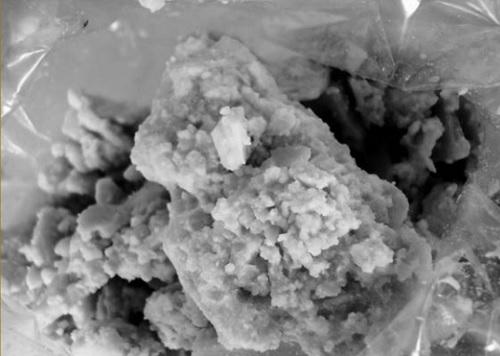
Moisture absorption is also one of the major factors affecting powder flowability.
Some plastic powders can easily absorb moisture from the air during storage or transportation, especially in high-humidity environments.
After absorbing moisture, powder particles are more likely to stick together, forming agglomerates, bridging, and even causing hopper blockages.
To prevent moisture absorption issues, manufacturers are advised to:
Maintain a dry storage environment
Use sealed packaging
Control workshop humidity levels
Minimize long-term exposure of powder to the air
The flowability of plastic powder affects not only the physical properties of the powder itself but also the stable operation of the entire production system. From raw material storage and conveying to dosing, downstream processing, and final product forming, every stage of production can be influenced by powder flowability.
When powder flow performance is insufficient, manufacturers may face not only reduced production efficiency but also increased equipment maintenance costs, labor requirements, and raw material waste. Especially in highly automated production lines, stable and continuous powder feeding is essential for maintaining production efficiency and product consistency. Therefore, powder flowability has become one of the important indicators for evaluating plastic powder quality and processing performance.

When powder cannot flow smoothly, the feeding system is unable to continuously and steadily supply material to downstream equipment.
This ultimately leads to production fluctuations, unstable extrusion processes, and inconsistent product quality.
Hopper bridging is one of the most common problems in plastic powder production.
When powder loses its ability to flow under gravity, it may form an “arch” structure above the hopper outlet, completely preventing the material from discharging.
In such situations, operators often have to stop the machine and manually remove the blockage, seriously affecting production continuity.
Poor powder flowability means that the powder requires more time to complete the entire production process.
Frequent material interruptions, unstable conveying, repeated grinding, and equipment cleaning all increase downtime, thereby reducing overall production efficiency.
For industries such as rotational molding, powder coating, masterbatch production, and plastic modification, powder flowability has a direct impact on final product quality.
Insufficient flowability can cause uneven powder distribution during processing, affecting melting behavior, filling performance, and additive dispersion. As a result, product performance may become inconsistent.
Manufacturers may face the following issues:
Uneven coating thickness: Inconsistent powder distribution leads to uneven surface coverage, affecting appearance and protective performance.
Increased color variation: Insufficient dispersion of masterbatch or pigments causes color differences between production batches.
Reduced mechanical properties: Uneven material mixing may decrease product strength, toughness, and durability.
Higher product defect rates: Reduced production stability leads to increased rework and material waste.
Therefore, improving plastic powder flowability is not only about enhancing powder conveying performance but also about ensuring stable and efficient operation throughout the entire production process.
By optimizing pulverizing processes, controlling powder particle size distribution, reducing powder temperature, and selecting high-performance plastic pulverizing equipment, manufacturers can significantly improve powder flowability and achieve more stable, efficient, and cost-effective production.
Improving plastic powder flowability is not about solving a single isolated problem, but rather requires comprehensive optimization of the entire pulverizing process. From raw material preparation and grinding processes to cooling systems and equipment maintenance, every stage can influence the final flow performance of the powder.
Only when these factors are properly controlled can manufacturers continuously and stably produce high-quality plastic powder with excellent flowability, uniform particle size distribution, and consistent performance.
Temperature is one of the most critical factors affecting powder flowability. During the plastic pulverizing process, most of the heat is generated by friction, collision, and shearing between the grinding discs and plastic particles. If this heat cannot be effectively removed in time, the powder temperature will continue to rise, causing particles to soften and adhere to each other.
Maintaining the grinding temperature within the optimal processing range of the material can effectively achieve the following benefits:
Prevent powder agglomeration
Maintain uniform particle size distribution
Improve powder flowability
Reduce energy consumption
Enhance production stability

The grinding disc is the most critical component of a plastic pulverizer, and its structure directly determines cutting efficiency, heat generation, and powder quality.
An improperly designed grinding disc can create excessive ineffective friction, causing more electrical energy to be converted into heat rather than being used for efficient cutting of plastic particles.
An optimized grinding disc design can provide the following advantages:
Improve cutting efficiency
Reduce friction
Lower grinding temperature
Improve particle size consistency
Extend grinding disc service life
With more than 30 years of experience in plastic pulverizing technology, MaoYue Intelligent Equipment continuously optimizes grinding disc structures and combines high-precision CNC machining with dynamic balancing technology. This enables our equipment to achieve higher cutting efficiency, lower heat generation, and more stable plastic powder quality.

Even the most advanced grinding discs will still generate heat during high-speed operation. Therefore, an efficient cooling system is essential for maintaining stable powder temperature and ensuring consistent powder quality.
Modern plastic pulverizers typically adopt a combination of multiple cooling methods to achieve effective temperature control.
A high-volume airflow continuously removes heat from the grinding chamber and transports the plastic powder to the cyclone separator.
Suitable for:
PE
PP
PVC
The water cooling system provides more stable and efficient heat dissipation for continuous and high-output production.
Key advantages include:
Stable temperature control
Higher cooling efficiency
Better protection of bearings
Extended equipment service life
For certain engineering plastics, a low-temperature pulverizing system is required to prevent the material from softening prematurely during the grinding process.
Typical materials include:
TPU
PA
EVA
Cryogenic pulverizing helps maintain material brittleness, improve cutting efficiency, and effectively prevent powder agglomeration.
Particle size distribution directly affects plastic powder flowability.
An excessive amount of coarse particles can lead to unstable feeding, while too much ultra-fine powder may cause increased static electricity and particle adhesion.
A well-controlled particle size distribution provides the following benefits:
Better powder flowability
Faster melting rate
More uniform dispersion performance
More stable production process
Many companies believe that increasing feeding speed will always increase production output.
However, excessive feeding can overload the grinding chamber, generate more frictional heat, and ultimately reduce powder quality.
The optimal feeding speed should be properly matched with the following factors:
Motor power
Grinding disc processing capacity
Cooling capacity
Material characteristics
Even the most advanced plastic pulverizers require regular maintenance to consistently maintain optimal performance.
It is recommended to regularly inspect:
Grinding discs
Bearings
Cooling pipelines
Air filters
Blowers
Feeding systems
Timely replacement of worn components can effectively reduce friction, improve heat dissipation efficiency, and maintain excellent plastic powder flowability.

Excellent plastic powder flowability cannot be achieved simply by using a high-power motor or increasing grinding disc speed. Instead, it is the result of the overall performance of the complete pulverizing system. Only through the combination of efficient cutting structures, precise grinding disc clearance, stable temperature control, optimized airflow conveying, and high-precision manufacturing processes can manufacturers consistently produce high-quality plastic powder with uniform particle size, lower temperature, and superior flowability.
With more than 30 years of experience in the research, development, and manufacturing of plastic pulverizing equipment, Mao Yue Intelligent Equipment has always focused on powder quality as its core objective. The company continuously optimizes grinding disc structures, cooling systems, airflow classification technology, and overall equipment manufacturing processes to help customers worldwide achieve more stable, efficient, and energy-saving plastic powder production.
Mao Yue plastic pulverizers adopt high-precision grinding disc processing technology and optimized grinding systems, enabling materials to be fully pulverized while effectively reducing frictional heat accumulation. This helps prevent powder softening, agglomeration, and particle adhesion caused by excessive temperatures. Meanwhile, the efficient cooling system combining air cooling and water cooling continuously controls grinding temperature, maintaining excellent powder flowability and stable particle size distribution. These advantages provide reliable powder processing solutions for industries such as rotational molding, powder coating, plastic modification, masterbatch production, and dip coating.
Higher production efficiency: Optimized grinding disc structures and pulverizing processes increase equipment capacity while maintaining excellent powder quality.
Lower grinding temperature: Efficient cooling systems reduce powder temperature rise, minimizing the risks of softening, agglomeration, and thermal degradation.
Superior powder flowability: Reduced particle agglomeration ensures smoother powder discharge and more stable conveying performance.
More uniform particle size distribution: Reduced proportions of ultra-fine powder and coarse particles improve powder consistency and processing performance.
Lower energy consumption: Optimized power systems and grinding efficiency reduce energy consumption per unit of output under high-capacity production conditions.
Longer equipment service life: High-quality wear-resistant materials, precision manufacturing processes, and strict quality control effectively extend the service life of key components and the complete machine.

More stable product quality: Helps customers continuously produce high-quality plastic powder, improving product yield rates and market competitiveness.
Whether you are processing PE, PVC, PP, ABS, PET, PA, EVA, TPU, or other engineering plastics, high-performance polymers, and modified materials, MaoYue can provide professional customized plastic pulverizing solutions based on different material characteristics, target particle sizes, production capacities, and application requirements.
From equipment selection and process design to technical support and after-sales service, MaoYue is committed to helping customers achieve higher-quality, more efficient, and lower-energy-consumption plastic powder production, creating greater long-term value for businesses worldwide.


