Specializing in the production of Plastic Pulverizer Machines.

Views: 0 Author: Site Editor Publish Time: 2026-08-16 Origin: Site
If you operate a plastic pulverizer every day, you may notice a seemingly strange phenomenon: two grinding discs that look almost identical can have completely different service lives. One disc may operate continuously and reliably for several months, while another may quickly develop tooth wear, uneven disc surfaces, or reduced grinding efficiency.Why does this happen?In fact, grinding disc wear is rarely caused by a single factor. Material hardness, plastic type, grinding disc gap, temperature, feeding rate, dynamic balance, manufacturing precision, and even impurities in the raw material can all affect disc service life.In other words, the grinding disc is not simply a consumable part—it is essentially the “heart” of the plastic pulverizing process.
Grinding disc wear is an inevitable phenomenon during the long-term operation of a plastic pulverizer. During operation, the grinding discs are continuously subjected to friction, impact, and shearing forces. As plastic particles constantly pass through the gap between the rotating disc and the stationary disc, the grinding teeth and working surfaces gradually lose material. This is considered normal wear.
However, if the grinding teeth on only one side or in certain areas become noticeably shorter, or if there are chipped teeth, deep grooves, or localized shiny spots while other areas remain relatively intact, this may indicate abnormal wear or uneven wear of the grinding disc.
You can think of a grinding disc like a pair of scissors: when the two cutting edges remain properly aligned, cutting is smooth and efficient. If one side is damaged or misaligned, the force becomes concentrated in a small area. The same principle applies to grinding discs.
For industrial production, the truly ideal grinding disc is not one that never wears out, but one that can maintain uniform, controllable, and predictable wear over a long service cycle. This is also one of the key differences between a high-quality grinding disc and an ordinary one.

Normal wear is generally gradual and uniform. The grinding teeth gradually become dull, but the grinding disc as a whole remains relatively stable, and there are no sudden, significant changes in powder output or particle size.
Abnormal wear is different. It often “sends an early signal” through the quality of the final product. As the grinding teeth gradually lose their original grinding capability, the plastic powder may become increasingly coarse, while the particle size distribution becomes unstable.
At the same time, the equipment may experience reduced output, increased energy consumption per unit of production, higher grinding temperatures, fluctuations in motor current, or increased vibration.
If the raw material and production parameters have not changed significantly, but the product quality suddenly changes, you should consider whether the grinding disc has developed abnormal wear.
These symptoms usually indicate potential problems with the raw material, grinding disc gap, concentricity, cooling system, feeding rate, or the grinding disc itself.
There is no single answer to this question. Grinding disc service life is the result of multiple variables working together. A machine processing clean PE with stable feeding may experience completely different grinding disc wear compared with a machine processing PVC containing mineral fillers. Even on the same machine, simply changing the grinding disc gap or cooling conditions can significantly affect the wear rate.

The hardness and wear resistance of the grinding disc material are among the key factors determining its service life. Grinding discs that undergo proper heat treatment and achieve a higher hardness generally offer better wear resistance.
However, hardness is not the only factor. The grinding disc must also have sufficient toughness. If the material is extremely hard but lacks toughness, hard impurities in the raw material may cause tooth chipping or even cracking.
Therefore, professional grinding disc design requires a balance between hardness, toughness, wear resistance, and specific application requirements.

Not all plastics are equally “friendly” to grinding discs. The type, hardness, melting characteristics, filler content, and impurity level of the material can all directly affect the wear rate of the grinding disc.
Take PE and LLDPE as examples. These materials are relatively soft, but they can generate significant heat and may even cause material adhesion when the grinding temperature rises. PVC is relatively harder and can create stronger abrasive contact.
Plastics containing fillers, glass-fiber-reinforced materials, calcium-carbonate-filled plastics, and recycled plastics containing impurities may cause significantly greater wear on the grinding disc. Sometimes, even a small amount of hard impurities in the raw material can result in far more wear than expected.
The grinding disc gap is one of the most easily overlooked factors affecting wear.
If the gap is too small, friction and temperature rise rapidly. Excessive contact may occur between the discs, accelerating wear and causing the plastic to soften or even adhere to the disc surface.
If the gap is too large, the material cannot be sufficiently ground, resulting in longer material residence time and reduced output.
More importantly, if the grinding disc gap is uneven, pressure may become concentrated in certain areas, eventually causing uneven wear.
Therefore, precise control of the grinding disc gap is essential for maintaining stable powder particle size, improving grinding efficiency, and extending grinding disc service life.

Temperature is also an “invisible enemy” of grinding discs.
High-speed rotation naturally generates frictional heat. If cooling is insufficient, the plastic may soften, while the grinding disc surface is exposed to additional thermal stress.
The problem becomes even more noticeable during continuous production because heat may accumulate faster than it can be dissipated.
Therefore, a properly designed cooling system not only protects the plastic powder—it also protects the grinding disc.

Feeding too quickly can overload the grinding chamber. Instead of entering the chamber steadily, a large amount of material enters within a short period, causing friction, machine load, temperature, and pressure on the grinding discs to increase simultaneously.
Feeding too slowly is not necessarily ideal either, as the machine may fail to achieve its intended production efficiency.
The ideal condition is to maintain stable and continuous feeding according to the machine's capacity and the characteristics of the processed material.
Imagine driving a car with poorly balanced wheels. Even if the tires themselves are high quality, imbalance can still generate significant vibration at high speeds and gradually affect surrounding components.
The same principle applies to grinding discs.
If the dynamic balance is poor, high-speed rotation can generate significant vibration, leading to uneven pressure, increased bearing loads, higher noise levels, and localized grinding disc wear.
Therefore, dynamic balancing is far more than a simple “visual quality check.” It directly affects equipment stability and grinding disc service life.
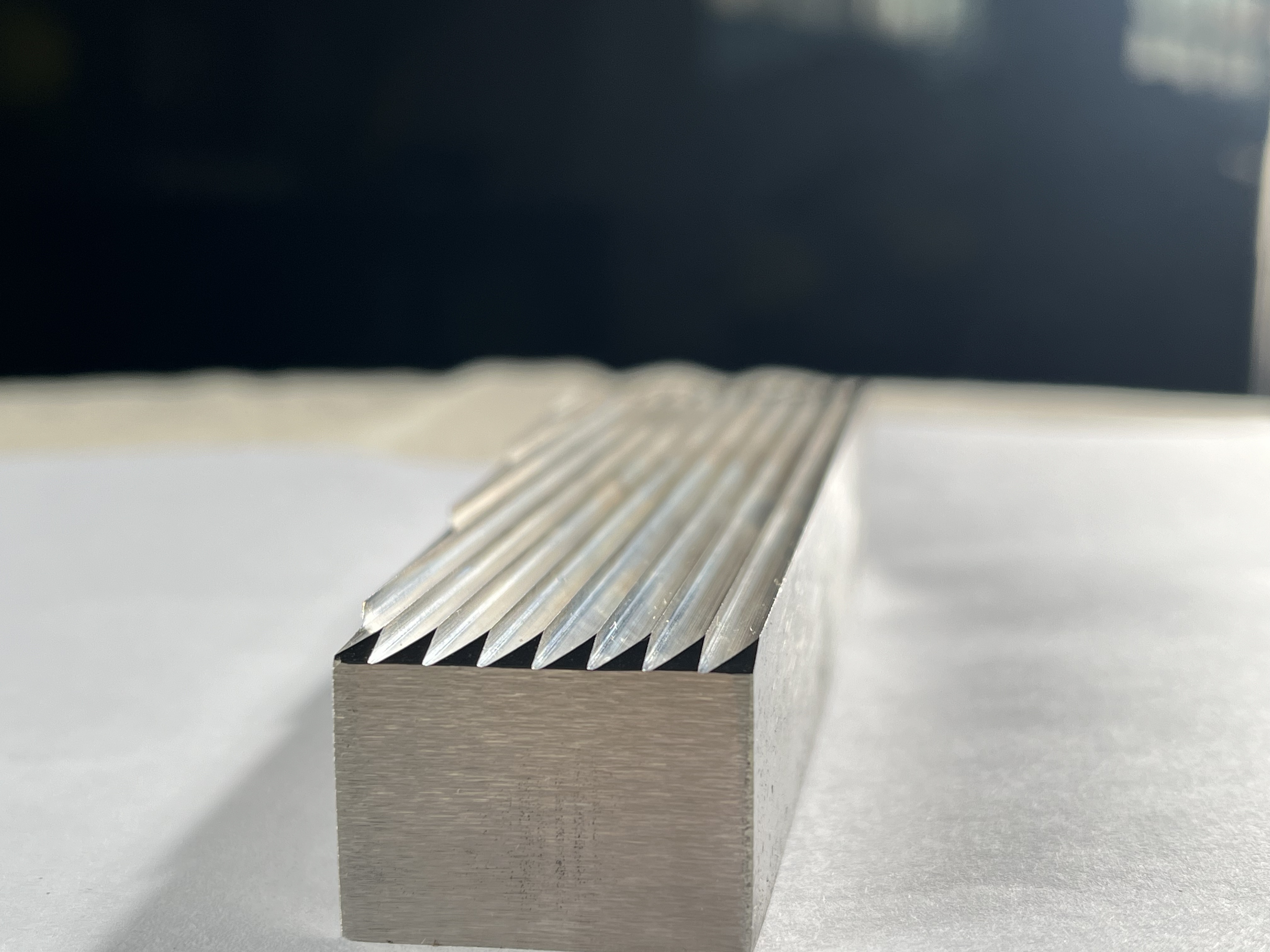
A grinding disc may look perfect to the naked eye, yet there may still be dimensional variations at the microscopic level.
Flatness, tooth profile, concentricity, and even slight deviations in the mounting surface can affect the contact condition between the grinding disc and the material.
Precision machining helps ensure a more consistent working surface and enables more accurate control of the grinding disc gap.
In industrial pulverizing applications, millimeter-level deviations can already be significant, while certain critical positions may require even finer dimensional accuracy.
The processed material may be the most obvious variable, but it is often underestimated. The same grinding disc can experience completely different wear patterns when processing different polymers.
Material hardness, melting point, moisture content, filler ratio, particle shape, and impurity content can all change the mechanical and thermodynamic conditions inside the grinding chamber.
Therefore, when selecting a grinding disc, you should not only consider the machine model but also fully evaluate the actual material being processed.
PE and LLDPE are widely processed by plastic pulverizers, especially in rotomolding and plastic recycling applications.
Their relatively soft nature does not mean that the grinding disc will not wear. As the temperature rises, these materials may soften and adhere to the working surface of the grinding disc.
Therefore, stable cooling and a properly adjusted grinding disc gap are particularly important.
PVC presents different requirements for pulverizing systems due to its hardness and processing characteristics.
Compared with softer polymers, rigid PVC profiles, pipes, and similar materials can generate stronger abrasive contact. Therefore, in these applications, grinding disc material, tooth design, cooling method, and wear resistance are particularly important.

Filled and reinforced plastics can significantly accelerate grinding disc wear.
Additives such as calcium carbonate, glass fibers, and mineral fillers are generally harder than the polymer itself. They can act like countless tiny abrasives continuously passing through the grinding chamber.
If your application involves these materials, choosing an ordinary grinding disc simply because it is cheaper may actually result in higher overall costs in the long run.
There is no need to wait until the grinding disc completely fails before inspecting it. Many forms of abnormal wear can be detected at an early stage through changes in the product and equipment performance.
A sudden decrease in output, unstable powder fineness, increased motor current, abnormal vibration, higher grinding temperature, or unusual noise may all indicate that the pulverizing system needs to be inspected.

If some grinding teeth are noticeably shorter or smoother than those in other areas, the grinding disc is likely experiencing an uneven load.
Possible causes include insufficient concentricity, inconsistent grinding disc gaps, improper feeding, uneven material distribution, or manufacturing deviations.
Deep grooves or unusually shiny areas appearing on certain parts of the grinding disc should also be treated as warning signs.
Under normal conditions, the entire effective working area of the grinding disc should maintain a relatively consistent operating condition. Localized damage often indicates that pressure, temperature, or material flow is concentrated in a specific area.
One of the simplest ways to identify grinding disc wear is to monitor the powder fineness.
As the grinding teeth gradually wear down, the machine may slowly begin producing coarser powder. If the raw material and machine parameters have not changed, but the particle size of the final product suddenly changes, the grinding discs should be inspected.
The first step is to select the appropriate grinding disc material based on the actual application. High-wear applications require greater wear resistance, while applications involving hard impurities or impact require a better balance between hardness and toughness.
There is no single grinding disc material that is perfectly suitable for all types of plastics.
A properly adjusted grinding disc gap can improve grinding efficiency while reducing unnecessary friction.
The optimal gap should be determined based on a combination of factors, including plastic type, feed particle size, target powder fineness, grinding disc condition, and machine design.
Operators should not simply copy the settings used for other materials.
Stable feeding helps prevent sudden overloads, while effective cooling keeps the grinding chamber within an appropriate temperature range.
When these two factors work together, they create a more stable grinding environment and reduce the thermal and mechanical stresses placed on the grinding discs.
A grinding disc is not necessarily durable simply because it is made from a high-grade steel material. What truly determines whether the material can perform effectively under actual operating conditions is the manufacturing process.
Heat treatment, CNC machining, tooth design, flatness, concentricity, dynamic balancing, and final inspection can all affect the service life of a grinding disc.

Proper quenching and heat treatment can significantly improve the hardness and wear resistance of a grinding disc.
However, the heat treatment process must be strictly controlled. Excessive hardness combined with insufficient toughness may make the grinding disc prone to chipping or cracking, while insufficient hardness can result in rapid wear.

Precision machining helps control the dimensions, grinding tooth geometry, flatness, and installation accuracy of the grinding disc.
For high-speed plastic pulverizers, precision is not simply about making a component “look good.” It is essential for ensuring that the grinding disc can operate stably under conditions of thousands of revolutions per minute.
Dynamic balancing helps reduce vibration caused by uneven mass distribution.
This is particularly important for high-speed grinding discs. Better dynamic balance means more stable rotation, lower mechanical stress, and a more consistent grinding process.
At Mao Yue, we do not treat grinding discs as ordinary spare parts. As one of the core components of a plastic pulverizer, the grinding disc requires careful attention to everything from material selection and structural design to machining precision, heat treatment, and dynamic balancing.
With more than 30 years of experience in plastic pulverizing equipment, Maoyue focuses on developing grinding solutions based on actual material characteristics and production requirements, rather than following the simplistic approach that “one grinding disc fits all applications.”

For pulverizing applications that require high wear resistance, Maoyue can use DC53 wear-resistant tool steel to manufacture grinding discs.
After proper heat treatment, DC53 can achieve high hardness and excellent wear resistance, helping reduce wear during long-term operation while maintaining stable grinding tooth geometry and consistent grinding performance.
Of course, a more expensive grinding disc material is not necessarily better. The key is to match the material to the actual application.
Based on factors such as plastic type, target powder fineness, production capacity, and operating conditions, Maoyue can select more suitable grinding disc materials and specifications for each customer.

Grinding disc durability depends not only on material selection but also on manufacturing precision.
Maoyue applies CNC machining, precision grinding, heat treatment, and dynamic balancing throughout the grinding disc manufacturing process, with a focus on controlling dimensional accuracy, working-surface precision, and rotational stability.
The goal is clear: to reduce unnecessary vibration, maintain a stable grinding disc gap, and ensure that the grinding discs experience more uniform loading and wear.
A high-quality grinding disc should not only provide longer service life but also help the entire plastic pulverizer maintain a more stable and predictable operating condition.

PE, PVC, PP, color masterbatch, and glass-fiber-reinforced plastics have different processing characteristics, so they are not necessarily suitable for exactly the same grinding disc configuration.
Maoyue matches the grinding disc and the complete pulverizing system based on material characteristics, target powder fineness, production requirements, cooling requirements, and actual operating conditions.
This application-oriented design approach avoids simply pursuing “higher specifications.” Instead, it allows grinding disc performance to directly serve actual production needs while reducing the long-term costs associated with premature wear, frequent replacement, and unnecessary maintenance.
So, why do different grinding discs wear at different rates? Because grinding disc service life is determined by far more than steel hardness alone.
Material characteristics, grinding disc gap, temperature, feeding rate, cooling, concentricity, dynamic balancing, machining precision, and maintenance all work together to influence grinding disc performance. If any one of these factors is poorly controlled, the entire system can be affected.
The good news is that uneven grinding disc wear is not unavoidable. By selecting the right grinding disc material, controlling operating parameters, maintaining a precise grinding disc gap, and working with an experienced plastic pulverizer manufacturer, you can significantly extend grinding disc service life and improve grinding stability.
There is no universal replacement interval.
Grinding disc service life depends on factors such as plastic type, production capacity, operating hours, grinding disc material, grinding disc gap, and the level of impurities in the raw material.
Instead of replacing the disc simply according to a fixed time period, it is recommended to determine whether replacement is necessary by monitoring powder fineness, output, vibration, temperature, and grinding tooth condition.
Not necessarily.
Grinding disc diameter alone does not determine service life. Material, structural design, rotational speed, load distribution, cooling, and manufacturing quality are equally important.
A properly designed grinding disc that is well matched to the operating conditions can easily outperform a larger disc with an unsuitable configuration.
The first step is to identify the material being processed.
Tell the manufacturer what type of plastic you are processing, whether it contains fillers or reinforcing materials, the target powder particle size, required production capacity, and daily operating hours.
An experienced manufacturer can then recommend the appropriate grinding disc material, grinding tooth design, cooling configuration, and grinding parameters based on your specific application.
When grinding disc wear becomes a recurring problem, simply replacing the grinding discs more frequently may not be the best solution.
Sometimes, the real solution is to re-evaluate the entire pulverizing system.
Maoyue specializes in plastic pulverizing technology, grinding discs, cooling systems, feeding systems, and equipment configurations for different applications.
With decades of manufacturing experience and a strong focus on precision machining, dynamic balancing, wear resistance, and process stability, Maoyue is committed to helping customers achieve more stable production while reducing long-term operating costs.


