Specializing in the production of Plastic Pulverizer Machines.

Views: 0 Author: Site Editor Publish Time: 2026-06-30 Origin: Site
Is your plastic recycling line struggling with inconsistent powder quality?
Choosing the wrong equipment leads to costly machine clogs and wasted energy.
The molecular structure of your material determines your success.
You must match your machine to your specific polyethylene grade.
In this post, we will simplify the HDPE vs LDPE vs LLDPE pulverizer selection process.
You will learn how to pick the right configuration to maximize your ROI.
You might think plastic is just plastic, but your machine knows better. When you feed different polyethylene grades into a mill, they react in unique ways. If you ignore these material traits, you will end up with clogged chambers or poor powder quality. Choosing the right HDPE vs LDPE vs LLDPE pulverizer starts with respecting the material's specific physical behavior during the grinding process.
HDPE is a rigid, high-density material that acts like a solid block. It requires high-impact shearing forces to break down into uniform powder. Because it is stiff, it does not easily deform under pressure, which makes it a great candidate for high-output grinding. Conversely, LDPE and LLDPE are flexible and soft. They do not snap under pressure; instead, they stretch. If you use a standard blade configuration on these materials, the blades will simply smear the plastic rather than cutting it. This creates a sticky mess that ruins your production flow and wastes valuable raw material.
Every plastic has a specific thermal window where it begins to soften or melt. This is the biggest challenge in the milling chamber. If your grinding process generates too much friction, the material will reach its melting point instantly. Once it melts, it sticks to the discs, causing the machine to choke. You need to manage these temperatures carefully based on the specific grade you are processing.
Material Type | Primary Characteristic | Grinding Challenge |
HDPE | Rigid, high crystallinity | High friction heat buildup |
LDPE | Highly flexible, soft | Prone to smearing/clogging |
LLDPE | Tough, linear structure | Requires precise gap control |
We have seen many factories struggle because they treat all PE materials the same. To get the best results, you must adjust your machine setup. For example, Maoyue often recommends specific disc gaps for different grades to ensure the blades stay cool and sharp. When you match your machine settings to the material, you stop fighting against the physics of the plastic. This approach keeps your production line running smoothly throughout the day.
● For HDPE: Focus on high-impact shearing. Use sharp, wear-resistant blades that can handle the rigidity of the material without generating excessive heat. It is a straightforward process if you keep the cooling system active and the feed rate steady.
● For LDPE/LLDPE: Prioritize precision cutting. You need a much narrower gap between the discs to shave the material into fine particles before it has a chance to stretch or smear. Always ensure your air-cooling system is working at full capacity to move the powder away from the heat zone quickly.
● For System Longevity: Keep an eye on your motor amperage. If the material starts to soften, the motor will work harder to push through the resistance. Adjusting your feed rate in real-time helps you maintain a consistent output without pushing the equipment to its breaking point.
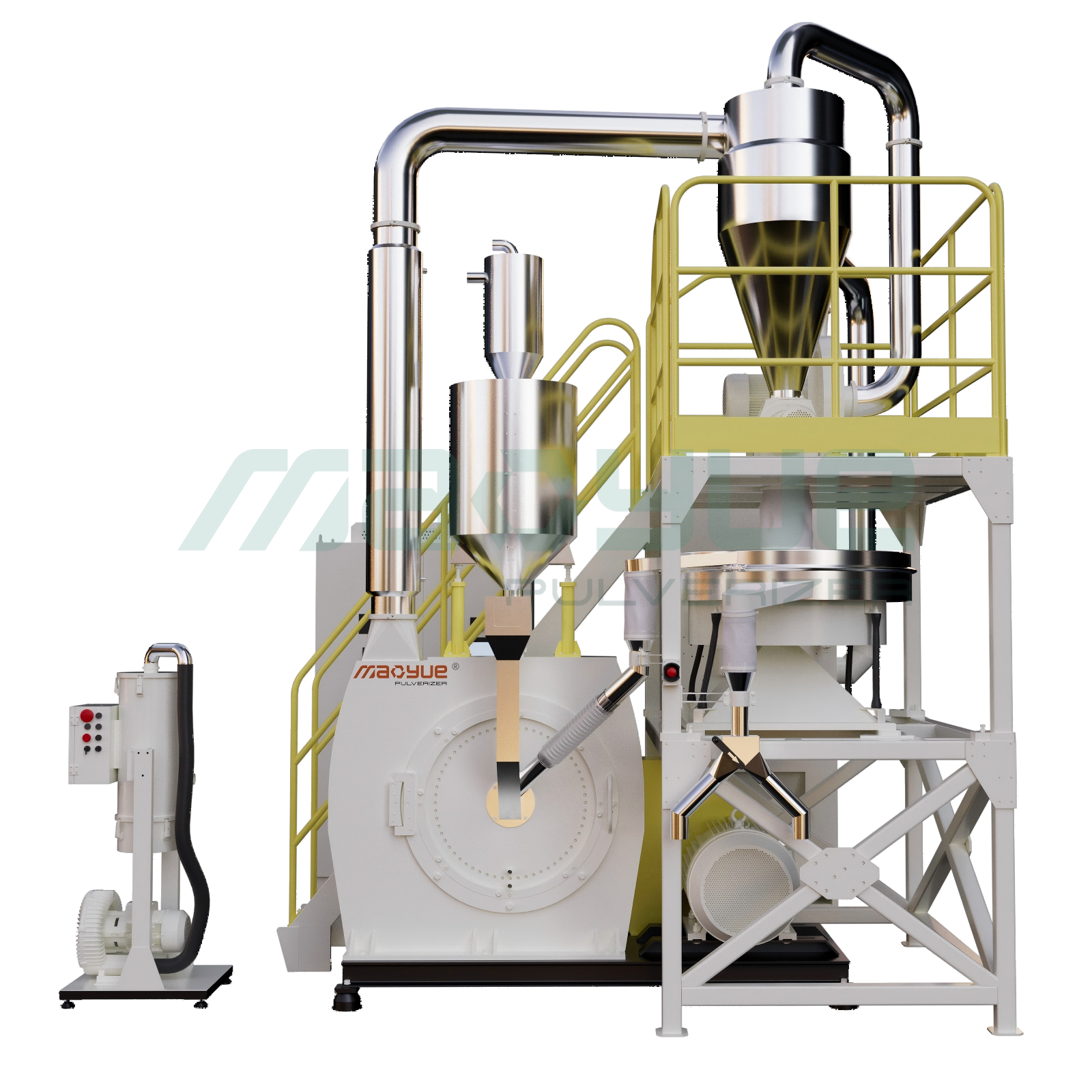
Selecting the right HDPE vs LDPE vs LLDPE pulverizer requires looking under the hood. You need components built for your specific material. Small technical choices today save you from massive maintenance headaches tomorrow. We focus on three critical areas to ensure your production line stays profitable.
The grinding disc acts as the heart of your machine. You can choose between one-piece discs or segmented designs. Segmented blades often provide the best value for busy workshops. Maoyue designs these segments so you can resharpen them four to five times. This feature slashes your replacement costs while keeping the machine running like new. You should also prioritize the blade material itself. DC53 steel offers superior wear resistance, ensuring the teeth stay sharp even after grinding thousands of tons of plastic.
Feature | Segmented Blade Advantage |
Maintenance | Resharpen 4–5 times before replacement |
Cost Efficiency | Lower long-term operational expense |
Material Choice | DC53 steel for maximum durability |
Polyethylene is sensitive to heat. If the milling chamber gets too hot, the powder will melt and clog your system. This is especially true for LDPE and LLDPE, which have lower melting points. A dual cooling system using both water and air is essential. Water jackets keep the chamber walls cool, while high-velocity air carries the powder away before it can stick. Real-time temperature monitoring acts as your safety net. It allows you to track heat levels constantly, ensuring your powder stays consistent and free from clumps.
● Water Cooling: It circulates through the stationary and rotating discs to absorb friction heat. This keeps the internal temperature within a safe range for sensitive materials.
● Air Throughput: A powerful blower system moves finished powder to the cyclone collector. It also acts as a primary heat-removal mechanism for the milling process.
● Temperature Sensors: Automated controls monitor the process constantly. They trigger cooling adjustments immediately if the system detects an upward spike in heat.
Your feeding system must be as smart as your grinding system. You cannot afford to let metal debris enter the chamber. A stray bolt or screw can destroy your expensive grinding discs in seconds. Maoyue integrates magnetic vibrating feeders to catch these contaminants before they enter the mill. This simple addition protects your investment and prevents costly downtime. You should also use variable-frequency speed control to manage your input rate. It links the feeder speed directly to the main motor current. If the chamber starts to struggle, the system slows the feed down automatically. This prevents overloading and ensures every batch meets your quality standards.
Choosing the perfect HDPE vs LDPE vs LLDPE pulverizer doesn't have to be a guessing game. We have broken the selection process into four logical steps. By following this path, you ensure your equipment matches your production goals perfectly.
You must first define exactly what you are grinding. Rigid HDPE scraps like pipes or bottles behave differently than soft LDPE films. You should pre-grind your material to a uniform size of 5–10mm before it hits the pulverizer. This size allows the vacuum feeder to maintain a steady flow. If you try to feed large, irregular chunks, you will notice inconsistent output and unnecessary strain on your motor.
Your end product determines the mesh size you need. Rotomolding applications usually require a standard 35–60 mesh powder to ensure even melting in the mold. If you are producing masterbatch, you likely need a finer 60–80 mesh output. You can achieve this by adjusting the gap between your stationary and rotating discs. Maoyue equipment makes this adjustment easy, allowing you to switch between applications without needing a complete machine overhaul.
Application | Required Fineness | Typical Material |
Rotomolding | 35–60 mesh | HDPE / LLDPE |
Masterbatch | 60–80 mesh | PE / PP |
Custom Needs | < 80 mesh | Specialized Polymers |
Your hourly output target dictates the motor power you need. A small-scale operation processing under 500kg/h can run efficiently on a 75kW motor. If you need to hit 500–800kg/h, we recommend upgrading to a 90kW motor. For high-volume facilities processing over 800kg/h, a 132kW motor paired with a reinforced grinding chamber is the standard choice. Always plan for your future growth rather than just your current needs.
● Small Scale: Use a 75kW motor for consistent, lower-volume production. It keeps energy costs manageable while providing reliable results.
● Medium Scale: A 90kW motor balances power and throughput. It handles moderate loads without breaking a sweat during long shifts.
● Large Scale: The 132kW motor is built for heavy-duty, 24/7 operation. It ensures you meet high-output demands without risking motor burnout.
Modern production requires smart control. You need a system that minimizes human error and maximizes uptime. Maoyue intelligent equipment features advanced HMI touch-screen systems that simplify your daily operations. You can start the machine with one key, monitor temperatures in real-time, and diagnose faults instantly. These systems even support remote PC monitoring, allowing you to manage the entire line without standing next to the machine. This level of automation is essential for modern, unattended production environments where efficiency is the top priority.
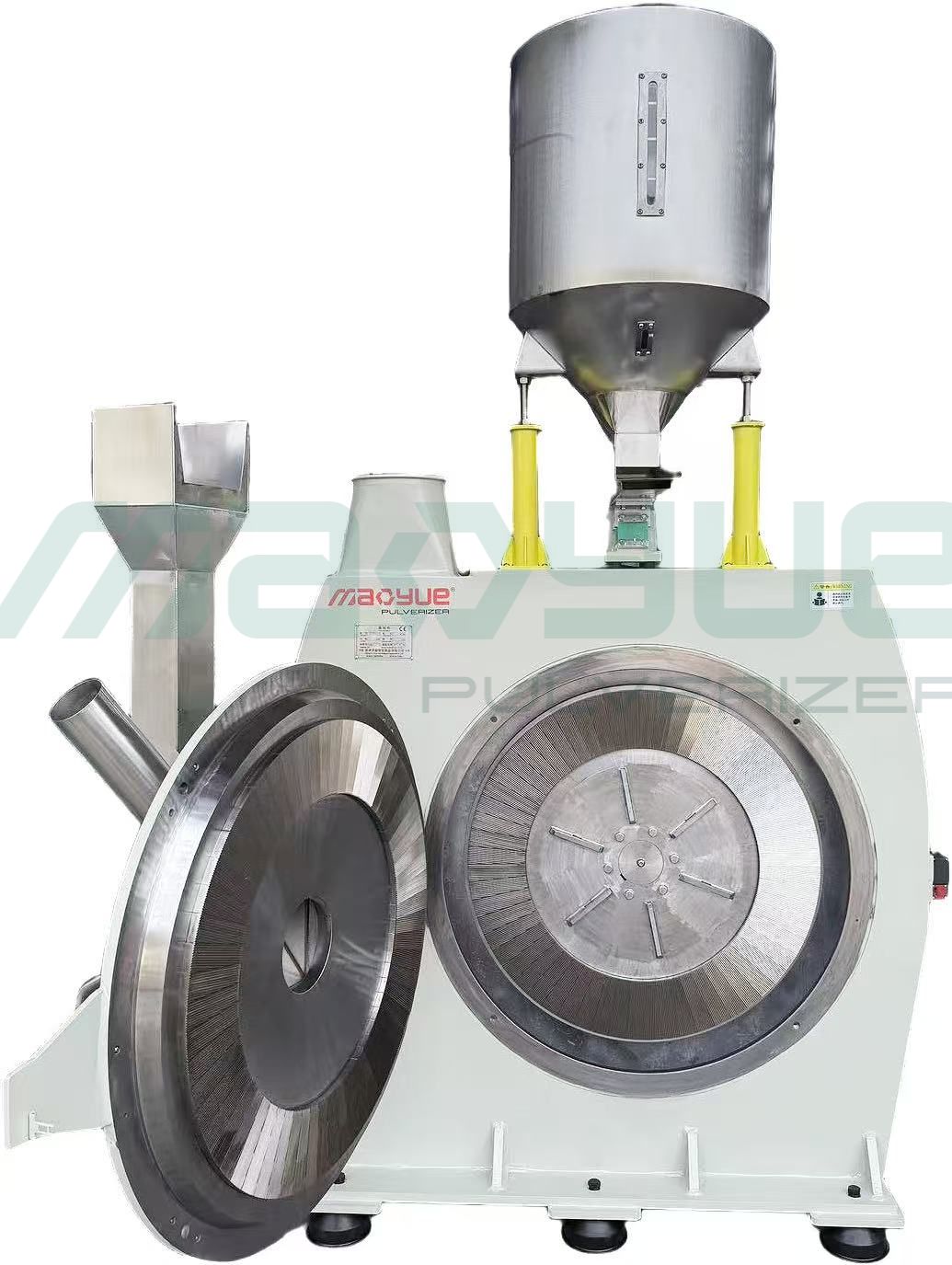
Running an HDPE vs LDPE vs LLDPE pulverizer effectively requires more than just turning a switch. You need to manage airflow, material flow, and air quality to keep the line moving. When you master these operational habits, you extend the life of your equipment and improve the quality of your final powder.
Heat is the enemy of any plastic pulverizing process. If your chamber gets too hot, the plastic softens and smears across the grinding discs. You can stop this by optimizing your pneumatic air throughput. A strong, consistent airflow does two jobs at once. It pulls the finished powder out of the chamber quickly and carries away excess heat generated by friction. We suggest checking your blower performance weekly to ensure it moves enough air to keep the internal temperature stable.
● Airflow Management: Adjust your blower speed to match the material density. LLDPE requires higher air volume than HDPE to prevent the material from sticking to the blades.
● Cooling Water Flow: Always monitor the water flow rate through your cooling jackets. If the water pressure drops, the chamber will heat up within minutes, leading to immediate clogs.
● Feed Consistency: Never overload the chamber. A steady, controlled feed rate keeps the temperature balanced and prevents the material from lingering too long near the grinding discs.
You want a consistent product every single time. A closed-loop setup is the best way to guarantee this. By using a vibrating screen after the pulverizer, you can automatically separate the fine powder from the oversized particles. The system then routes those larger pieces back into the grinding chamber for a second pass. This ensures 100% of your output meets the target mesh size without manual intervention.
System Component | Role in Consistency | Benefit |
Vibrating Screen | Classifies particle size | Guarantees uniform output |
Pneumatic Loop | Returns oversized material | Eliminates manual rework |
Closed-loop Design | Automates the cycle | Increases hourly yield |
A dusty workshop creates health risks and fire hazards for your team. You should prioritize a clean environment by installing a high-quality dust-catching system. While basic bag-type collectors work for some, pulse dust catchers are much better for heavy-duty operations. They use compressed air to clean filters automatically, maintaining constant suction power. This keeps your air clear of fine plastic particles and helps you stay compliant with local safety standards like OSHA.
● Pulse Dust Catchers: These systems are highly efficient for continuous production. They shake off dust buildup automatically, ensuring the air remains clean throughout your entire shift.
● Dust Containment: Enclose your feeding and bagging stations to stop dust from spreading. Proper containment protects your workers and makes the cleaning process much faster at the end of the day.
● Regular Maintenance: Check your filter cartridges for tears or clogs every month. Clean filters mean better airflow, lower energy consumption, and a much safer environment for everyone in the facility.
Investing in the right HDPE vs LDPE vs LLDPE pulverizer ensures superior quality.
It also boosts your long-term production efficiency significantly.
Do not settle for generic equipment that slows your growth.
We provide custom solutions tailored to your unique material needs.
Contact us today for a free material trial.
Speak with our experts to find your ideal machine configuration.
Let us help you optimize your recycling line for maximum success.


