Specializing in the production of Plastic Pulverizer Machines.

Views: 0 Author: Site Editor Publish Time: 2026-08-24 Origin: Site
Choosing mesh size is not just a technical detail.
A wrong range can waste energy, lower output, and damage powder quality.
For most PE PP Pulverizer Machine applications, 20–80 mesh is the practical industrial range.
It gives PE and PP powder enough fineness for smooth melting.
At the same time, it helps protect machine throughput and processing safety.
In this post, you’ll learn why this range is common.
We’ll also explain mesh-to-micron conversion, application needs, and buyer selection tips.
Changzhou Maoyue Intelligent Equipment Co., Ltd. supports PE/PP powder production, plastic scrap recycling, and plastic milling processing.
For most PE and PP powder jobs, 20–80 mesh is not a random setting. It is a practical range built around real factory problems. Buyers need powder fine enough to melt well, but not so fine it slows the whole line. A PE PP Pulverizer Machine must also control heat, output, flowability, and safety at the same time. Think of it this way: powder size affects almost every next step. It changes how resin melts, how fast the machine runs, how stable the powder flows, and how safe the workshop stays. That is why many industrial users stay inside the 20–80 mesh window instead of chasing the finest powder possible.
Mesh Range | Approx. Particle Size | Common Use | Main Advantage |
20–30 mesh | Coarser powder | Recycling and compounding | Higher output and easier blending |
30–40 mesh | Medium powder | Rotomolding | Better flow and smooth fusion |
60–80 mesh | Fine powder | Masterbatch and coating | Better dispersion and surface finish |
PE and PP do not transfer heat very fast. When particles are too large, the outside may soften first, while the inside stays partly unmelted. This can create weak spots, rough surfaces, or uneven material structure in the final product. A suitable mesh size helps each particle absorb heat more evenly. In rotomolding, extrusion, or compounding, this makes the melt more stable. It also helps reduce unmelted spots, air gaps, and visible defects. For buyers, this matters because poor powder quality often looks like a molding problem. In reality, the issue may start at the pulverizing stage. A well-adjusted PE PP Pulverizer Machine helps prevent those hidden problems before production begins.
Finer powder sounds attractive, but it always has a cost. Grinding PE and PP from pellets or flakes into 40 mesh is far easier than pushing it toward 80 mesh or beyond. The machine needs more cutting time, more energy, and more load on the grinding discs. In daily production, this means output can drop quickly when the target mesh becomes too fine. It may also increase wear on cutting tools and raise maintenance costs. That is why experienced factories usually match mesh size to the real downstream need. A simple rule works well:
Use coarser powder when speed and bulk processing matter. Recycling and compounding often need stable feeding more than ultra-fine powder. In these cases, 20–30 mesh can keep production efficient.
Use medium powder when flow and fusion must stay balanced. Rotomolding often works well around 30–40 mesh. The powder can move into mold corners and still melt evenly.
Use fine powder only when the application truly needs it. Masterbatch and coating may need 60–80 mesh for better dispersion. Going finer may add cost without improving the final result.
PE and PP are sensitive to heat during grinding. When the powder is pushed too fine, friction rises inside the grinding chamber. That heat can soften the plastic before it leaves the machine. Once this happens, the material may smear, stick to blades, or form small clumps. It can also lose part of its original physical properties. The operator may see lower output, unstable powder size, or material build-up around the grinding area. This is one reason Changzhou Maoyue Intelligent Equipment Co., Ltd. focuses on matched pulverizer equipment, grinding discs, and cutting tools. Good machine design helps control heat and cutting stability. Still, the right mesh target remains important for long-term production.
Powder finer than 80 mesh can become harder to handle. It may hold static electricity, stick together, or bridge inside hoppers. Once flow becomes unstable, the feeding system may clog, and the next production line may stop. Fine airborne plastic dust also brings safety concerns. In a busy factory, dust control is not just about cleanliness. Very fine particles can increase explosion risk if ventilation, collection, and grounding are poor. For this reason, 20–80 mesh is a safer and more balanced choice for many industrial users. It gives enough surface area for processing, while keeping powder easier to move, feed, store, and control during PE/PP plastic powder production.
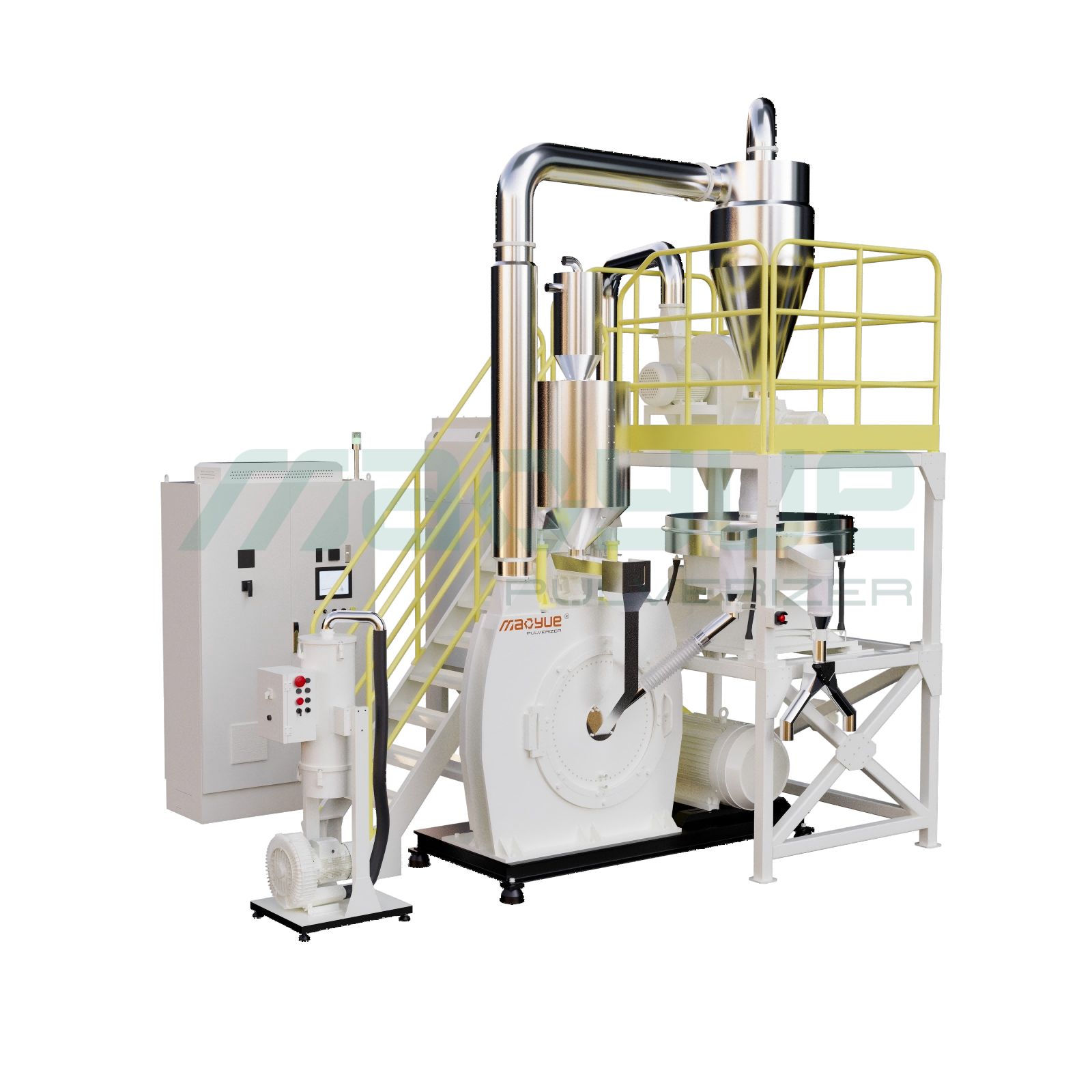
A PE PP Pulverizer Machine plays a major role in powder fineness, but it is not the only factor. The final mesh size also depends on the resin grade, feed material shape, tool condition, machine setting, and heat control. If one part is unstable, the powder may become uneven, even when the machine itself is well built.
In real production, many buyers focus only on the target mesh number. That is risky. A 40 mesh target may behave differently when processing HDPE flakes, LDPE film scraps, or PP injection waste. So, before adjusting the machine, we should first look at the material and working conditions.
Factor | What It Affects | Common Production Risk |
Material type | Grinding behavior and powder flow | Uneven particle size |
Feed condition | Feeding stability and powder consistency | Clogging or unstable output |
Tool quality | Cutting accuracy and mesh control | Coarse powder or low capacity |
Speed and temperature | Fineness and heat generation | Agglomeration or material damage |
Different polymers do not grind the same way. HDPE is usually tougher, so it may need stronger cutting force and stable disc precision. LDPE is softer, and it can become sticky more easily when heat builds up inside the grinding chamber.
PP often has better rigidity than LDPE, so it can break into powder more cleanly under proper settings. But grade still matters. A recycled PP scrap may behave differently from clean PP pellets, especially when it contains fillers, colorants, or mixed waste.
For buyers, this means one PE PP Pulverizer Machine may need different settings for each material. The target mesh can stay the same, but speed, feeding rate, and cooling may need adjustment. This is where test grinding becomes very useful before mass production.
Feed material shape has a direct effect on powder consistency. Pellets often feed more evenly, while flakes, scraps, and crushed recycled pieces may vary in size. When the feed is uneven, the machine receives an unstable load, and the powder size may shift.
Clean and dry material is also important. Moisture can make powder stick together, especially during fine grinding. Dust, labels, metals, and other impurities may damage grinding discs or create dark spots in the final powder.
Before running PE or PP material, factories should check a few basics:
Keep feed size as consistent as possible. Oversized scraps may cause sudden load changes. Smaller and cleaner pieces help the pulverizer run more steadily.
Remove moisture before grinding. Wet material can reduce powder flow and cause sticking. Dry feed also supports better mesh control.
Avoid hard contaminants. Metal or sand can damage cutting edges fast. Once the tool edge wears, powder quality drops quickly.
Grinding discs and cutting tools decide how cleanly PE and PP are cut. Sharp, precise, wear-resistant tools can produce a more stable mesh range. Worn tools may tear, rub, or heat the plastic instead of cutting it cleanly.
This is why tool quality matters as much as motor power. If the disc gap is not stable, or the cutting edge is no longer sharp, the powder may become mixed in size. Output can also fall because the machine needs more time to reach the same fineness.
Regular maintenance should not be skipped. Operators need to inspect tool wear, clean material build-up, and replace worn parts in time. Changzhou Maoyue Intelligent Equipment Co., Ltd. focuses on plastic milling machine grinding discs, cutting tools, and matched pulverizer equipment, which helps buyers keep powder production more stable.
Machine speed affects both fineness and heat. Higher speed can help produce finer powder, but it also creates more friction. If heat rises too much, PE or PP may soften, smear, or stick to the grinding surface.
Temperature control is especially important when targeting finer powder near 60–80 mesh. The material stays longer in the cutting area, and friction increases. Without proper cooling or controlled feeding, the powder may clump before it leaves the machine.
A practical setting process usually looks like this:
Start from a moderate speed. Check powder size, machine load, and discharge flow. Then adjust slowly instead of making large changes.
Watch the material temperature. If powder feels warm, sticky, or uneven, reduce load or improve cooling. Do not force finer output at the cost of material quality.
Match feeding rate to the target mesh. Finer powder needs more grinding time. A stable feed helps protect the machine and keeps output more predictable.

Choosing the right mesh range should happen before buying a PE PP Pulverizer Machine, not after installation. Mesh size affects powder quality, machine output, energy use, and the next production step. If the target is wrong, even a strong machine may waste power and produce powder the line cannot use well.
Most industrial users work inside the 20–80 mesh range because it gives a useful balance. It is fine enough for melting, mixing, and coating, yet still practical for stable production. The best choice depends on what the powder must do after grinding.
Downstream Use | Common Mesh Range | Why It Works |
Plastic recycling and compounding | 20–30 mesh | It supports faster output and easier blending into extrusion lines. |
Rotomolding | 30–40 mesh | It flows into mold cavities and melts more evenly. |
Masterbatch and color concentration | 60–80 mesh | It helps pigments and additives spread across the polymer. |
Fluidized bed coating | Around 80 mesh | It suspends better in air and supports smoother coating. |
The first question is simple: where will the powder go next? PE and PP powder used for rotomolding does not need the same size as powder used for masterbatch. A buyer should define the final process before asking for machine capacity or price.
For compounding and recycling, coarse powder often makes more sense. It feeds well, blends fast, and keeps output higher. For masterbatch, finer powder helps color and additives mix more evenly, so 60–80 mesh may be worth the extra processing cost.
Coating applications may also need finer powder. The powder must move smoothly in air and cover heated surfaces. If the downstream process is unclear, the buyer may choose a mesh range too fine or too coarse for real production.
Many buyers think finer powder means better powder. That is not always true. Finer powder may improve dispersion, but it also increases grinding time, energy use, tool wear, and heat inside the grinding chamber.
A practical PE PP Pulverizer Machine selection should focus on “fine enough,” not “as fine as possible.” If 40 mesh can meet the molding requirement, pushing to 80 mesh may only raise cost. It may also lower output and make powder harder to handle.
Before confirming the mesh target, check these points:
Product quality needs should come first. If the final product needs smooth fusion, stable color, or coating uniformity, the mesh target must support that goal. If it does not improve the final product, extra fineness may not pay back.
Production cost should stay realistic. Finer powder takes more time and power. It can also increase maintenance because discs and cutting tools work harder.
Powder handling should not be ignored. Very fine powder can become cohesive or electrostatic. It may bridge in hoppers or create feeding trouble.
Mesh size and hourly capacity move in opposite directions. As the powder becomes finer, the machine needs more cutting time. This usually means lower output, higher load, and more heat control work.
For example, a machine may run efficiently at 30–40 mesh for rotomolding powder. The same material at 60–80 mesh may need slower feeding and better cooling. So, buyers should ask for capacity based on the exact mesh target, not only the machine model.
It is also important to match the pulverizer to the full production line. If the extrusion, mixing, or coating line needs a fixed hourly supply, the pulverizer must keep up. Otherwise, the whole workshop may wait for powder, even when the grinder is running.
Sample testing is one of the safest steps before purchase. HDPE, LDPE, PP, and mixed recycled materials do not grind the same way. Their toughness, softness, melting behavior, and flow can change the final powder result.
Testing helps confirm the real mesh size, powder flowability, and machine stability. It also shows whether the material becomes warm, sticky, or uneven during grinding. These small signs matter because they often become large problems during long shifts.
For recycled material, testing is even more important. Scraps and flakes may include moisture, dust, labels, fillers, or mixed polymers. A reliable supplier such as Changzhou Maoyue Intelligent Equipment Co., Ltd. can help buyers review material conditions, grinding discs, cutting tools, and machine settings before full-scale PE/PP powder production.
For most PE PP Pulverizer Machine output, 20–80 mesh is a practical industrial range.
It helps balance powder quality, melting performance, machine throughput, safety, and production cost.
The right mesh size still depends on material type, downstream use, and hourly capacity.
Before choosing equipment, buyers should test HDPE, LDPE, PP, or recycled material.
For stable PE/PP powder production, consult an experienced plastic pulverizer machine manufacturer for suitable machine and mesh guidance.
A: The common industrial range is 20–80 mesh, depending on the final application.
A: Not always. 80 mesh is finer, but it can reduce output and raise heat.
A: Rotomolding often uses 30–40 mesh for smooth flow and even melting.
A: It may cause low throughput, overheating, agglomeration, clogging, and dust risks.
A: Yes. Many machines adjust mesh through settings, discs, screens, or operating conditions.


