Specializing in the production of Plastic Pulverizer Machines.

Views: 0 Author: Site Editor Publish Time: 2026-08-31 Origin: Site
Why does the same PVC material produce completely different powder quality after grinding?
PVC pulverizing is not only about reducing waste size. It depends on additives, thermal stability, material behavior, and grinding conditions.
Rigid PVC and flexible PVC require different pulverizing strategies due to their unique formulations.
In this post, you’ll learn how additives and heat control affect PVC powder quality and how advanced PVC pulverizer technology improves recycling results.
PVC pulverizing is not only controlled by machine power and grinding speed. The additives inside PVC materials often decide whether the final powder is clean, uniform, and easy to reuse. Different formulations create different grinding behaviors, especially between rigid PVC and flexible PVC.
During processing, additives affect hardness, heat resistance, particle shape, and powder flowability. Understanding these differences helps recycling factories select better grinding conditions and avoid common quality problems.
PVC Additive | Common PVC Type | Main Function | Impact During PVC Pulverizing |
Plasticizers | Flexible PVC | Increase flexibility and reduce hardness | May cause sticky powder, adhesion, and poor flowability |
Calcium carbonate fillers | Rigid PVC | Improve stiffness and reduce material cost | Increase brittleness but raise grinding heat and tool wear |
Heat stabilizers | Rigid & Flexible PVC | Prevent thermal degradation | Protect powder color and recycling performance |
Flexible PVC usually contains a high amount of plasticizers. They lower the glass transition temperature (Tg), making the material softer and more flexible. This helps the final product perform better, but it creates challenges during grinding.
When flexible PVC enters a high-speed pulverizer, the soft material may absorb impact energy instead of breaking. It can stretch, smear, and attach to grinding chamber surfaces. The result is often uneven powder and frequent cleaning downtime.
Common problems caused by plasticizers include:
Sticky powder formation: Excess heat can soften PVC particles during grinding. They may combine into larger blocks instead of becoming fine powder.
Plasticizer volatilization: High temperatures can cause plasticizers to escape from the material. This reduces powder stability and affects future molding or extrusion performance.
Poor powder flowability: Residual plasticizers can make recycled PVC powder less free-flowing and harder to handle.
To improve flexible PVC pulverizing results, factories usually need lower shear conditions and stronger temperature management. Proper cooling helps keep the material below its softening range. It also reduces adhesion inside the machine.
Rigid PVC often contains calcium carbonate fillers. These fillers increase stiffness and improve processing performance. They also make PVC more brittle, which usually helps the material break into smaller particles.
However, high filler content creates another challenge. Calcium carbonate is harder than PVC resin, so it increases friction between the material and grinding components.
This can lead to:
Higher grinding chamber temperature.
Faster wear on grinding discs and cutting tools.
Changes in powder density when filler distribution is uneven.
Rigid PVC Factor | Effect on Pulverizing |
High calcium filler content | Easier fracture but more tool abrasion |
Uneven filler distribution | Inconsistent powder density and particle size |
Excessive friction heat | Higher risk of PVC degradation |
For rigid PVC recycling, the grinding system must balance strong cutting performance and heat control. Maoyue PVC pulverizers use wear-resistant grinding discs and cooling systems designed for different PVC formulations, helping maintain stable powder quality during continuous processing. :contentReference[oaicite:0]{index=0}
Heat stabilizers protect PVC from thermal damage during processing. Common stabilizers include calcium-zinc stabilizers, tin stabilizers, and other heat-resistant additives.
During PVC pulverizing, mechanical friction generates heat. If stabilizers are insufficient, PVC can start releasing hydrochloric acid (HCl). This causes several quality issues:
Powder yellowing or dark discoloration.
Polymer chain damage.
Lower recycling value during later processing.
Repeated recycling cycles also reduce stabilizer effectiveness. Older PVC waste may have already consumed part of its protective additives, making temperature control even more important.
A stable pulverizing process needs both suitable additives and proper machine control. Advanced cooling systems, temperature monitoring, and matched grinding conditions help reduce thermal degradation and maintain consistent recycled PVC powder performance.
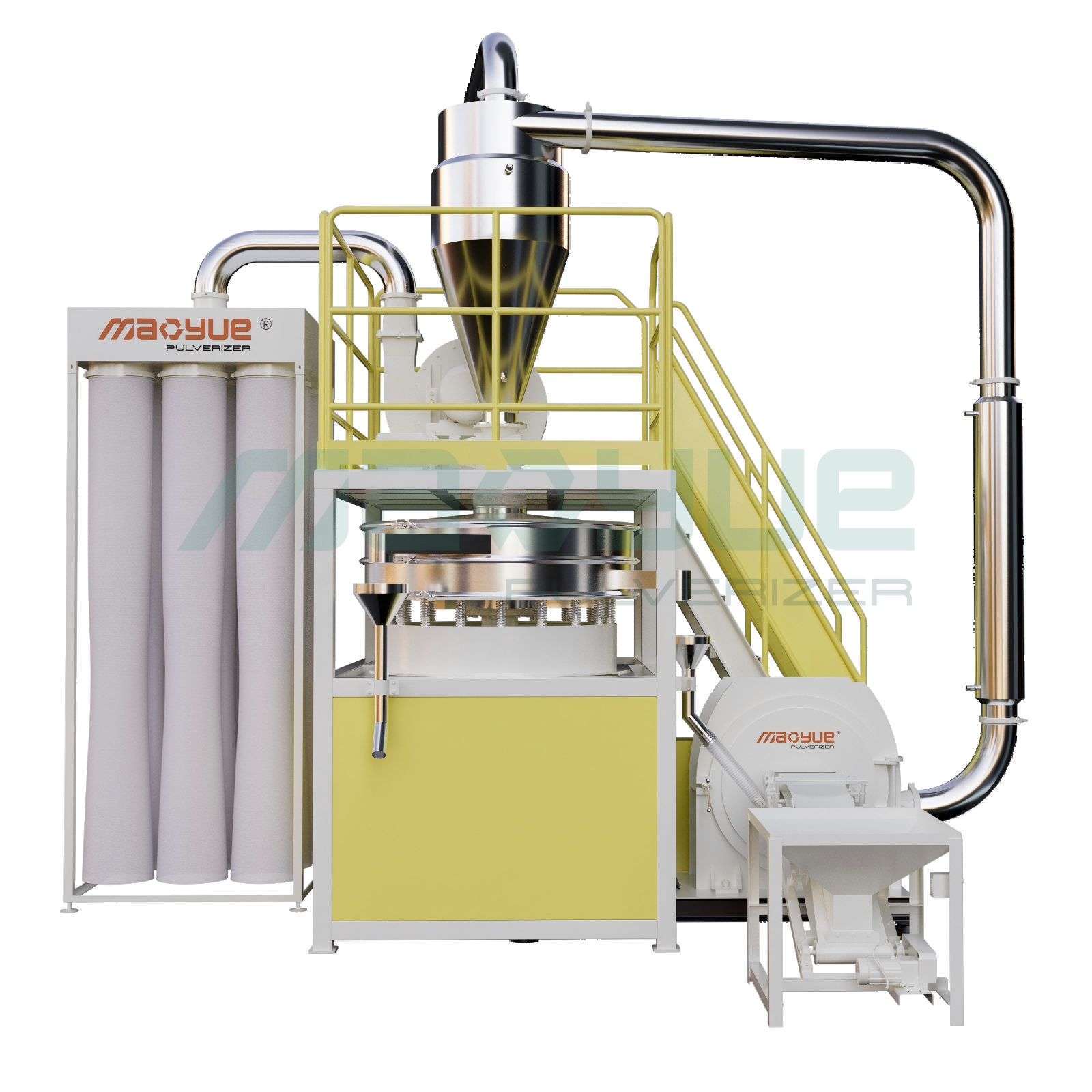
Temperature control is one of the most important factors in PVC pulverizing. PVC is a heat-sensitive polymer, and excessive grinding heat can quickly reduce powder quality, even when the material formula is correct.
During the grinding process, mechanical friction between PVC scraps, blades, and grinding discs creates heat. If this heat is not removed in time, PVC particles may experience thermal degradation, affecting color, particle shape, and future recycling performance.
When the grinding chamber temperature rises beyond the suitable range, PVC begins to break down. The polymer structure becomes unstable, releasing hydrochloric acid (HCl) and damaging the recycled material.
High temperatures can create several problems:
Color changes: Overheated PVC powder may turn yellow or develop black spots. This usually indicates thermal degradation and reduced material stability.
Particle fusion: Instead of separating into clean particles, softened PVC may partially melt and stick together inside the grinding chamber.
Poor powder flowability: Heat-damaged powder often has irregular shapes. It becomes harder to transport, mix, and reuse.
Lower recycling value: Polymer chain damage reduces the performance of recycled PVC in later extrusion or molding processes.
Temperature Problem | Impact on PVC Powder Quality |
Excessive friction heat | PVC degradation and discoloration |
Poor heat removal | Particle adhesion and powder clumping |
Unstable grinding temperature | Inconsistent particle size distribution |
Long-term overheating | Reduced recycling performance |
Rigid PVC and flexible PVC react differently under heat because their formulations are not the same. Choosing the right temperature range helps prevent material damage during continuous production.
PVC Material Type | Recommended Grinding Temperature | Main Temperature Challenge |
Rigid PVC | Around 45–65°C | Calcium fillers increase friction heat and tool wear |
Flexible PVC | Around 40–55°C | Plasticizers make the material soften and stick easily |
Rigid PVC usually has better heat resistance because it contains fewer plasticizers. However, materials filled with calcium carbonate can create more friction during grinding, increasing local heat around the cutting area.
Flexible PVC requires stricter temperature control. Plasticizers lower the material’s softening temperature, so even moderate heat can make the particles become sticky. During continuous PVC pulverizing, heat accumulation must be controlled before it affects powder consistency.
To manage these differences, manufacturers need equipment that can adjust cooling performance based on material behavior. A fixed grinding condition often cannot handle both rigid PVC scraps and flexible PVC waste effectively.
A reliable cooling system helps remove heat before it damages PVC particles. It supports stable production and keeps powder properties consistent.
Common cooling methods include:
Water cooling: Circulating water removes heat from the grinding chamber and reduces friction temperature during operation.
Forced air cooling: Strong airflow improves heat dissipation, especially during high-speed grinding.
Closed-loop cooling systems: They maintain stable temperatures during long production runs and reduce temperature fluctuations.
Intelligent temperature monitoring: Sensors can detect temperature changes and adjust processing conditions automatically.
Maoyue Pulverizer combines water-air dual cooling technology and intelligent temperature monitoring to maintain stable grinding chamber temperatures. This design helps reduce thermal degradation risks when processing different PVC formulations, including rigid and flexible PVC waste. :contentReference[oaicite:0]{index=0}
In practical PVC recycling operations, stable cooling also reduces cleaning frequency. It prevents sticky materials from building up inside the machine and helps maintain consistent powder output during long working cycles.
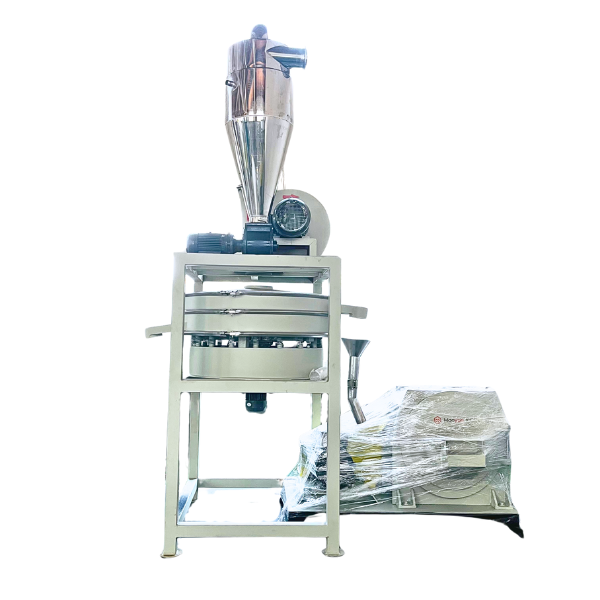
Producing high-quality recycled PVC powder requires more than powerful grinding equipment. The final powder performance depends on how well the machine matches the material characteristics, grinding conditions, and recycling goals.
During PVC pulverizing, small differences in grinding structure, particle control, and contamination management can directly affect powder consistency, production efficiency, and reuse value.
Different PVC formulations need different grinding approaches. Rigid PVC and flexible PVC behave differently under mechanical force, so the grinding structure must be carefully matched.
A grinding system that works well for hard PVC pipes may create problems when processing soft PVC films or plasticized waste.
Grinding Component | Function | Suitable PVC Processing Considerations |
Rotor blades | Provide high-speed cutting force | Requires lower shear settings for flexible PVC to avoid melting |
Fixed teeth | Support crushing and material breakdown | Helps improve grinding efficiency for rigid PVC |
Grinding discs | Control final particle size and grinding stability | Needs wear resistance when processing filler-rich rigid PVC |
Flexible PVC contains more plasticizers, making it softer during grinding. Excessive shear force can increase heat generation, causing particles to stick inside the chamber. Lower shear conditions and stronger cooling help prevent adhesion.
Rigid PVC usually contains calcium fillers, which increase hardness and brittleness. These materials are easier to fracture but can accelerate wear on grinding components. Wear-resistant grinding discs and cutting tools help maintain stable performance during long-term operation.
Maoyue PVC pulverizers use independently developed grinding discs and cutting tools matched for different PVC materials. The equipment design focuses on improving wear resistance, grinding stability, and powder consistency for various recycling applications. :contentReference[oaicite:0]{index=0}
Particle size is one of the most important indicators of recycled PVC powder quality. Uneven particles may reduce material performance during extrusion, injection molding, or other recycling processes.
The grinding gap, feeding speed, and material temperature all influence the final powder structure. Small adjustments can create noticeable differences in output quality.
Key factors affecting particle consistency include:
Adjustable grinding gaps: They allow operators to control the distance between grinding components and achieve different powder fineness levels.
Stable grinding conditions: Consistent temperature and feeding rates help prevent oversized particles or powder clumping.
Screening systems: Multi-layer screening separates particles based on size, improving overall powder uniformity.
For example, recycled PVC powder used for secondary processing often requires stable particle distribution. A powder mixture containing too many large particles may reduce melting consistency and affect the final product appearance.
Clean processing conditions are essential for producing valuable recycled PVC powder. Dust, metal impurities, and equipment wear can all reduce powder purity and increase maintenance costs.
A complete PVC pulverizing process should include proper protection systems before and after grinding.
Important production controls include:
Metal impurity removal: Magnetic separators can remove metal pieces before they reach the grinding chamber. This protects blades and grinding discs from unexpected damage.
Dust collection systems: Efficient dust collection improves working conditions and prevents fine powder loss during operation.
Tool protection and maintenance: Regular inspection of grinding parts helps maintain stable particle output and prevents contamination from worn components.
Modern PVC recycling lines often combine feeding control, screening, and dust collection to improve overall production stability. Maoyue PVC pulverizer systems integrate magnetic separation, vibration feeding, screening, and dust collection solutions to support cleaner and more consistent recycled PVC powder production. :contentReference[oaicite:1]{index=1}
PVC pulverizing performance depends on material formulation, additives, and heat stability.
Rigid PVC and flexible PVC need different grinding strategies to maintain powder quality.
Successful PVC recycling requires the right pulverizing technology, cooling system, and grinding structure.
Precise temperature control helps prevent degradation and produces consistent recycled PVC powder.
A: Rigid PVC is harder and more brittle, making it easier to grind into fine powder. Flexible PVC contains more plasticizers, making it softer and more difficult to pulverize.
A: Flexible PVC has a lower glass transition temperature. It tends to soften, stick, and create powder agglomeration during grinding.
A: Plasticizers can cause sticky powder, poor flowability, and reduced recycling performance when excessive heat causes volatilization during PVC pulverizing.
A: Proper temperature control prevents thermal degradation, yellowing, black spots, and particle fusion caused by excessive grinding heat.
A: A suitable PVC pulverizer uses optimized grinding structures, cooling systems, and temperature monitoring to maintain uniform particle size and stable powder quality.


